
Author: 525carmen
No Benchwarmers Allowed: Student Sportswriters
It’s pretty common to use sports as a means to get kids out of their seats and on their feet. But what if we flipped that thinking? What if there was a way to use sports as a way to engage students in writing and literature that they normally wouldn’t look at twice. That is what Jeff Mann at Belzer Middle School is trying to do with his program No Benchwarmers Allowed.
What is the project and their goals?
No Benchwarmers Allowed is a unique, hands on literacy project that will connect middle school students’ love of sports to reading and writing. This project will create two key components that no middle school has ever offered:
- Create the first nationally available sports magazine written entirely by middle school students,
- Create and offer the first middle school language arts class that will teach the traditional standards in a non-traditional and engaging way using sports literature and sports writing.
In short, sports will be “the bait” that lures students to becoming better readers and writers. What’s exciting about this project is Jeff’s clear knowledge of his students interests and passions, and how he planned on using a near universal love of sports to get them excited about reading.
What did they accomplish?
In August, the sports class was created and put into place. Once established, the planning for the curriculum was ongoing throughout the year. Meanwhile, the writing and reading for the course was adjusted to not only fit the students interests but also to help have completed writings from which to select for the magazine.
According to Jeff, the students displayed a clear interest in writing and reading more than they would have in other traditional language arts classes.
Students began submitting pieces from about October and they concluded the writing portion at the end of March. This left April for selection, editing, ideas, and publication of the journal. The journal was a big success, despite some timing hiccups that prevented publishing by the original date. But they were distributed by the principal throughout the school and a number of other educators were asking about how they could get involved.
In the end No Benchwarmers Allowed made students work harder than they thought they were going to have to, the writing took much more time than any of them anticipated, and the final product came out much better that they’d had hoped.
What challenges did they come up against?
While most students took a sports centered approach, there were still some outliers and the teachers needed to make adjustments to keep those students engaged as well.
Some of the larger challenges dealt with the publishing of the sports magazine, but with the premier issue out, and now armed with the knowledge of how it works timing wise – they ae much better prepared to tackle this in the new year.
Another idea for improvement would be to bring in more professional sports writers in order to demonstrate how a love of sports and a love of the written word can find a great synthesis between the two. Hopefully, this exciting program will continue to turn out great products in the form on their magazine as well as to keep the students plugged into books.
Further Reading
Share this:

Quest for STEM
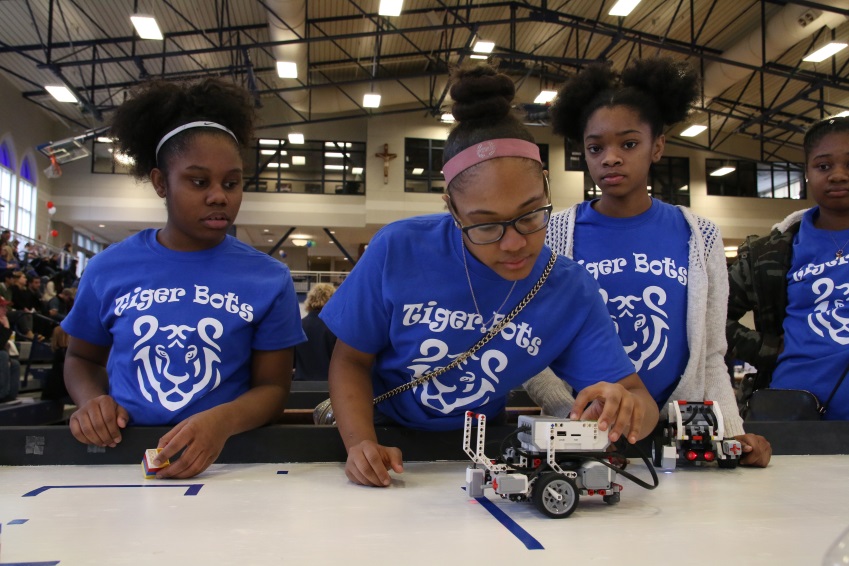
There are a lot of gatekeepers in this world, barring women from careers, hobbies, and involvement in popular culture. And this year is, for many reasons, been called the year of the woman. So, what better time to focus on getting our girls plugged into fields of interest that have been traditionally closed off to them by these arbitrary, and mostly unwritten, rules. This is what the Quest/STEM program at Marian Middle School is all about. Marian Middle School is an all girls school, so what better place to put this pilot program into practice.
Goal
In order to understand the things they’ve accomplished, we need to understand what their stated goal was when conceiving the program. The goal was to get Marian Girls to be workforce ready critical thinkers, creative problem solvers with the skills to be highly employable in STEM careers. But even simple goals often require multi-pronged approaches as there is no one avenue into the myriad of career possibilities in the STEM field.
What did they accomplish?
Broken down into a three-pronged approach, the educators focused on the following:
- Learning through project- and inquiry-based learning and the Engineering Design Process
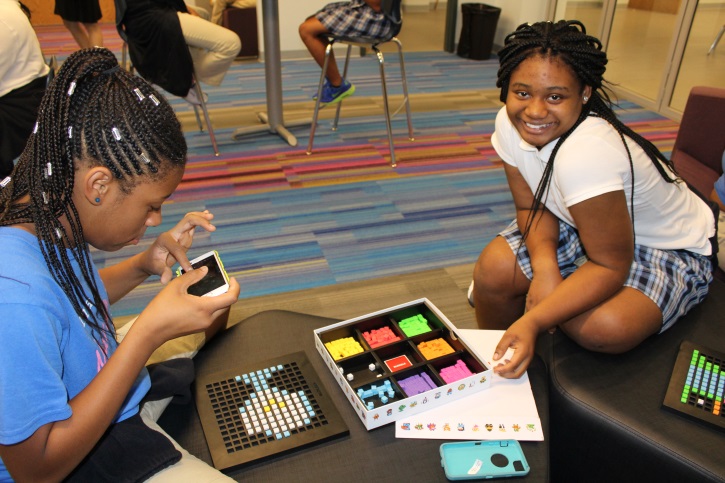
- “Through their STEM Quest classes this year, students were given a choice in the projects they wanted to take on based on their interests and passions. Some projects that were undertaken included rebuilding two motorized scooters, creating original video games, developing animal-friendly beauty products, designing a school prayer garden, and building a virtual school tour for the school’s website, among other projects. All projects were real-world tasks requiring students to research, plan, design, build, and evaluate. They applied learning from their traditional courses to create original work. Working with peers through the design process challenged students to think creatively, to work collaboratively, and to continuously evaluate their work to improve their product. Though it can be difficult for adults and middle school students alike, through this process Marian students are building a myriad of skills that make them highly employable for internships, positions, and opportunities available to them at their age and on which they can grow in the future.”
- Increasing interest in STEM careers
- By using a simple survey to collect data from students regarding their top three career interests they were able to categorize these careers, identifying those with a STEM focus. Year after year, comparisons are made and trend lines are established as each class moves from fifth grade through eighth grade. Students who named a STEM related career in one of their top career choices this school year include:
- 13/15 5th graders (87%)
- 15/17 6th graders (88%)
- 16/17 7th graders (94%)
- 17/17 8th graders (100%)
- Overall Total — 92%
- Through their STEM classes and Marian programming, they have been exposed to professional careers they may not have previously considered. As a result, the range of occupational interest’s students are considering for their futures is as impressive as it is diverse. Careers of interest from the survey include music producer, veterinarian, architect, marine biologist, computer engineer, paramedic, farmer, pediatrician, plastic surgeon, photographer, zoologist, neurosurgeon, cardiac surgeon, entrepreneur, obstetrician/gynecologist, film editor, forensic psychologist, federal agent nuclearmaterial courier, nurse, and occupational therapist, among others!
- Making statistically significant gains on STEM areas of standardized tests.
- Marian students took the Iowa Test of Basic Skills in September 2017 which includes Science and Math components. 72% of eighth grade students made significant gains in math and 67% made significant gains in science as compared to previous scores. The small sample size makes 1 or 2 outliers significant. All sixth and seventh graders made significant gains in math. Science averages of our student body increased in 5 of the 6 domains tested. Student averages in 4 of the 6 domains are now above the national average as compared to only 1 above the national average last year.
- By using a simple survey to collect data from students regarding their top three career interests they were able to categorize these careers, identifying those with a STEM focus. Year after year, comparisons are made and trend lines are established as each class moves from fifth grade through eighth grade. Students who named a STEM related career in one of their top career choices this school year include:
A couple of exciting projects
One of the more exciting projects is the Prayer Garden. Students performed research on prayer gardens, as well as a number of other themed types. By assessing the needs and space available to them they were able to identify the elements they would propose. After a presentation, complete with visual aids, to the principal they were given the go ahead to purchase supplies and begin construction.
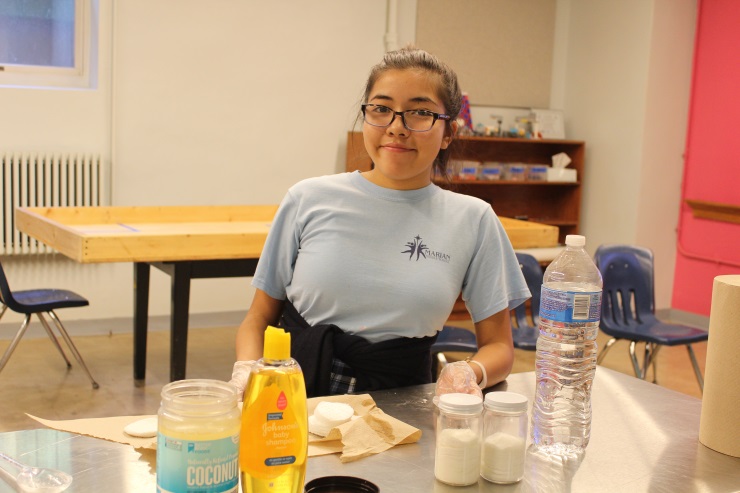
The other project is the Animal-Friendly Beauty Products. By researching practices that impact animals and products that already exist they planned, budgeted, purchased and actually made some products including animal-friendly nail cuticle oil.
In order to evaluate the success of the products, they created a survey that was distributed with the products to solicit feedback They subsequently revamped their products based on feedback for redistribution.
Not only that, but 19 Marian Girls competed in the Clavius Project Robotics Jamboree at St. Louis University High School in January. Out of 27 participating schools, Marian students won the first-place platinum award, and on top of that, were also awarded the Leadership with Distinction Award for their evident teamwork, persistence, and problem-solving skills.
And an even more unique feather for this projects cap: An article was written on the National Nuclear Security Administration website about one of their 7th grade student’s curiosity in becoming a Nuclear Material Courier! This is a testament to the students’ increased interest in many different STEM related careers!
What are some of the challenges they faced?
As exciting and successful as this project has been – it is not without challenges.
They’ve tried to be proactive about revising the programming and goals based on student interest, progress, and feedback. One difficulty they faced was the length of time students need to complete a project and how difficult it is to determine at the outset. They plan to figure out how to include more flexibility in scheduling. Additionally, timing is important in the optimal utilization of workshop space and sharing of available technology to meet everyone’s needs. Ideally, they could more regularly engage community experts in STEM fields as facilitators and instructors for the students. However, school hours are also work hours, which makes optimal engagement difficult.
These challenges aside, they have made great strides in accomplishing their goals and we at the McCarthy Dressman Education Foundation are excited to see how this project progresses.
Share this:

Design Thinking in Middle School: A Human-Centered Approach to 21st Century Learning Vision
Technology advances at a rapid pace. So fast that it often outpaces advancements in education policy and practice. Students are often way ahead of the curve while teachers who learned pedagogical methods in days when there were many less avenues for incorporating technology into classrooms lag far behind them in terms of technological facility. This is compounded by the fact that every student learns in a different way, and with more and more options, it gets increasingly difficult to cater to the individual needs of students. This is what makes the Design Thinking in Middle School: A Human-Centered Approach to 21st Century Learning Vision project really stand out. They aim to bolster the technological aptitude of their educators while designing more individualized curriculum for their students. In pursuit of this vision for student learning, a team of teachers at Southeast Middle School applied with their Board of Education to open a magnet center on campus. The focus of this magnet center is to bring a three “I” – Interest, Impact, and Innovation- driven approach to teaching and learning.
Goals
In order to better understand where they find themselves as of their last progress report, it’s important to understand the goals they set out to accomplish.
Students will work on collaborative, cross-curricular projects that center on design thinking, a powerful learning tool that teaches students to use empathy and critical thinking to tackle problems of any kind from a human-centered point of view. In their model, the teacher’s role is to provide opportunities for discovery and to guide students to understanding through their innovation projects. The transition from a teacher-centered, depository learning framework to a student-centered, design-based learning approach requires teachers to work in a highly collaborative environment to develop cross-curricular and student-centered projects.
So, in their first year, how did they go about doing this?
Before they could start they had to answer a few key questions for themselves, and anyone looking to replicate this program would do well to do the same.
- What resources are currently available and/or necessary to obtain in order to successfully realize their stated vision?
- How might the concepts learned in the theme-based professional development activities be applied to their specific school context?
- What effect(s) might a design thinking approach to teaching and learning have on school performance, as measured by five instructional pillars (teaching) and the ISTE 21st century skill standards (learning)?
These questions guided their approach and the following methods were applied.
- Conduct a needs assessment and establish a teacher growth plan,
- Plan and implement teacher developed lessons tailored to the classroom context, and
- Evaluate the impact of the project on student learning and extract teacher learning through reflective practices.
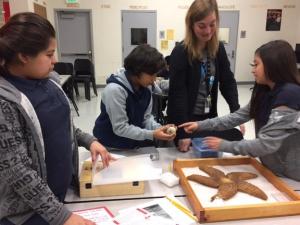
Their first year found its focus in the first two milestones. One of their priorities this year was to help the new magnet teachers build a theoretical grounding in the foundations of design thinking in K-12 education. They found early on in the project that this looked different for every teacher, based on their subject area, experience level, and their personal interests in areas of growth. Because of these disparate levels of experience, as a team, they decided that more experienced teachers would take on a more robust menu of learning opportunities that were designed to fill in gaps in theoretical and clinical knowledge and to prepare themselves to be teacher leaders in the new school. Their primary learning focus as a teacher leader team was to increase their capacity to understand and teach in alignment with a program theme of design thinking through project-based learning.
So, a year in, where are they?
Their collection of professional development opportunities during Year One has helped teachers develop a greater capacity for executing the magnet program’s vision of developing a human-centered approach to 21st century learning. Teacher leaders are using their learnings from model school visits, workshop and trainings, and collaborative planning sessions, to develop a comprehensive instructional technology plan, to plan and implement theme-based lessons tailored to their classroom contexts, and to develop a comprehensive introductory professional development plan for novice teachers. This included the teacher leaders themselves sharing their learnings through professional development sessions that they curated from their experiences in Year One of the project.
Students were able to develop their skills as digital citizens, innovative designers, knowledge constructors, creative communicators, empowered learners, and global collaborators through design-based, project-based learning tasks throughout the school year. Additionally, they were able to showcase their learning at multiple community events at their school site and within the larger learning community of South Gate. News and pictures of the events were shared on the school website at <http://southeastms-lausdca.schoolloop.com/>. Teacher-leaders are currently designing their digital portfolios to showcase their student projects on the magnet program website <www.dreamsmagnet.org>.
But no project is without challenges. What were some that they faced?
The biggest thing they had to contend with was finding substitute teachers within the budget. This allowed the participating educators to take time off from class for professional development. This is being solved in the second year by reallocating some of the grant money to pay for that.
It’s never too late to educate yourself on the latest technology. Even though chances are, by the time you’ve mastered it there will be something new. But that shouldn’t stop us from trying to narrow the technology gap between students and educators, and this project sounds like one way to do it.
Further reading
Share this:

Playmaking Puts Fundamentals in the Spotlight

LAMusArt’s Playmaking project approached their goals with a lot of ambition and spirit. Their program was an exciting one, aimed at engaging students ages 9 – 11 in the fundamentals of playwriting over the course of 10 weeks, culminating in a full scale performance of the student written plays by adult actors. It can be extremely difficult to schedule several adult actors to appear in one place at any one time, but in Los Angeles this difficulty can be compounded. So the fact that they were able to get 11 kids plays up and running cast with professional actors is something that on it’s own should be applauded.
Project Goals
But before we get into what they accomplished, let’s take a dive into what goals they set out to accomplish.
1) to give underserved students in their East Los Angeles communities a public opportunity to experience success and recognition through artistic expression, authorship, and performance regardless of race or gender.
2) to aid the growth and development of each student’s important life skills, including their cognitive and emotional evolution, and their creative, academic, social, and behavioral progress by way of artistic opportunities.
3) to validate each student’s unique voice by giving them an opportunity to tell and see their own stories about their respective experiences.
4) to bridge the gap between our community and the life-affirming power of the arts, which they’ve been traditionally barred from due to barriers like language, finances, and exposure.
5) to provide students with the academic attention they lack in public schools, including inclusive and enriching creative programs and better student/adult ratios.
4) to increase student learning in fundamental theater concepts and practices.
Now, a number of these goals seem a bit hard to quantify. Many of which won’t be fully known until long after the student has left the program. But, you might be surprised by the results that the parents are reporting. But we’ll get to that shortly.
So how did they accomplish their goals?
Over the course of 10 weeks, each student kept a notebook of their weekly writing exercises, vocabulary lessons, and understanding of key concepts. Each student was able to grasp these exercises, as proven by the completion of their original plays. Although some plays were more complex than others, every student completed a play with at least two characters and a central conflict between those characters. The driving idea that was used to emphasize dramatic storytelling was “Want. Conflict. Change.” They started the course by establishing that every character must have a strong want or wish. To move the story forward, they put characters with different wants in a scene together to establish a high-stakes conflict, in which the characters want to get in the way of each other. To resolve the story, they needed a change, from either one or both characters, or an outside force. The idea of “Want. Conflict. Change.” was interpreted in different ways by each student, resulting in wildly different, but entirely vibrant and entertaining works. And having personally attended the event I can say that what resulted was a wildly surreal night of shows. Even though their concepts were simple… or often nonsensical (like the boy and his friend, and a slice of pizza) what they demonstrated was unfiltered creativity. It’s not often that playwrights get to write without self consciousness, and while it’s doubtful that they approached it without self doubt — the final product betrayed a sense of fun, unfettered imagination, and clear encouragement to tell the story they want to tell.


So where are the students now and how are they doing?
According to reports from the parents, the students have seen vast improvement in all areas that the program set out to address.
- 100% said they would recommend the program to others;
- 100% said that the elementary school their student attends does not offer a program similar to Playmaking, which tells us the program is unique and needed in the community;
- 100% said their student’s literacy and writing skills developed over the 10 week course;
- 100% said their student’s listening skills developed over the 10 week course; and
- 100% said their collaboration and creativity skills developed over the 10 week course.
Now, I’m no math teacher, but 100% returns across the board seems to me to be pretty good results. If not pretty great.
But no program is without its challenges. How can this one improve?
The most notable challenge was the coordination of rehearsal time for all eleven groups of adult actors and directors. It was difficult to fit adequate rehearsal time for all eleven plays into a two week period, causing them to schedule additional rehearsals with actors and a prolonged tech period in the theater space.
Another challenge they faced was giving the composer sufficient time to compose an original song for each play. Because the songs and plays were not written until Play Day, the composer was unable to read the plays and lyrics until a day before the first rehearsal, giving barely enough time to compose a new piece. They believe this can be improved by having the composer present on Play Day to aid the students in writing their lyrics. This will also give the composer a better idea of what the student has in mind stylistically for their song.
Completely surmountable challenges aside, this program seems to have legs that are going to carry it into the future and help improve the confidence, writing, and collaboration skills for any students involved.
Learn more
Share this:

Math and Maritime Place-Based Learning – M2BPL Re-thinks Math Workshop
Math and Maritime Place-Based Learning
Rig up the mast, batten down the hatch and come sail away with the educators at the Blue Heron School in Port Townsend, Washington as they embark on their exciting project: Math and Maritime Place-Based Learning – M²PBL. The district’s Maritime Discovery Schools Initiative (MDSI), implemented in 2014, is guiding their transformation by encouraging teachers to change instructional pedagogy, increase student engagement, and experience connections between classrooms and business partners. This proposal develops 30 teachers over three years.
What exactly is the Math and Maritime Place-Based Learning – M2PBL?
Research has shown these educators that students benefit highly from using a Math Workshop (MW) model.
When executed successfully, MW models support a culture of underlying beliefs:
- all students are capable of quality thinking;
- participation through hands-on activities and discourse builds student thinking;
and - through true engagement, all young minds can make real sense of mathematics.
An engaging environment is also the premise for Project Based Learning (PBL), where students use 21st century skills to learn collaboratively while working on projects to benefit themselves and others. The M²PBL proposed a structure for K-8 teachers to collaborate and design sense-making math environments tailor made for their students.
Through deepening knowledge of the Common Core State Standards in Mathematics (CCSSM) – particularly in Number and Operations, Measurement, and Geometry – teacher teams (K-2, 3-5, 6-8) focused on:
1) Number Talks (NT), a workshop element where students apply and verbally share strategies to solve and improve mental computations (number fluency),
and
2) PBL projects to apply students’ growing math strategies and conceptual knowledge. The MDSI promotes community partnerships between the school district and maritime-related industries.
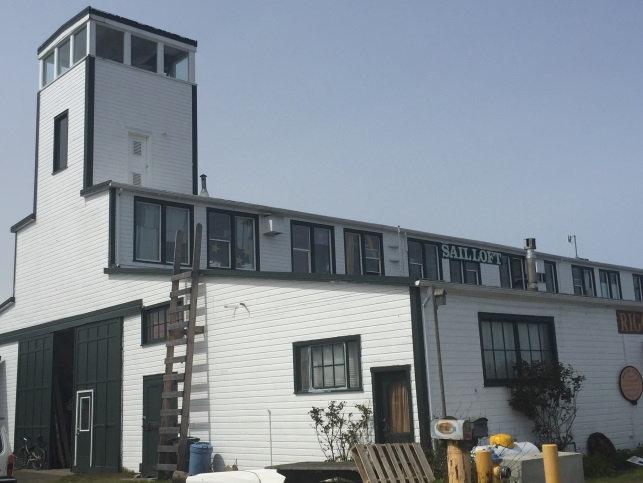
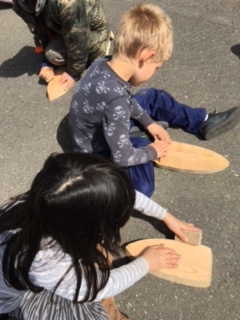
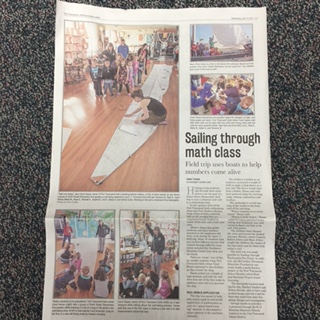
As exciting as this is for the teachers, when the students get involved it brings it to another level. The educators are partnering with Port Townsend Sails, a local business specializing in “quality sails for traditional and modern rigs.” Teachers, students, and employees will collaborate to explore authentic mathematics on-site in the sail loft. There, and in classrooms, student mathematicians will count and measure to possibly build boats, design sails, and and/or navigate!
What were the goals for M²PBL?
They had two primary goals to accomplish in year one. They wanted answers to the following questions:
- How do Number Talks increase the quality of students’ number fluency?
- Does authentic application of number fluency deepen student learning in project-based mathematics?
Eleven teachers initially met for professional learning in an elementary group and an intermediate group; each grade level met for two full days (early fall and mid-winter).
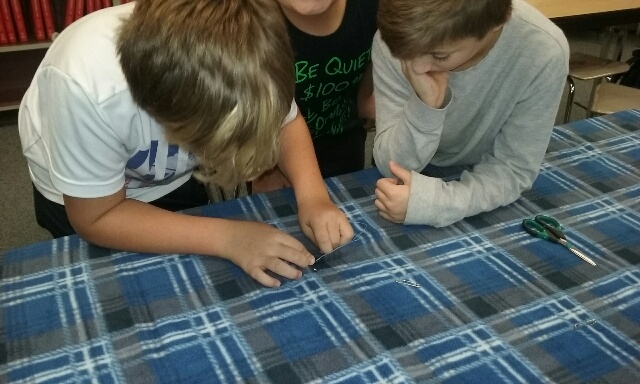
Those teachers recorded 10 half-day visits into classrooms (using a substitute) which totaled to around 15-20 visits arranged during planning times and/or with colleagues to “step out” for a short period to observe. One teacher also requested a grade level team observation one morning, so three teachers not technically a part of the grant this year joined in on observations of Number Talks. This was a productive way to share knowledge around fluency outside of the core group. Teacher texts, classroom fluency instructional materials, and PBL supplies were purchased. Items included: student journals, chart paper/markers, wood (for boats), bird feeders, bird ID texts, meter tapes, weights, calculators (specifically for order of operations), and math manipulatives for Family Math Night (dice, spinners, etc.). There, two classes taught fluency activities to parent/students, and the activities went home for continued learning. In-kind donations included dowels (masts), sail cloth (from PT Sails), sand paper/wood pieces for sanding blocks from the high school shop. Volunteer support was received from parents (chaperones), the Schooner Martha captain and family, the Northwest Maritime Center/Wooden Boat Foundation shop personnel, Carol Hasse and crew of Port Townsend Sails, the PT High School STEM/maritime students, and parents to help first graders drill boats for the mast and to tack sails to masts.
What were some of the challenges?
As we can see, they’ve been busy this year. But like all new project ideas, they are not without challenges. The biggest challenge was the collaborative work that required teachers to be out of their classrooms. One participant asked that her grade level team be able to collaborate around classroom observations, and that was accomplished. It’s also been more difficult than anticipated to get teachers to keep up with data collection. But they are already coming up with ideas on how to improve next year. Things like: 1) Supporting a full day of professional learning around math fluency/PBL for any teacher not involved in year one who volunteers (sub time/materials stipend); 2) Supporting grade level teams to collaborate around math fluency through collegial visits/observations (sub time); 3) And finally, approaching Port Townsend Rigging Company as an additional maritime partner to help expand and grow the program for years to come.
All in all, it’s an exciting project to see come together. We’re all waiting with bated breath for this ship to come back to harbor with tales of their next success.
Learn more
- Project-Based Learning: Students actively investigate solutions to complex, long-term challenges, often in groups
- Problem-Based Learning in Mathematics: ERIC Digest
- Maritime Discovery Schools Initiative
- Maritime Discovery update: Students helping salmon
Share this:

Full STEAM Ahead with Project Based Learning
All aboard and Full STEAM Ahead!

The educators over at Bates Middle School in Sumter, South Carolina have been working hard laying tracks for the past year in order to bring their exciting project to fruition. By combining Project Based Learning (PBL) and a curriculum focus on Science, Technology, Engineering, the Arts and Mathematics (STEAM) and working with local businesses they are hoping to create a new generation of students who are prepared to be in an agile and competitive work force. One of the brilliant concepts behind this project is that nothing exists in a vacuum. You can’t well understand engineering if you don’t have a good handle on physics. You can’t code a videogame without understanding the underlying code. And you certainly can’t have music without math.
The Full STEAM Ahead project aims to remove the traditional isolation of subjects through the use of the “Critical C’s” of Collaboration, Cooperation and Communication which are emphasized with project based learning through interdisciplinary activities.
Now that they are a year in, let’s see what has transpired.
Bates teachers, led by the Transforming Learning Together (TLT)

mentor teachers, in the first stage of this initiative begun by identifying large-scale student learning goals for the year. They then researched new teaching approaches in order to integrate STEAM and Project Based Learning to help them achieve their goals, along with developing “action plans” for each year’s practice. The belief was that art can spark creativity in young scientists and engineers, develop observational abilities, and strengthen collaborative skills. One of the guiding questions for this project is ” How can we improve instruction, pedagogy, and student learning across the curriculum through the use of STEAM and PBL?”
So how do they propose to do this?
They began by having their trainers and the TLT team attend a PBL and STEAM workshop that spaned six sessions. This team returned to Bates to lead the entire staff through a STEAM Project Based Learning activity in order to familiarize everyone with the methods. Teachers investigated and utilized critical inquiry to work through this challenge. The thinking was that teachers will experience everything that the students do, giving them the tools to help elevate the projects as well as answer previously unanticipated questions. Teachers then guided students through one PBL unit in the first year of implementation.
A year in… where are they now?
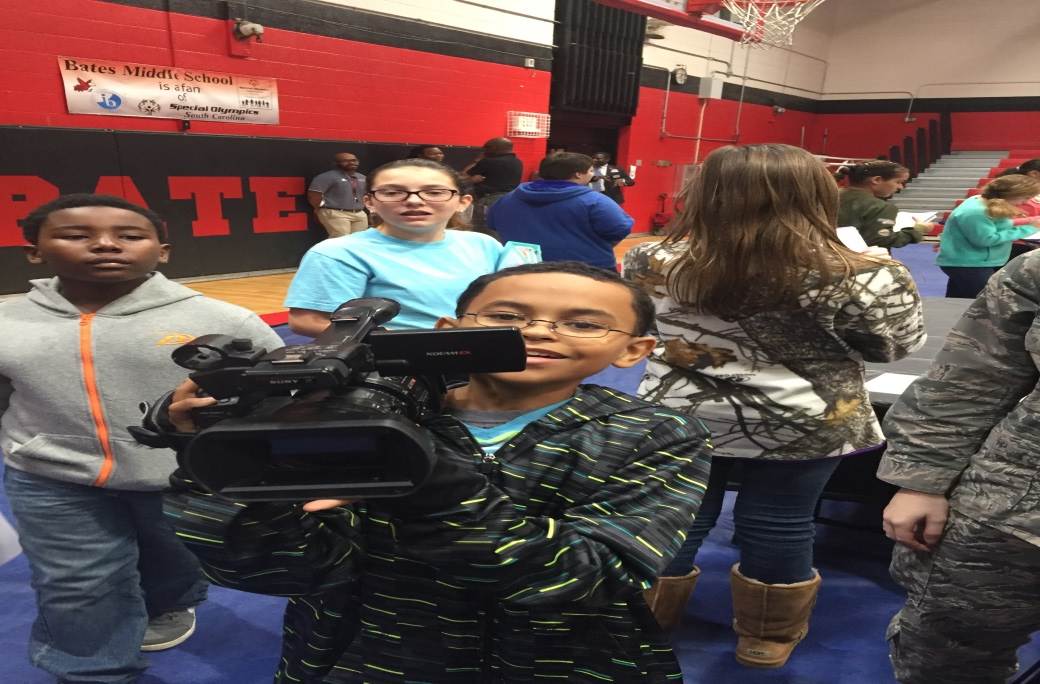
They started off by providing professional development to their teachers during the first semester of the school year. STEAM lessons were developed to be a part of the regular curricula as well as embedded in Project Based Learning. The second semester brought about school-wide PBL units. Then on March 24th, there was a school-wide PBL Kickoff to begin the grade level units. This is where things really began to take off. For this initial thrust into the unknown they gave each year a different subject field to dig into. Sixth graders explored the guiding question: “Are animals placed in captivity at an advantage or disadvantage than those in their natural habit? Why/ Why not?”

The kick-off was a field trip to the Riverbanks Zoo. The 6th graders researched the question and created suitable habitats for animals of their choice. The 7th graders explored the guiding question: “How can we be prepared for the unexpected?” Dealing with the preparedness for natural or man-made disasters was the focal point. The Red Cross, Fire Department, EMS, Disaster Management, Police Department, Shaw AFB and Salvation Army each set up a station to explain their role in disasters and how the community can prepare for disasters in the future. Students researched a disaster and prepared community service presentations on disaster preparedness. Eighth graders explored the, very relevant, guiding question: “Can separate be equal?” This question dealt with the Civil Rights movements of 1960 -1990. Guest speakers, Nathaniel Briggs (Briggs vs. Elliot) and Artrell Benbow (civil rights activist in Summerton and Sumter) spoke to the students of their personal experiences. This culminated with the 8th grade Drama class presenting a skit about the infamous Orangeburg Massacre. Students then rotated rooms to watch films about civil rights, explored civil rights virtual museums, and participated in gallery walks. Students researched the civil rights eras of 1960’s through the 1990’s and created projects to address the guiding question. The PBL classes occurred every Tuesday and Thursday beginning March 28th and ended in a PBL Excellence Fair held on May 4th at 6:00 pm at BMS to showcase student work and presentations.
What are some challenges facing STEAM/PBL learning?
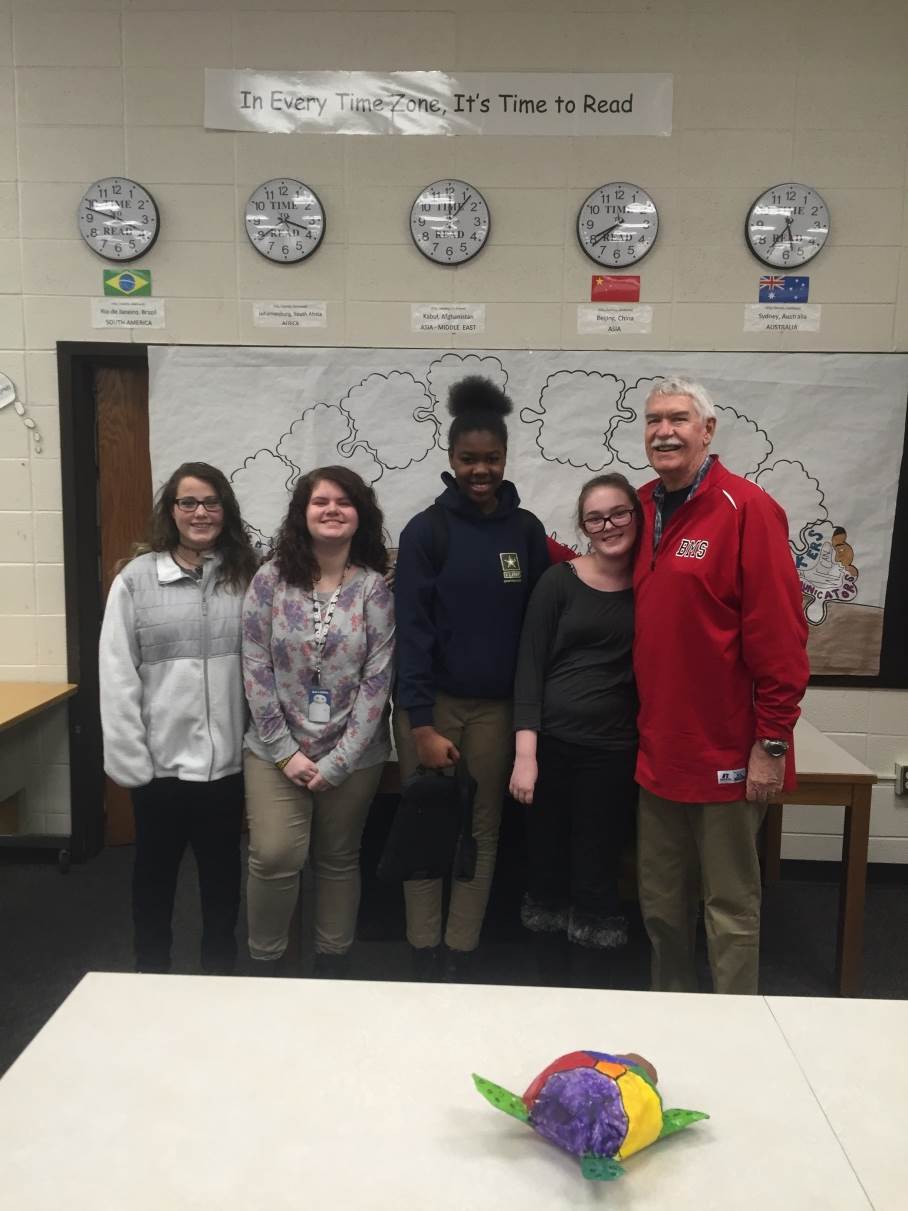
For as exciting as this method of PBL learning is, and it’s clear that it’s starting to work; students and teachers on the whole are more engaged in their study areas… it’s not without it’s challenges. One of the biggest cited in the report is that not all of the teachers have bought into the STEAM /PBL concept. This makes communicating those ideas to students that much harder. Further professional development is needed in order to ensure more participation by teachers. They have also had some difficulty setting up model classrooms so we are hoping teachers observing other teachers will assist in this. But as more teachers undergo professional development and find the merit in this method of teaching the easier it will get. And year two has some exciting things in store for the students. One word: Robots. We look forward to hearing about their experiences with Robots.
How might Robots, cross-cultural references and civil rights intersect?

Let’s mix up that engineering and art a bit, shall we? The term “robot” came from a Czech play called Rossums Universal Robots and is derived from the word “robotnik” which means slave. It’s about a robot who is forced to work for a shady company that then rebels and leads to the extinction of the human race. It’s bleak, but not without hope. But it’s a good lesson and a challenge for students on how we should be thinking about a newly created servant class. Just some food for thought.
Learn more
- STEAM, not STEM
- STEAM Rising: Why we need to put the arts into STEM education
- Project-Based Learning: PBL is a dynamic classroom approach in which students actively explore real-world problems and challenges and acquire a deeper knowledge
- Project-Based Learning: Students actively investigate solutions to complex, long-term challenges, often in groups
Share this:

Cigar Box Odyssey: Enriching Creative Process Skills
Fourth graders stimulate the thinking processes involved in creativity through an Academic Enrichment Grant
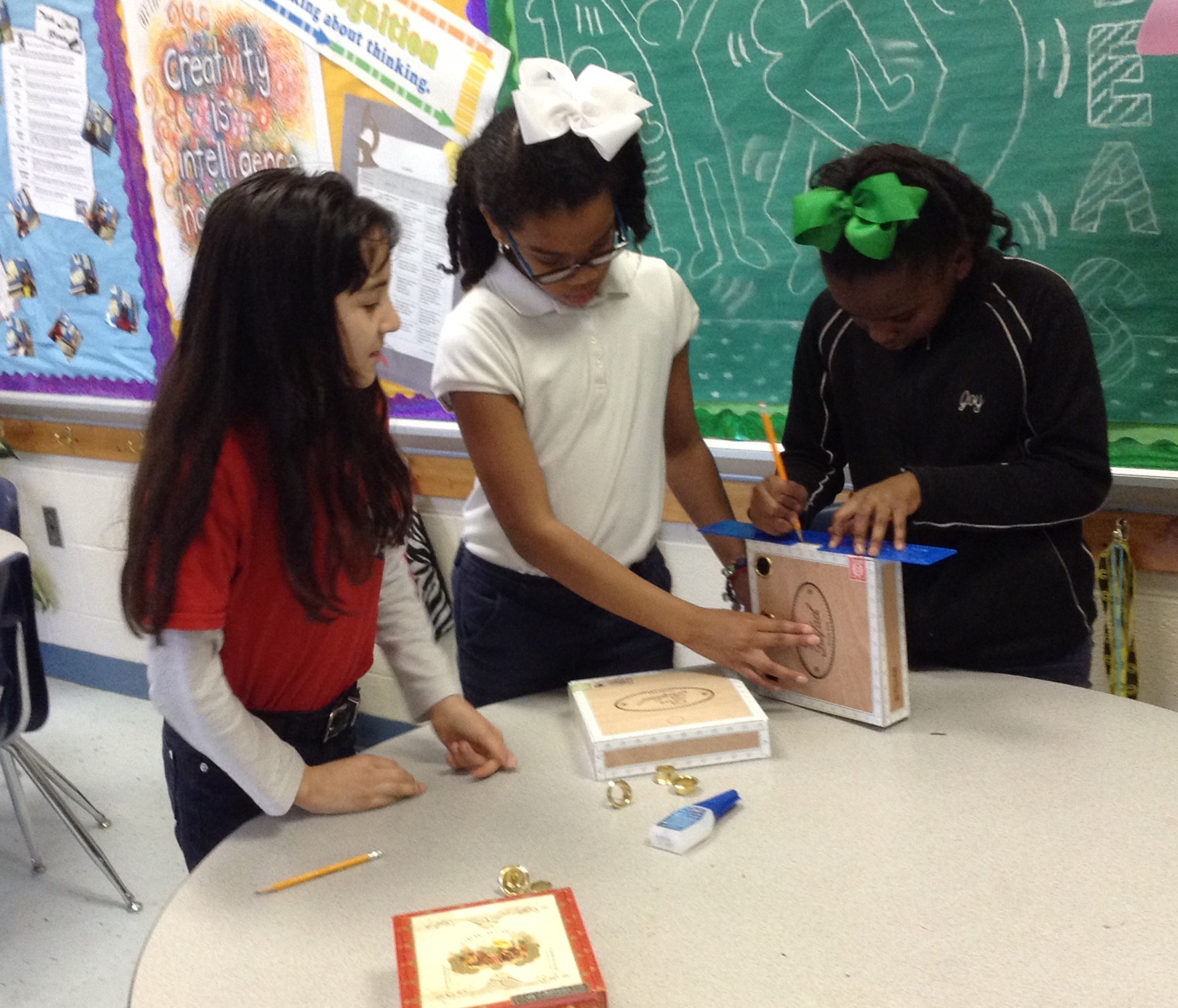
As we face many challenges in educating our children, it is important to emphasize creative thinking and problem solving. Creative thinking and problem-solving are essential parts of the process to turn ideas into innovation and open up avenues to creativity.
What were the goals of the Cigar Box Odyssey project?
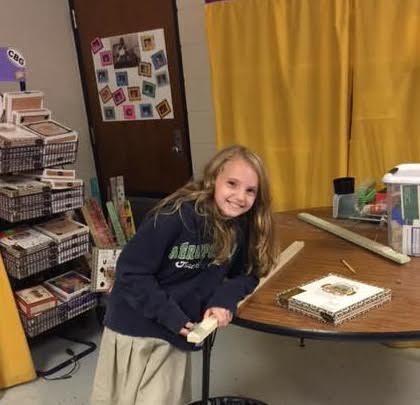
The overall goal of the Cigar Box Odyssey project was to teach creativity by integrating the Outcomes of their gifted program with the Objectives of their Fourth Grade Curriculum. Their goal was achieved by emphasizing the gifted process skills of performance, presentation, research, creativity, self-directed learning, group dynamics, and understanding and creating art. The students analyzed the creative process used by musicians to design the cigar box guitar using the SCAMPER (Substitute; Combine; Adapt; Modify; Put to another use; Eliminate; Reverse) technique.
What is the SCAMPER technique?
The SCAMPER technique (introduced Bob Eberle, as described in the design thinking blog, Designorate, by Rafiq Elmansy) is based on the idea that what is new is actually an adaptation of something that already existed. It is considered one of the easiest and most direct methods to creative thinking. The SCAMPER keywords noted above represent the necessary questions students should address during the creative thinking process. For example, for Substitute one could ask, “What part of the process can be substituted without affecting the whole project?” or for Combine, one could ask, “Can we merge two steps of the process?”
- Project caption “We begin research and building guitars at the same time. We use sites like PBS Blues Road Trip and Carnegie Hall History of the Blues.”
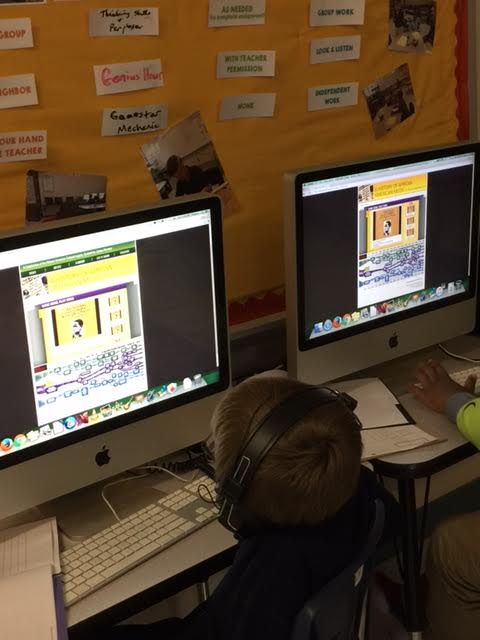
What skills did students use to build their Cigar Box Guitars?
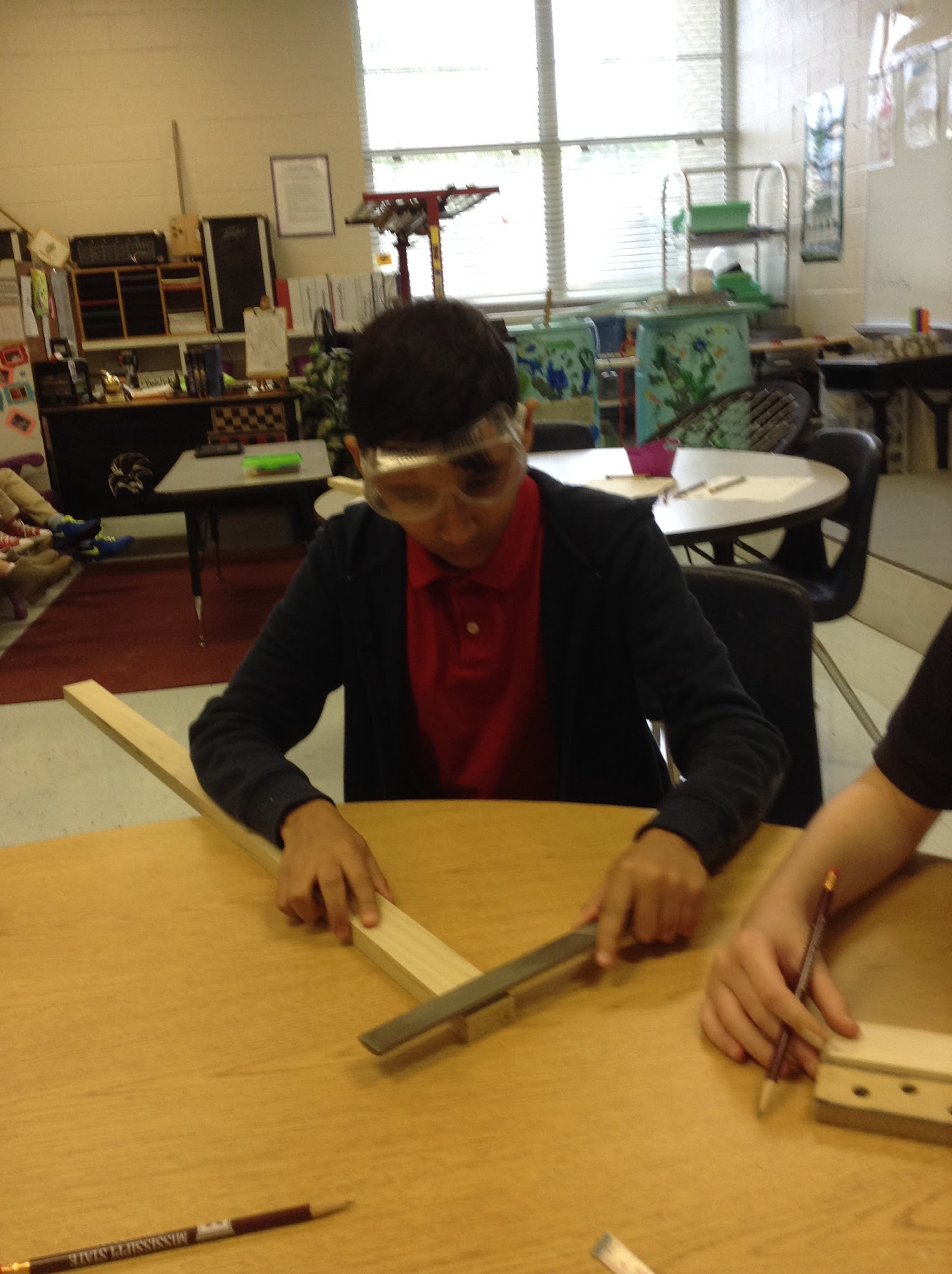
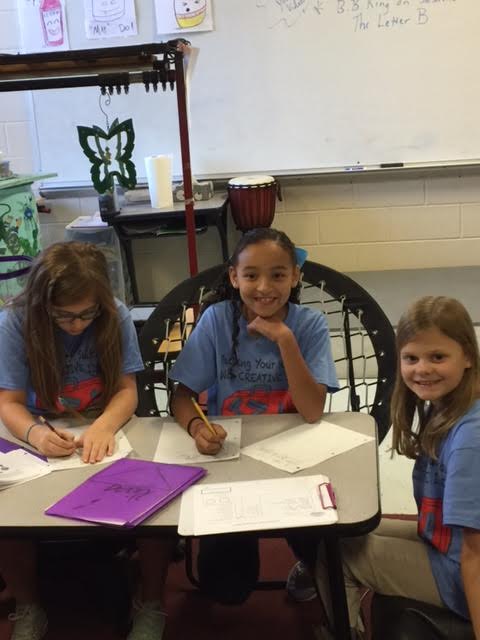
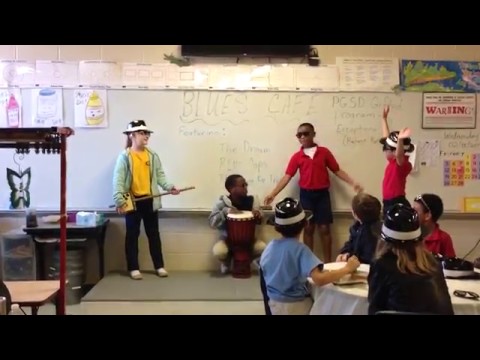
The students researched the origin of the Delta Blues and how the Blues form travelled and changed, influencing other American music forms. They used measuring skills, basic knowledge of sound, and creative principles to build their own cigar box guitars. Then the students wrote original songs and performed them in a Blues Café that was set up in their classroom.
The students attended the New Orleans Cigar Box Guitar Music Festival where they were well received and able to meet professional performers. And, to top it off they have been invited to perform at the Festival next year. To prepare for their performance, they plan to invite T. J. Wheeler, creator of the Blues in Schools program, to College Park and help the students prepare for this performance. He taught this year’s fourth graders a few things in just a short time at the festival.
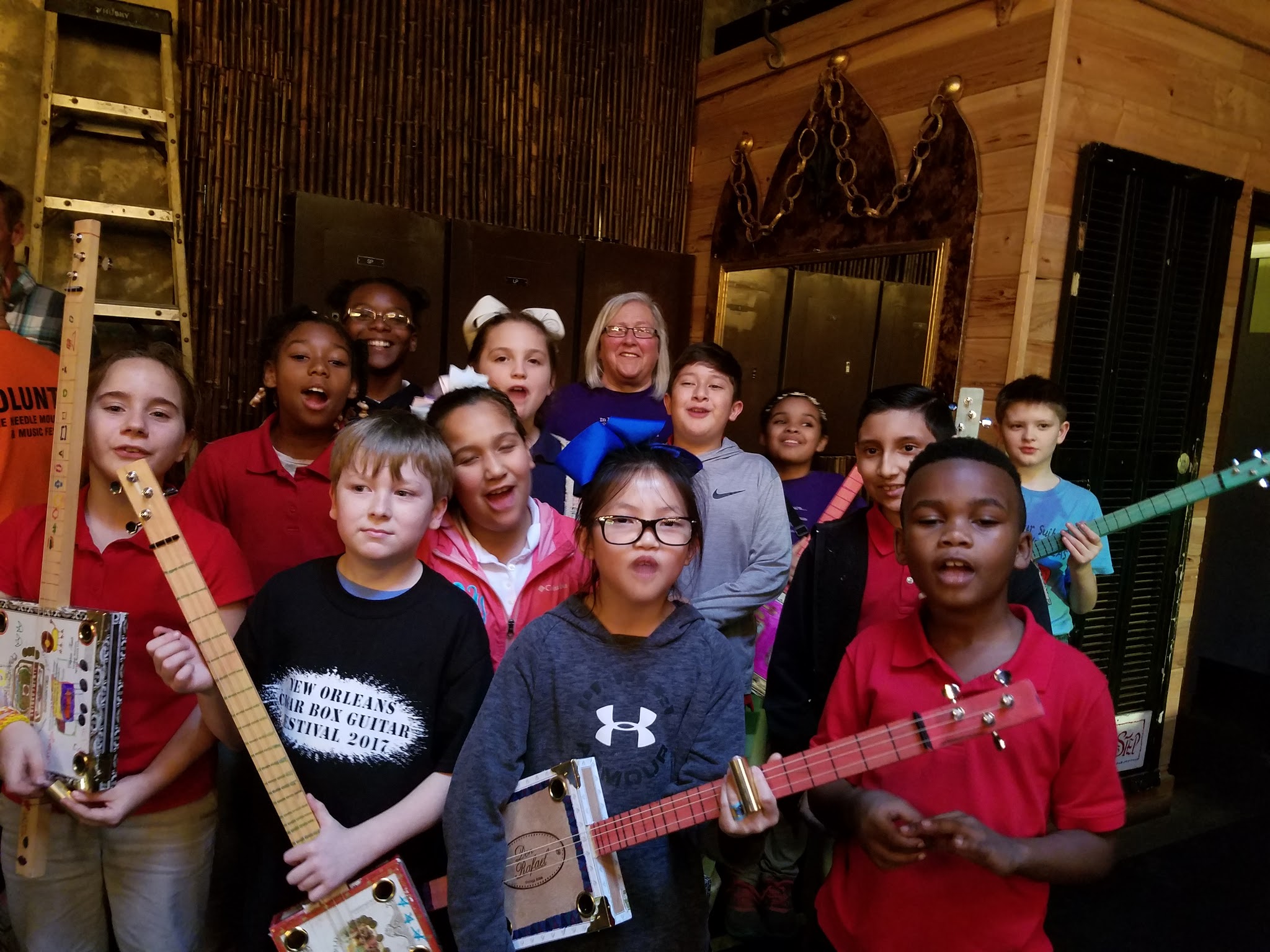
How has this program affected learning?
Because of this program the students have experienced the intersection of research and reality. They have had a taste of living what they researched and were exposed to adults who built the same instruments and performed the same kind of music. They were also able to extend the program to include some cutting-edge technology by 3D printing their own guitar picks.
- “We wrote our own Blues songs and performed them in a Blues Cafe in our classroom” Project caption.
So, what’s next for the students?
With the purchase of a 3D printer students will learn how to program CAD and create (not just print) their own picks. So, both the technology and the performance components of the program will be lifted to a higher plane when they learn to program CAD and perform formally in front of a festival audience.
- Students develop original music. ({Project photo).
Further reading:
Share this:

Art History Enrichment Club: Painting to Understand Human Culture
Two things that are rarely taught in tandem, outside of college elective courses, are Art and History, yet these two disciplines are inextricably linked. Art gives us a window to the minds of humans living in another time. Every detail can tell a story, from the subject and the setting to the style of a time period. Each of these things gives us hints as to what life, attitudes, and technology were like when those pieces were created. Art as old as ancient Egyptian hieroglyphs as well as that created in modern day can shed light on how humanity has evolved and provide a glimpse to human potential. Some might argue, if you don’t know the history – how can you create the future?
This important connection between human expression and history has inpired the educators at NYOS Charter School in Pflugerville, Texas, in the Art History Enrichment Club. According to the project team, the goal is for students to better understand how history and art are interwoven throughout the ages. This understanding will allow students from all backgrounds to connect the art they studied to the community and world around them. By studying the craft of painting in a variety of techniques, they will not only grow as artists, but also make connections between advances in art, history and culture, from paintings in famous museums to those found in their local community.
How does art history after school enrichment support cognitive and social skills in intermediate grades?
The Art History Club was open to students in 4th and 5th grades. Students applied, with parent permission, and thirty of them decided to stay after school one day a week for an hour. This allowed the school to serve up to 20% of their student population. The classes were offered for 20 weeks and were capped off with a trip to the Blanton Art Museum in Austin, Texas. Not only did the project allow students of all backgrounds to connect with history and their communities, it also gave them a new visual language to identify styles and techniques. Research has shown that students who are enrolled in art programs increase cognitive and social skills that are then applied in daily classroom activities.
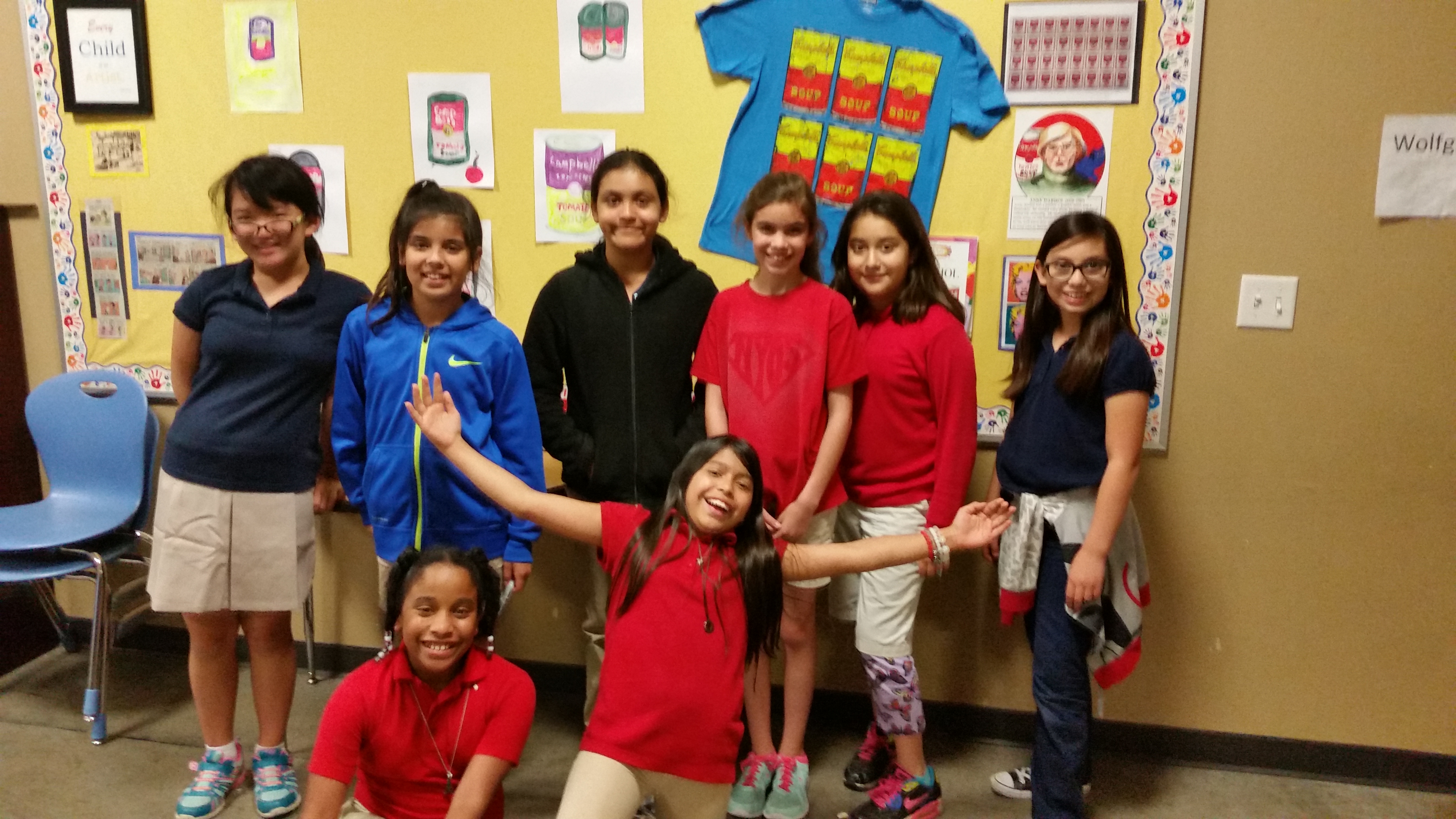
An important part of this enrichment program is that it wasn’t just passive observation. These students received hands on experience, so to speak. Not only did students see and study the art and varying techniques, they also put those lessons to the test. A weekly display of the information about an artist and the students work was also shared in a common area for all students to view. Additionally, there was an art show displaying student’s artwork open to the NYOS community. NYOS also has a collaborative relationship with local business. These business were able to display artwork allowing students to share their achievements with their local community.
What other benefits came from this project?
According to Melissa Hefner, project awardee, the project was designed to make broad connections between art, history, and real life: “The first goal of the project was to teach how history and art were interwoven. The second goal was to show the different styles of art that have been created throughout history, starting with Egyptian Art and ending with Modern Art. The third goal was for students to identify famous pieces of artwork on clothing, TV shows, movies, posters, etc. making the connection that masterpieces are all around us. The fourth goal was to have them identify art in their community and then add their own art to the community.”
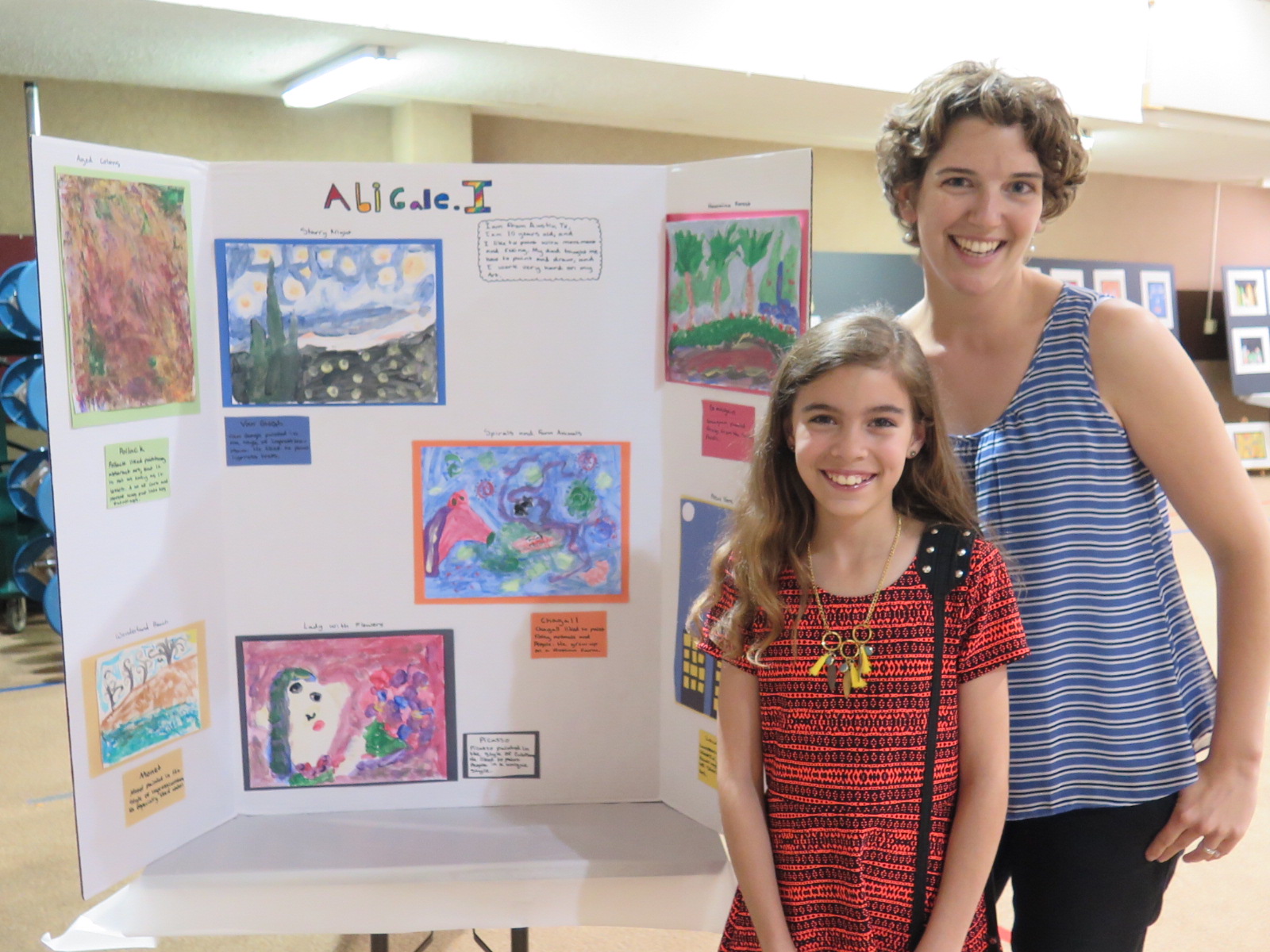
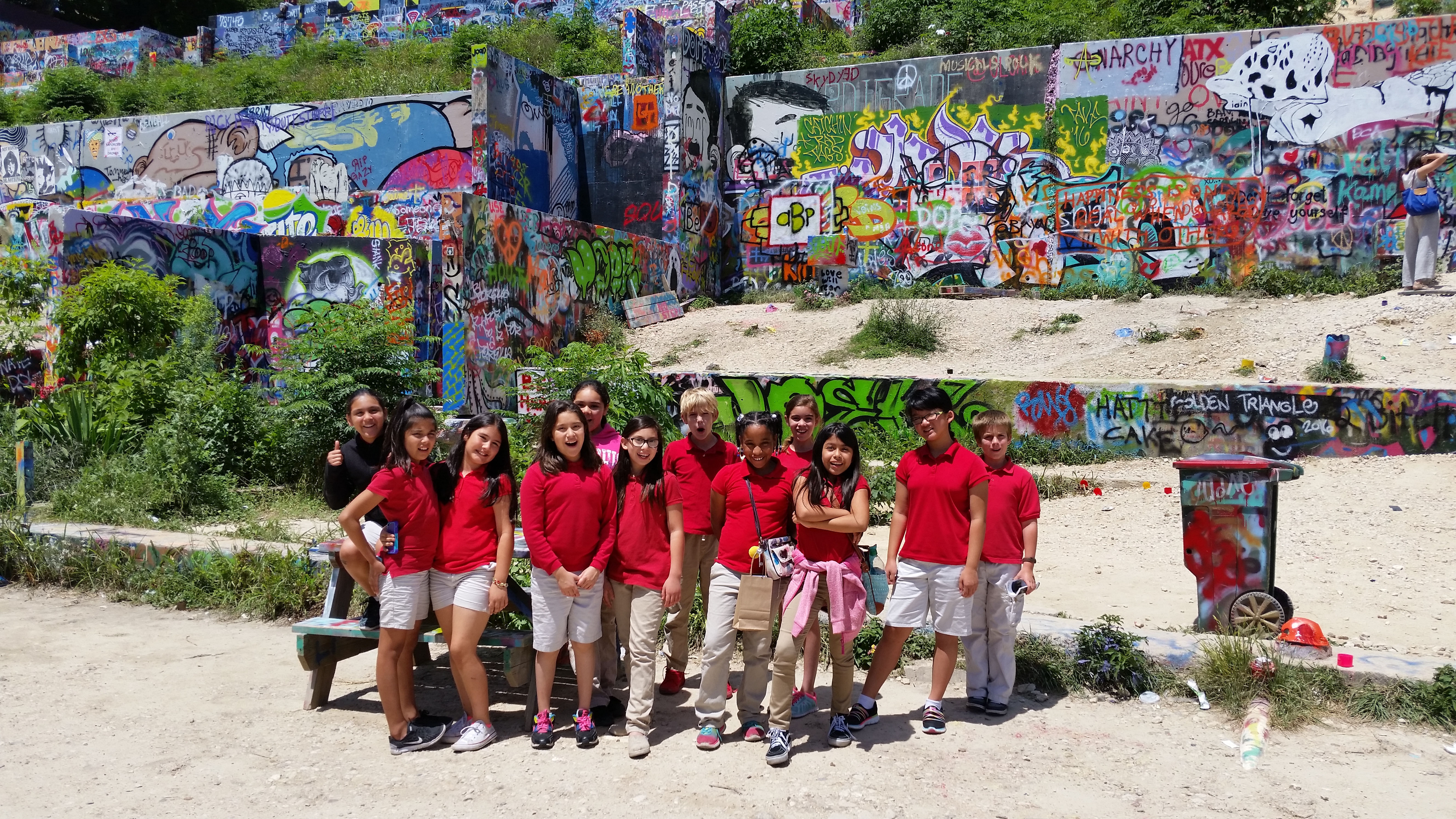
The students have discussed art throughout many historical periods and created pieces of artwork in many different styles in the after school program, every Thursday for an hour. In April, students showcased their work at Fine Arts Night, and even the parents managed to learn a little something they didn’t know previously. In the beginning of May they took the field trip to a local art museum and graffiti wall. A great contrast between fine and street art, and a great lesson about the importance and impact of both. As a direct result, students have become aware of how much art exists around them in the books they read, historical events they study, current events they hear about, and even in their social media feeds.
This project is off to a strong start and continue to impress us at the McCarthey Dressman Education Foundation. Here’s to a few more years of making art and creating history!
Learn More
- Art History Teaching Resources
- Art in Action
- Using Works of Art in Teaching American History
- Teaching History Through Art
Share this:

STARS: Real world inquiry excels to new heights at Research Ranch
Science, inquiry, project-based learning, and relevance take center stage in STARS.
At a time of such ecological uncertainty, when some of our greatest minds have given us 1000 years as a species until extinction, one thing is abundantly clear: the study of celestial bodies, near and far, has never been more important. And while 1000 years may be a bit far off to even comprehend, it behooves us to broaden our understanding of our neighboring planets in stars in hopes that when the time comes for us to leave our terrestrial trappings behind, we’re ready.
This is exactly what educators at George West High School have been working on for the past two years with their innovative STARS (South Texas Astronomical Research for Students) program.
“It has widely been assumed that scientific research and especially astronomical research was an endeavor to be pursued at the university level, and even then primarily by graduate students, certainly not at the high school level. STARS challenges that notion.”
-Kenneth Zeigler
Research Ranch Cultivates Learning
STARS is not limited to astronomy. At Research Ranch, tiny ranch by Texas standards of only 34 acres, introduces students to real research in the following fields of study:
- Astronomy
- Solar energy to electricity conversion
- Ecology
- Materials engineering
- New techniques in ranching (the solar ranch)
According to the report, in the first two years of this project all the areas above demonstrated tremendous progress in regards to research. Current efforts continue to focus the project primarily on astronomy, materials engineering, and solar energy.
A Converted Marching Band Trailer becomes a Mobile Astronomical Observatory
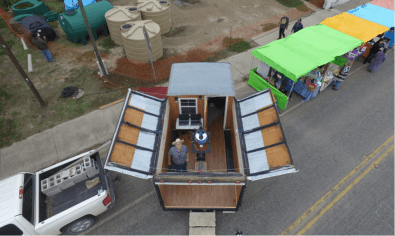
One of the most exciting developments of the past year was the STARS observatory telescope coming fully online to fully begin the program. It’s housed in the Mobile Astronomical Observatory, an 8 by 16 foot, 30-year-old converted marching band trailer.
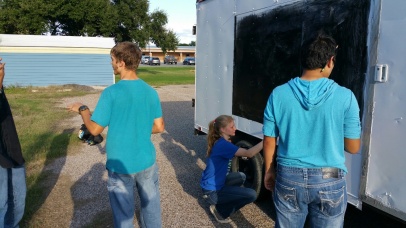
This year saw the final steps of the transformation into a scientific research facility. Even receiving a brand new coat of paint and its official logo as the school year began.
The mobile observatory is divided into a control room and telescope room section. Most of the student researcher’s time is spent in the control room which is climate controlled.
The primary instrument used this year with the telescope was the thermoelectrically cooled CCD camera that could be used to take timed exposures of the heavens as well as make measurements of star brightness at a variety of wavelengths. This opens the possibility of making measurements of color and surface temperature of stars or the shapes and rotational periods of asteroids. The student operators, CCD camera and main telescope are shown in the slideshow below.
Rocketry Club Qualifies for National Competition
The observatory isn’t the only thing to be excited about. An unexpected offshoot of the astronomy program has been a new rocketry program. Interest in the mobile observatory inevitably led to an interest in all things space, and it led students to pursue the Team America Rocketry Challenge. Two teams from George West High School participated in this nationwide competition. The challenge was to build a rocket that would carry two raw hen eggs to an altitude of exactly 850 feet and return them to the ground undamaged in a flight time between 44 and 46 seconds. This is a most difficult task and one of the two teams (Cloud 9) qualified for the national competition.
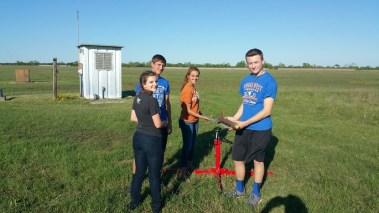
Solar Voltaic Arrays Support Real World Agricultural Inquiry
The solar ranch is another reason to celebrate this program. Junior Ryan Repka has been working on two different designs for photovoltaic arrays. The first one is the semi-active array. The first panel will be finished before the end of the school year and will be installed during the summer of 2016 with the entire photovoltaic array to be completed during the fall 2016 semester. At that point, Ryan will begin a semester long study as to the best ways to maximize efficiency, from panel positioning to water cooling of the panels.

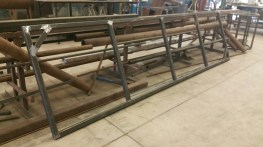
Through repositioning of photovoltaic arrays as part of the STARS research project, an additional 15-20% solar power efficiency can be realized.While this project exceeds expectations for high school students, it continues to expand student learning opportunities.
In terms of agricultural and ecological research, the project is just beginning to make progress. In fact, an intriguing future project is taking shape. Not far from the observatory site and solar ranch, the first trees of a citrus orchard have been planted. The observatory site is a bit north of the main citrus growing region of Texas. Being on a hill out of areas of cold sinking air help, but this area is subject to serious killing frosts about one year in four. To combat this problem, the students and educators plan to develop what they are calling a microwave defroster. This system could be used to prevent frost damage on citrus but would be even more useful on more sensitive winter vegetables such as lettuce. They plan to initiate a pilot project for this device no later than the winter of 2018.
It truly is an exciting time to be a student or a teacher participating in the STARS program at George West High School. There’s something very powerful about teaching and learning while simultaneously working for a better future for all humans.
Learn More
- Citizen science: Real-world applications for science students (Learn NC)
- Inquiry-Based Learning in the Science Classroom (Edutopia)
- Finding Real World STEM Problems for Student Inquiry (Middle Web)
Share this:

Waltham Integration Network: Connecting Teachers to Investigate and Improve Digital Learning Across Contexts
It’s easy, as an educator, to feel like an unmoored ship in a vast sea. Pricks of light in the distance indicate other ships, largely unreachable. Even though teachers in the same districts and schools work closely in a physical sense the gulf of communication can be vast and many good ideas and techniques are not shared and refined amongst a larger pool of minds.

This is what Elizabeth Homan, of Waltham Public Schools in Waltham, MA, is changing with her program Waltham Integration Network: Connecting Teachers to Improve and Investigate Digital Learning in Urban Settings. While the name is complicated, the aims are simple. This project proposed to bring together a small group of teacher leaders from across an urban school district to engage in collaborative inquiry and teacher-research related to the integration of digital technologies in classroom practice. The goal of this project is twofold: (1) research the challenges and possibilities of digital integration in a high-needs urban school district, and (2) increase the capacity of the district’s digital professional learning opportunities for teachers.
How can collaborative inquiry for teacher development work?
By keeping research at its center, engaging teachers in conversations about “what works” for their digital learning, and helping teachers support their colleagues in reinventing their teaching to meet the needs of today’s very “plugged in” learners. The first year was largely preparatory with an articulation of goals and a formulation of an action plan that would turn into quarterly meetings.
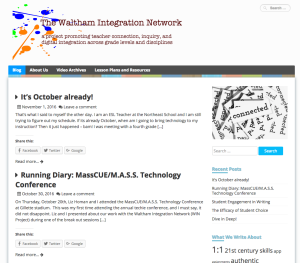
At the start of the project, cohort members worked to identify the student learning goals for the year and articulate how their goals could be measured using qualitative or quantitative classroom data. These goals could be as simple as learning how to create and fully integrate a new tool, such as a classroom website, or it may involve an entirely new approach to instruction, such as “flipping” the classroom. Later in the year, team members shared classroom artifacts, lesson plans, and examples of videotaped practice from their classrooms with other team members in quarterly face-to-face workshops, connecting their practice with research-based approaches and examples.
The project will continue to meet these goals through recruitment of additional teachers, teacher mentorship of new recruits, sharing teacher work through the blog and, in the summer, development of video evidence of teacher practice with technologies.
How can collaborative inquiry impact educators?
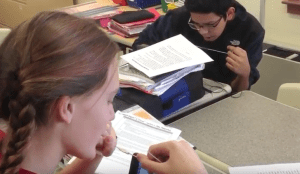
The educators at Waltham Public Schools have been busy. In their first year they have recruited research assistants to help mentor teachers at the middle and elementary school levels. They have also developed a number of #WINproj spaces for sharing practice. From their blog (walthamintegrationnetwork.org) to their twitter hashtag (#WINproj) and Facebook page, these educators have worked this year to foster a digital voice for the network and to develop consistent expectations around the content and design of their website/blog and social media interactions. The teachers have worked throughout the year to archive photos, examples of student work, or videos of their practice, which they will use this coming summer to develop video reflections on their experience and what they have learned. And because the project and leader are new to the district, much of this year has been about building relationships, learning what’s happening in the buildings, and building excitement for the project.
How can collaborative inquiry improve instruction and pedagogy?
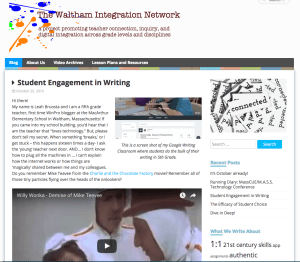
The first and most obvious benefit is a larger network of teachers and educators who have bridged the communication gap. Partnerships between teachers have formed both online and in person. The teachers are also becoming increasingly proficient with web writing and familiarity with the online tools such as the blogs and message boards. It’s clear they’ve been doing something right as they’ve been asked to present at the National Council of Teachers of English in November which will serve to get the word out about the program and widen the network of the educators involved.
How could this program be improved?
According to the team, the biggest challenge the program participants faced was that of time. Not expectantly they had trouble with the temporal logistics of getting so many teachers in the same space physically. More support and training for online meeting spaces is paramount for the growth of this project.
On a lesser, but no less important note, they found that some teachers needed to get acclimated to blogging. While they’re perfectly proficient in the classroom, the public articulation of methods of pedagogy doesn’t come easy for everyone. More support for first time bloggers would have a large impact on the productivity and communication between all parties.
Learn More
- Connecting a Classroom: Reflections on Using Social Media With My Students
- A Guidebook for Using Social Media in the Classroom
- Social Media Made Simple

 McCarthey Dressman Education Foundation