
Author: 525carmen
Teaching for Social Justice creates change for teachers and students
Back in May we introduced you to an innovative and exciting project being spearheaded by Scott Storm and the educators at Harvest Collegiate High School called Teaching for Social Justice. While it’s only been a few months since the original blog post, “Teaching for Social Justice transforms curriculum, educator mindset and improves student learning” (May 2016), it’s been two years since the McCarthy Dressman Education Foundation funded this project. We are exciting to be brining you another update on this effort to improve effectiveness and equity in high school classrooms.
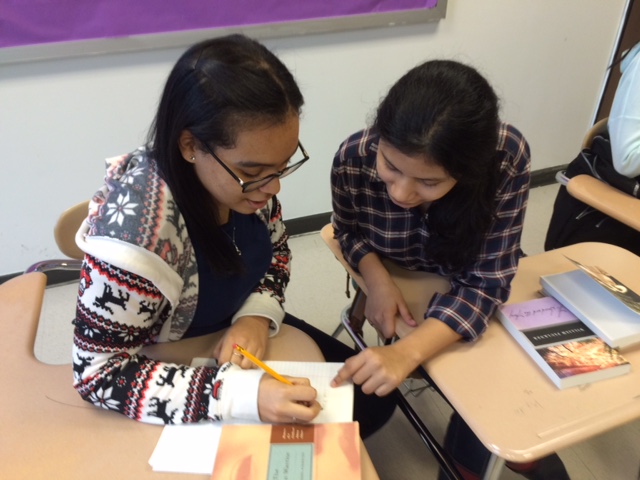
Before we can talk about what they are doing now, let’s revisit the project’s original goals. “Teaching for Social Justice” aims to design curriculum, support the development of teachers as social justice educators, and disseminate these lessons to progressively wider audiences. This requires a break from a dominant paradigm which views teaching as monologic, teacher-centered, and lecture-based. The following goals have been explored in this project.
- Design and revise courses to better support teaching for social justice.
- Conduct cycles of teacher inquiry and action research to further teaching and learning.
- Develop and grow a Professional Learning Community in our school that shares curricular materials, participates in peer-observation, and supports each other in formal and informal ways toward the goal of teaching for social justice.
- Disseminate our curriculum and research to teachers, teacher-educators, and the public.
Recipient Scott Storm explains, “In our work, we saw that the conception of teaching for social justice has been theorized from disparate, sometimes contradictory, epistemological and ideological positions. Our project aims to mesh these theoretical stances in locally situated practice.”
What kind of teacher development efforts strengthen social justice pedagogy?
In the past two years they have made a lot of progress on the following four goals. We’ve shared them below with some examples of student work in this teacher development project.
Goal 1: Design and revise courses to better support the Teaching of Social Justice
- Curriculum Retreats: In the first year of the project they held Curriculum Retreats to promote ideas for new courses, start to draft the courses, and reflect on their past work.
- New And Revised Courses:
o Fall 2014, New Course: “Identity Quest”
o Fall 2014, Revised Course: “Constructing Monsters”
o Spring 2015, New Course: “Lit Crit & Grit”
o Spring 2015, New Course: “Pop!”
o Winters 2015 and 2016, New Course: “Writer’s Retreat”: They created a new course for the January term (two weeks) called “Writer’s Retreat” in which 26 students traveled to a cabin (with no Internet, television or other electronic distractions) for several days. Many of the students came out of this experience with stronger writing skills.
o Fall 2015, New English Course—“Human Nature”: In this class students read Locke, Hobbs, & Rousseau alongside Lord of the Flies and Macbeth. Students explored ethical and moral issues and participated in group simulations and role-playing activities that identified ethics, oppression, and privilege.
o Spring 2016, New English Course—“Dysfunctional Love”: This course engaged students in questions around love and relationships through some classic literature. Students read Romeo and Juliet, Jane Eyre, Their Eyes Were Watching God, and other texts. Students talked through difficult issues while also analyzing textual form.
o 2015-2016 School Year, New Course—“AP English Literature & Composition”: This past year they offered an AP English Course open to all students. They recruited from special education classes, English Language Learners, low-income students, and those who are normally not encouraged to take AP at other schools. Students read poetry and many works including: Pride & Prejudice, The Sound and The Fury, Mrs. Dalloway, Invisible Man, Waiting for Godot, The Woman Warrior, Beloved, Midnight’s Children, Angels in America, and The Brief Wondrous Life of Oscar Wao. Some essential questions that guided these courses were “what is literature—and what do we do with it?” and “what is the relationship between form and meaning?” The assessment at the end of the unit asked students to use the theories of literary modernism to create their own short stories, poems, paintings, or musical scores, and then present and/or perform these at an evening coffee-house event.
Goal 2: Conduct cycles of teacher inquiry and action research to further teaching and learning.
- Teacher Research Team: For the past two years, Teacher Research Teams conducted inquiry on their teaching. They developed essential questions, created research designs, discussed relevant scholarship/literature, collected data, and analyzed the data together using qualitative research.
- English Department as Teacher Inquiry Team: Teachers focused on two areas: reading literary texts and writing as process. For each of these inquiries, they read articles about pedagogy around close reading, conducted their own close readings together, analyzed student work, planned for implementing shared practices, implemented these practices, analyzed post-intervention data, and created a plan for future directions.
- Classroom Ethnography Project: Teachers in the teacher research team served as ethnographic participant observers in each other’s classes (one or two periods a day). The dialogue between the teacher and the researcher improved both teaching and student learning.
Goal 3: Develop and Grow a Professional Learning Community in our school
- The Teacher Summit: A “Teacher Summit” was a day-long conference where half of the faculty presented on the courses they developed, on a portfolio of their work, or on one of their teacher inquiry projects. The faculty were excited for continued improvement of their teaching and the enhancement of their professional community.
- Teacher Learning Teams:
o Year One: In the first year of the project they brought together three teacher teams focused on: 1) descriptive review of student work in order to reflect on and refine teaching practices; 2) designing and implementing intervention plans for high-need students.; and 3) use of Critical Friends Group protocols from the National School Reform Faculty to fine-tune curriculum and assessment. Year one was about deep understanding and new knowledge.
o Year Two: In the second year of the project, they had the teachers from each of these teams use the skills that they had learned the first year to spread this learning so that all teachers became more familiar with these methods.
o Teacher Study Group: Each semester the Teacher Study Group chose a focus of study. In the fall, the group looked at “questioning as pedagogical tool” and in the spring they explored “formative assessment.” Each week they read a peer-reviewed journal article about the topic and discussed how this could improve their practice.
o Whole-Faculty Peer-Observations: In year one they had all teachers conduct a series of monthly peer-observations. They continued this practice in year two which has been helpful for the teachers to see themselves as a community of practitioners rather than individual silos.
Goal 4: Disseminate Curriculum and Research
There has been substantial progress in this area. They have written conference proposals, presented at conferences, and had articles published about their work!
- Publication: Storm, S. (2016). “Teacher-Researcher-Leaders: Intellectuals for Social Justice” Schools: Studies in Education. 13.1 57-75.
- Academic Conference Presentations:
o February 2015, “Tensions in the Teaching for Social Justice” presented at the University of Pennsylvania’s Ethnography in Education Forum.
o December 2015, “Adolescents Enacting Disciplinary Literacy in English Literature: Education for Social Justice or Model of Cultural Reproduction?” presented at the Literacy Research Association’s annual conference in Carlsbad, CA
o December 2015, “Epistemological Tensions in Teaching for Social Justice: A Case Study” presented at the Literacy Research Association’s annual conference in Carlsbad, CA.
o February 2016, “Reading Literary Criticism: Method of Critical Liberation or Tool of Cultural Assimilation?” presented at the University of Pennsylvania’s Ethnography in Education Forum.
- Other Presentations/Workshops
o Fall 2015, Critical Pedagogy Workshop for Student Teachers: Swarthmore College
o Fall 2015, Grammar/Writing Pedagogy for Justice Workshop for Student Teachers: Swarthmore College
o Spring 2015, Teachers as Researchers Presentation for pre-service English education students at the University of Pittsburgh
o Spring 2015, NYC Writing Project Teacher to Teacher Conference—one of our colleagues presented her work at this conference.
Additionally, they have submitted a number of presentations that are currently under review.
How does social justice pedagogy impact teachers and students?
They have definitely been busy and while it is great to hear what they have accomplished, it is even more important to hear about how they are doing. We also wanted to know how the teachers responded and how this has impacted students.
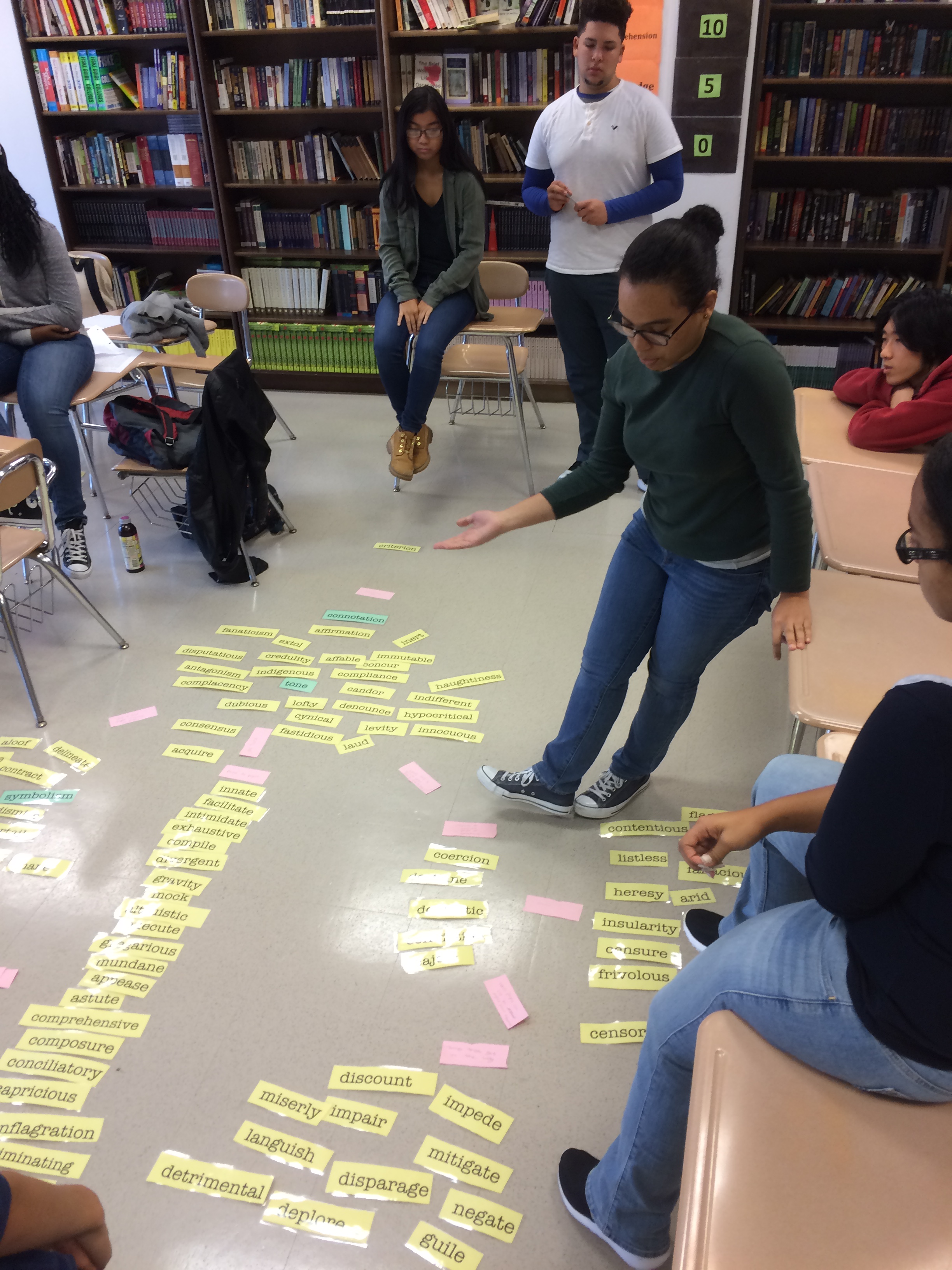
This project allowed teachers to collaborate, build shared professional knowledge, and to work toward social justice. In the first year of the project they did a lot of capacity-building as they worked to develop the skills of teacher-researchers. This year they have gotten to reap the benefits of putting so much time and energy into these activities.
In a reflective meeting in August before they started the new school year, one teacher remarked, “it’s incredible how much we learned…and now we get to use it all year!”
The English department in particular had some major achievements. They continue to create new courses that leverage students’ strengths and engage them in rigorous intellectual instruction. This has been a benefit to both teachers and their students.
At the school-wide level, the team is seeing the benefits of training teachers in peer observation, descriptive review, equity interventions, and Critical Friends protocols. Teachers who were participants in these groups last year are leading these activities in their departments and their grade teams. One teacher remarked, “I just feel like the tools that we have now let us actually focus on teaching and learning more and that to me is what improves practice.”
Finally, a big achievement this year has been having some of the teachers going to and presenting at conferences. At the conferences they shared their work with a wider audience. By doing this, they are hoping to improve practice beyond their school.
The teachers are not alone in being recipients of the benefits of this program. Students across the school were able to engage in interesting and deeper work through the courses that they have designed. Through the AP English course, students who might not have access to this level of work in another school were able not only to access the curriculum but also really thrived in this environment. One of the assessments in the course had students write an 8-10 page literary analysis on a book and question/topic of their choice and then present their work in an oral defense to a panel of external examiners. The examiners used a rubric to score the student’s work. One of the teachers, who has been doing this type of work for a decade, said of the students, “I have never seen so many students get [the highest level of the rubric] on projects like this. Our students have really learned how to do so much.”
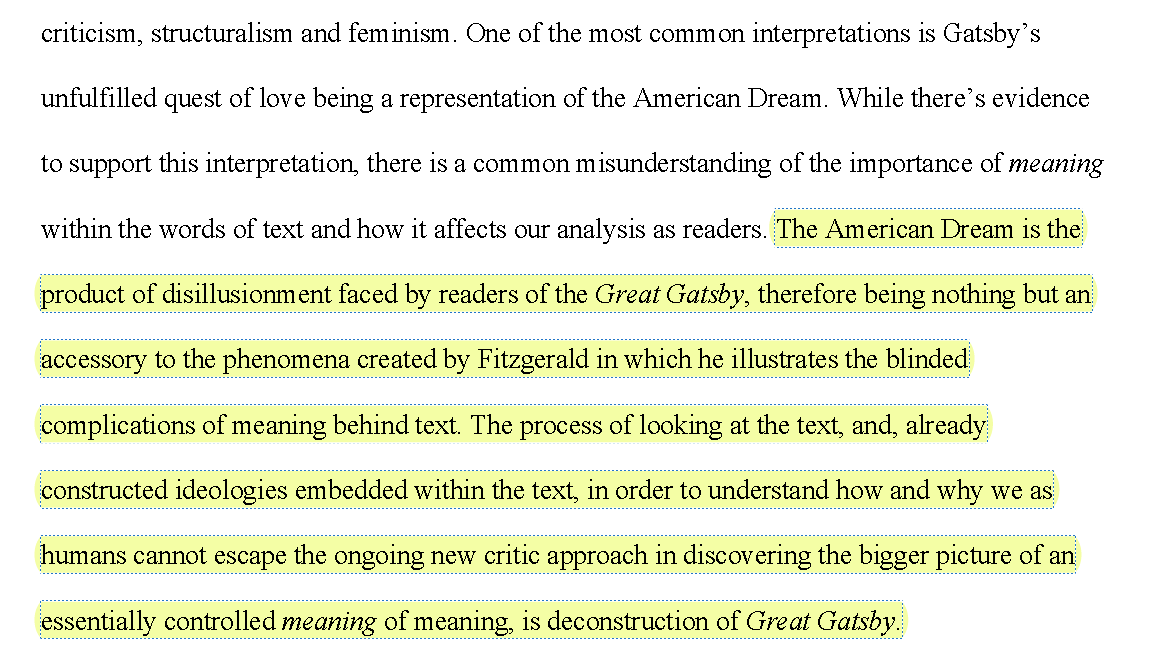
Here is a sample of some students and the titles of their papers:
- Leo R. – “Flower Imagery in Mrs. Dalloway“
- Elijah R. – “The Comparative Use of Animals in Modernism and Postmodernism”
- Omar C. – “To Close Read or Not To Close Read: Resolving the Epistemological Tensions Between Close Reading and Pleasure Reading”
- Emely H. – “The Gothic: A Solace for Humanity”
- Michelle H. – “The Coalition of Inner versus Outer Self in Palahniuk’s Fight Club”
- Francisca H. – “Accepting the Inevitable: A Discussion of Death and Time in Mrs. Dalloway and Beloved“
- Vanessa P. – “Forming Identity with Talk-Story in The Woman Warrior”
- Lucas G. – “Beloved: Redefining Motherhood Through the Language of Obligation”
- Nafissa M. – “Literary Era and the Construction of Motherhood”
As exciting as this project is, it’s not without it’s challenges and ways to improve. While many of the challenges from year one were about creating buy in and building capacity, the challenges the second year have been about sustainability. The teachers have found themselves with less time budgeted for professional development meetings than they would like but they are working around it as best they can. Additionally, it has been difficult to get teachers to write about their experiences for wider audiences. To address these for next year, they are scheduling more time to write, reflect and think about how they can frame their learning for wider audiences. They have also started to have more teachers present at conferences to “get their feet wet” in conversations beyond their school.
Challenges aside, it sounds like this program is reaping benefits that ripple far beyond teacher development. Students who were never given this opportunity are excelling and teachers are learning to better serve those students. The pursuit of Social Justice is an invaluable virtue but this program goes to show it can also be a valuable teaching tool.
Where can I learn more about implementing a social justice curriculum?
- Education for Liberation Network (http://www.edliberation.org/)
- Rethinking Schools (http://www.rethinkingschools.org/)
- Six Elements of Social Justice Curriculum, International Journal of Multicultural Education (2012)(http://www.ijme-journal.org/index.php/ijme/article/view/484)
Share this:

2nd Grade Startups with a Global Impact: A Pay it Forward Project
iPad Based Business Project Benefits Children in Africa
It is far too often that education simply consists of students taking in and regurgitating information, which does little but display retention skills. What is oft overlooked is how each student is developing as a person. So what if you could tie school work and kindness together in a way that teaches 21st century skills? That’s what the educators at St. Vincent’s Catholic School in Salt Lake City are doing. Their Pay it Forward project aims to both educate students about venture capitalism while also tuning up their social conscience by letting needy students in Africa be the beneficiaries of their profits.

How does Pay it Forward work?
The idea is exceedingly simple. At the start of Spring 2010, educator Rhea Hristou, project creator, gave each of her second graders five dollars.
“The children were asked to use that $5.00 as “seed” money to begin [their own startup] – some type of business venture that will turn the $5 into at least $15.00. Over one month, they could use the money for ingredients for cookies or lemonade for a food stand, posters for a garage sale, beads for jewelry to make and sell, or whatever they choose. At the end of that month, students do a presentation displaying their venture.”
Hristou then assisted the students in taking the profits and using them to gain entry for three children in Africa to a school sponsored by the Sisters of Notre Dame Mission in Uganda. Pretty cool, right? The project doesn’t stop there.
Integrating iPads
Hristou also requested ten iPads for technology center in her classroom to allow her students greater access to information about the children they were benefitting. Describing the benefit of these devices, she noted how many learning opportunities arose: “…apps to learn about the geography, cultures of Africa, a newspaper app to look up African current events, Math apps to help with funding and money collection, tools like Skype or email to communicate with the children in Uganda, and use presentation apps to help students present their ideas to the class.” The class based set of iPads were made available not only to the second grade, but also after school for other projects.
How can you replicate this program?
While ten iPads may seem like an expensive purchase for a school, they were lucky to find an independent donor to match five iPads if they were able to come up with the remainder. Remember, iPads aren’t necessary to begin teaching your students about business while also filling them with a social conscience. Using resources like those available through Pay it Forward Day, the charity chosen could be anywhere in the world.
When students know that they are making a tangible difference in their world, it fills students with a sense of pride while also bolstering their motivation to succeed at their task. If real lives are being affected, then the effort must be greater. An important lesson for any student.
This project started in 2010, so where are they now?
Student created startups were varied and ran the gamut from dog walking to making and selling pot holders to bake sales but the results were astounding! While only aiming to make a ten dollar profit on each student, Hristou was filled with pride to receive back an average of sixty five dollars a student. The iPads also were a hit, both for the teachers and the students. It allowed them unprecedented access to their African counterparts, while also providing tools and resources that expanded and shaped their world view.
The “Pay It Forward” model is an obvious success. Educating students while also giving them a more worldly view of their planet and filling them with a social conscience. In an increasingly globalized world these skills cannot be emphasized enough. For more information on the ideas in this project, please visit the websites below.
Further Reading:
- Teaching Kindness: More than a Random Act (Edutopia, 2013)
- Pay It Forward Kindness Project (Random Act of Kindness Foundation)
- “Pay It Forward” Service Learning Project Gathers Momentum (Beaver Creek City Schools)
- Pay It Forward Day Kit for Schools (Pay it Forward Day)
Share this:

Lesson Study: Improving Science at Willow Field Elementary School
One of the biggest factors in positively impacting student learning is teacher’s self efficacy and skill in communicating quality instruction. If you aren’t a natural communicator, this isn’t the easiest skill set to develop. With an increased emphasis placed on ELA (English Language Arts) and mathematics instruction at the elementary level, science instruction seems to have fallen through the cracks. The teachers at Willow Field Elementary in Liverpool, NY have developed a proposal to address that very issue. How do they plan on doing this? Through “Lesson Study.”
What is lesson study?
It’s also known as kenkyu jugyo in Japan, where the technique was developed. It’s focus is on teacher collaboration to discuss learning goals and planning actual classroom lessons. This is followed by observation and revision so that other teachers can benefit from it. According to their original proposal, a lesson study cycle begins with a team of educators who determine the content on which they want to focus for the purpose of preparing a research lesson. In this case, it is with a focus on science education, though the model can be adapted to fit any subject.

How does the project work?
The project team meets regularly to study and discuss the national, state and local standards and reviews educational research regarding the content. In Willow Field Elementary’s case, they’ve been studying the new National Framework for Science Teaching, recent journal articles from the field of elementary science education and consulting with the Department of Science Teaching at Syracuse University to become more knowledgeable in elementary science content and teaching practices. Using what they’ve learned, they will collaboratively write a lesson plan, which will be taught to a group of students while at the same time having the lesson video taped for further discussion. All of this is done with the end goal of improving instruction. How specifically? By starting to teach more science than in the past, teachers gain comfort and improve teaching effectiveness. When combined with studying the national framework, research literature, and the data they have collected about student’s learning process and outcomes, teachers can more easily pass on what they have learned to other professionals.
What did the teachers study?
Three questions, specifically, are guiding teacher learning in this project.
- How do we design science instruction that makes students’ thinking visible?
- How can we meet our students’ needs and simultaneously address the new science framework?
- How will evidence of students’ learning be used to help us revise our original lesson?
How did they find the time?
Because lesson study requires teachers have time to plan, observe and reflect with each other, scheduling is difficult. With the logistical challenges inherent in this model, they have certainly faced an uphill battle. Gearing up in August was required; team members needed time to plan. The project went into full swing of September 2012 with nine elementary school teachers and a building principal meeting a Syracuse University doctoral student and science education professor to discuss the overview of the Lesson Study process to those new to the method. Shortly after, they met to determine their over all research focus.
Their goals:
- Students will be problem-solvers.
- Students will be inventive, creative and curious.
- Students will be risk-takers.
To help focus their efforts, teachers broke into three smaller teams, each dedicated to a grade and content specific focus.
- 2nd Grade Science- Understanding the Specifics Matter (two second grade teachers, doctoral student)
- 4th/5th Grade Science- The Force of Magnetism (two 4th Grade and one 5th Grade teacher)
- 6th Grade Art – Observational Drawing to Support Sketching in Science Notebooks (two Art teachers, one 6th Grade and one 3rd Grade teacher)
Once the teams were in motion, they could follow the traditional model for the next semester. So after a year and a half of the program, how is lesson study impacting the students and teachers of Willow Field Elementary?
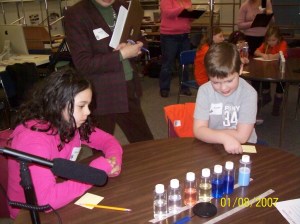
Impacting teachers, students, and administrators
With time, support and resources for lesson study, what were the teachers of Willow Field Elementary able to achieve?
- Teacher participants gained further pedagogical content knowledge with regard to science content knowledge, observational drawing and uses in science and, constructivist methods of teaching elementary science (versus direct instruction)
- Teacher participants expressed increased self-efficacy and confidence
- Students gained experience collecting data
- Students benefited from the many revisions to the lesson during the lesson study cycle
- Students engaged in authentic scientific experimentation
- Students gained content knowledge
- Students who volunteered on the Professional Development Day had the benefit of seeing their teachers as learners. They also experienced pride in playing a role in their teachers’ professional development.
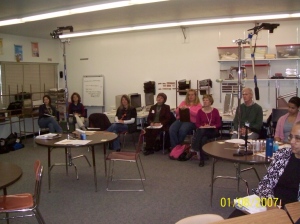
In their project update, members wrote “Our lesson study team garnered increased support from the district administrators.” Seeing the model in action “allowed them to recognize the benefits of lesson study as an authentic model of professional development.”
How could the project be improved?
With all of the positive outcomes, members reflected on ways to improve on their experience. They found it especially challenging to differentiate lesson study for the experienced and novice participants, though in future iterations this problem may simply solve itself through teacher collaboration. Scheduling and logistics, as always, was a nightmare. But the biggest problem they faced was that the current school structures do not support lesson study mechanisms. In order to widely adopt this model for nationwide consumption, a massive overhaul of our education system would be needed. However, for the individual school this method can prove invaluable in improving teaching and communication skills thus facilitating improved learning.
Further Reading
- Lesson Study: How Can It Build System-Wide Improvement? (Lewis, 2008)
- What is Lesson Study? (Teacher’s College, Columbia University, Undated)
- Lesson Study (Wikipedia, 2012)
- A Mathematics Leader’s Guide to Lesson Study in Practice (EDC, 2010)
- Chicago Lesson Study Group (McDougal, 2011)
Schools in the News using Lesson Study
- ‘Lesson Study,’ Japanese Strategy for Improving Teachers, Catching on in US (Lutton, 2012)
- Sherwood Middle Schools pilot collaborative Lesson Study, taken from Japan (Hammill, 2014)
Share this:

Project Go! Lab Classrooms offer job-embedded professional development
One of the problems facing educators today is the lack of time for personal and professional development. With overcrowded classrooms and heavy course loads it has become very difficult for many teachers to hone their craft or improve their teaching skills. This is a problem the teachers surrounding Project Go! at Rowe Middle School in Portland, Oregon are trying to address. Their strategy? Take a proactive approach to change, by improving and sharing their teaching craft through lab classrooms. Project Go! involves an ongoing series of lab classes, opening classroom doors to coaching in the midst of teaching. With classes often at capacity and teachers being forced to take their own, limited, time for professional development this project takes bold steps toward teacher development.
How does it work?
The first step Project Go! has taken to ensure teachers and educators have the time for professional development is to write half day substitutes into the budget. That way a teacher isn’t required to come in on an evening or weekend and they can rest assured that some one is teaching their students. With this half day, the teachers are given the opportunity to participate in teaching labs. Teachers participate in a preliminary meeting, lab site learning and debrief. With teachers being given opportunities to participate in these half-day labs, Project Go! supports their goal that “every educator engages in effective professional learning everyday so every student achieves.” Instructional practices, behavior management techniques, and pacing are all things to be discussed and deconstructed for the benefit of the educator. When paired with ongoing assessments, the teachers quickly find themselves with more education resources at their fingertips.
Teachers need learning structures that empower them professionally and enable them to collaborate with colleagues. (2010, ASCD)
So what do these labs look like?
Each lab takes a half day: an hour for a pre-briefing/discussion of what will be seen, the actual teaching, and the debrief to name and discuss what was seen, analyze the teacher choices and the student engagement. This model integrates the professional learning along with the learning of their students who will be gleaning the direct benefits of their teacher’s professional development. Not only that, the students will get to observe the review process where the teachers discuss with each other on their progress as teachers, and at the same time giving the students a better understanding of the tools and methods that will be utilized in the future.
How is this program unique from other professional development or peer review proposals?
Project Go! supports the newest teachers in the profession, setting the environment of a school in which doors are open, risks are taken, feedback is honest and immediate change is an ongoing reality. Mid-career teachers, who have often gotten used to being the only adult in the room, will find it energizing, intellectually stimulating and welcoming to either share their practice or participate by watching and dialoguing about a colleagues craft. Veteran teachers are equally invited into an invigorating opportunity for growth; many veteran teachers have so much to teach our newer teachers but have no means in which to do so. By facilitating the purposeful opening of the teaching practice Project Go! provides a time and place for teachers to participate without hamstringing them by adding extra workload.
What has been learned in the three years this project has been operating?
According to their report, the program has had a significant affect on teacher learning and therefore on student learning.
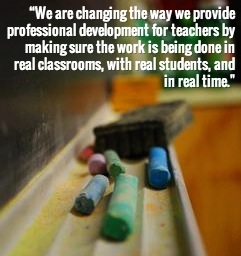
“We are changing the way we provide professional development for teachers by making sure the work is being done in real classrooms, with real students, and in real time. This models the metacognitive processes that teachers go through as they plan, teach, and reflect. A pleasant and meaningful surprise that has manifested itself throughout the past three years has been our students observing and learning from our metacognition. Students share how much they learn from listening to the teachers dialogue with one another. They give us insight into what is helpful/not helpful in the process of teaching new information.”
That being said, they have not been without their challenges. Scheduling labs around different teachers classroom schedules has proven more difficult than anticipated. The educators also have some worry over the sustainability of the project, due to the sub coverage. This lead them to reach out to Portland State University and form a partnership with the goal of identifying new strategies for sustaining this model. Though new strategies will take time to implement, teachers are encouraged by the practice of learning from colleagues in action.
All in all the teachers of Rowe Middle School have taken a very proactive approach to improving their craft and educational standards. Through collaboration and evaluation, these teachers have seen improvements in both their educator peers and students. With budgets growing ever tighter, this may be a difficult model for other schools to follow, but the rewards are clear. Any school wanting to create an environment of professional cross-pollination, where teachers are working with teachers and students gain the benefit should look into building a Project Go! of their own.
Related links
- Demonstrating Teaching in a Lab Classroom (2010, ASCD)
- Laboratory Classrooms – Frequently Asked Questions (2011, EBCERI)
- Learning by Observing Colleagues in Action (2006, Responsive Classrooms)
Share this:

CFCO: Service Learning Builds 21st Century Skills, Engages Teens
Connecting lessons learned in classrooms to real world applications is one of the great challenges in teaching. Teachers and administrators at Harrison High School in Evansville, Indiana have come up with an innovative new classroom model to address that challenge.
What is the CFCO?
They have created the Center for Family and Community Outreach (CFCO), which aims to use student skills (built around academic content) to create documents, multimedia, events, presentations, and more for over twenty non-profit organizations in their community.
Educators are able to connect students with members of the non-profit community, creating a symbiotic relationship wherein the student gains valuable real-life skills and the non-profits get a free service. Not only is it easier to engage teenage minds directly if they feel a sense of involvement and contribution towards the betterment of their community, it also helps teens build invaluable skills for the transition into their adult lives.
How can service learning support non-profits and drive engagement for learners?
There are many service learning projects around the country, but few, if any, that drives content in the classroom around producing products for non-profits. The CFCO model has elements of numerous trends in education, such as:

- project-based learning
- student-centered learning
- and new technology,
but is truly innovative for the level of engagement it produces for students.
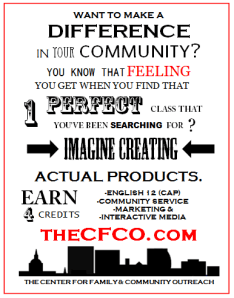
This program has seven distinct goals.
- Research the non-profit groups and social issues in students’ communities.
- Hold ‘Round Table’ discussions with local experts on special topic issues using the latest online literature and information.
- Tour the non-profit facilities and volunteer with local organizations and events.
- Collaborate with leaders on project ideas and write formal proposals
- Use project based learning and technology to design and create materials
- “Pitch” their ideas through benchmarks and final presentations
- Openly communicate with the community through blogging and video reflections.
Importance of Community Support
Students are immersed in the tangible application of skills from the classroom, and since students know what they are doing will have a real impact on their community, it is readily apparent how seriously they take it. The program has relied on a tremendous amount of community support and is currently in it’s third year of operation. Fortunately they continue to draw in new non-profit partners based on the satisfaction of their initial partners and publicity the projects have generated for the mission of non-profits in Evansville.
What is the impact?
So where are the teachers and students of Harrison High School now, a year into the program? Reports have come back with very positive results, including:
- Students have a sense of ownership and engagement in their work as well as their community.
- Non-profit data shows that the community’s organizations have much higher perception of the schools and teens’ abilities after working with the CFCO.
Moving forward they plan on moving the program to a half day model, to increase student exposure, as well as continuing to nurture community involvement and contribution.

With such an easily adaptable model, educators around the country should be looking to Evansville, and Harrison High School in particular. How they proceed could very well dictate how dozens of similar programs pop up in the future. Community involvement and concrete links between lessons learned in the classroom and real world applications are key in both advancing education as well as building a student body that is invested in the present and future of their community. While the saying “It takes a village to raise a child,” has been politicized as of late, I think we can all agree that fostering a child’s investment and involvement in his or her village can only lead to positive results.
For more information
Related articles
- NSSE Results 2013 (teachingresearcher.wordpress.com)
- Creating Space for Marginalized Voices: Re-focusing Service Learning on Community Change and Social Justice (knrajlibrary.wordpress.com)
- Online Student is Set on ReStore-ing Ethics (blogs.msbcollege.edu)
Share this:

Opening Classrooms with Teacher-Led Learning Communities

As we wrote earlier this year, “Among the many challenges facing us in education one of our most formidable foes is the comprehension gap, across all content areas, between students of low socioeconomic status and those of high socioeconomic status.” The multi-year project Opening Classrooms to Close the Knowledge Gap‘s goal was to enhance students’ ability to develop literacy across the diverse content areas. In the first post, we shared how teachers at School for the Future in New York City had addressed students’ ability to work autonomously through Peer Assistance and Review seminars that took place after school.
In this post, we’ll look at how the project worked to build a school wide culture of Teacher-Led Professional Learning Communities.
A professional study group around lesson analysis
To support the goal of building this teacher-led culture, School for the Future teachers engaged in a professional study group around a shared text, John Hattie’s Visible Learning for Teachers. This book challenged their thinking and pushed the teachers into incorporating many of the exercises into their own coursework. A specific example from the book gave instructors a simple three-step process to analyze their own lessons by looking specifically at the learning intentions.
- What is the outcome I am tracking progress toward?
- How do I track progress toward that outcome?
- How do students track progress toward that outcome?
In establishing the learning intentions the teachers looked at two things; skills necessary for participation in a democratic society and skills necessary for success in secondary and post secondary school.
Improving feedback on persuasive writing
What did teachers choose to focus on? Persuasive writing.
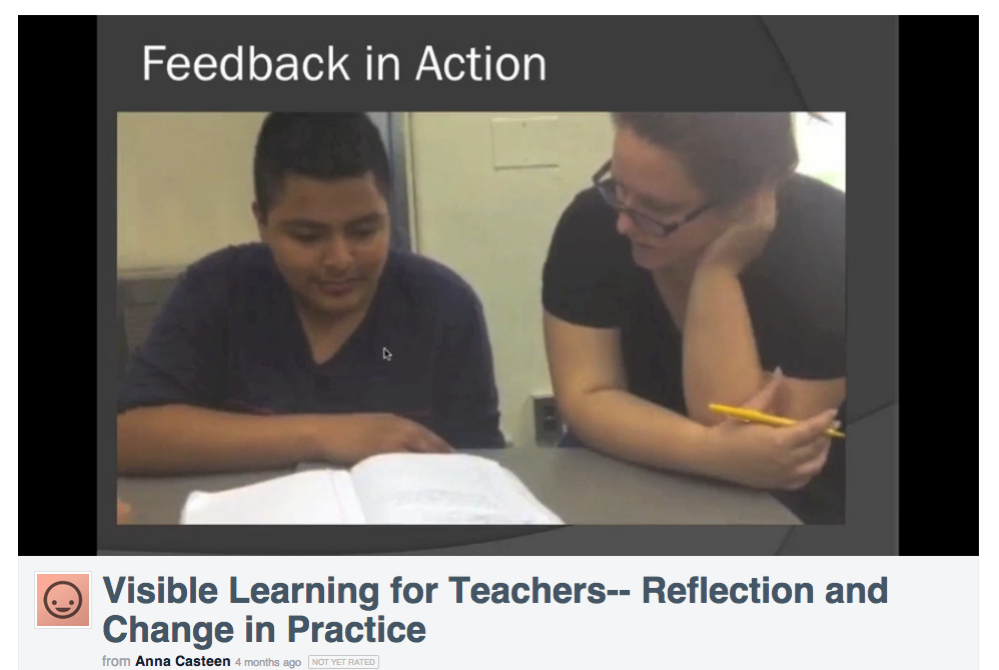
Although the teachers understood the need to zero in on writing performance, the students were somewhat harder to reach. To assist, teachers established another simple method of tracking student progress that included a common rubric that was used on every persuasive writing task and an online grading platform accessible to students, teachers, and parents.
Every participant teacher constructed a video that encapsulated how participating in the study group enhanced their professional practice. During the first year, only 11th and 12th grade teachers participated while in the second year it was expanded to include 9th and 10th grade teachers.
After the first year each of the participating instructors constructed a video encapsulating what they gained from participation and how the study group improved their professional practice. In this example, Scott Chesler, Inclusion Teacher, explains the impact of the teacher led professional development community.
In the videos teachers spoke how the group led them to alter how they gave feedback to students, leading the students to get to know more about themselves as writers. Teachers noted in their annual report that they are attempting this change from the bottom up rather than the top down. For example, teachers like Stephanie Van Duinen (9th grade social studies) asked students for feedback about the course and then analyzed the information. When she learned that a signifigant group of students needed more feedback, she worked with her professional learning community members to form an action plan for providing “in the moment feedback” so that students could use the information to improve their work as soon as possible.
This was a highly rewarding experience as it forced me to reexamine my beliefs about my own personal practice and think not so much about my methods of teaching but about their effectiveness.
-Stephanie Van Duinen, 9th Grade Social Studies Teacher
School of the Future, Manhatten, NY
One teacher reported that the course helped him realize that student expectations have a high effect on performance so he reimagined his course to track individual student goals, regularly meeting with the students as he coached them forward. Jessica Candlin, 11th Grade English Teacher, presented how she used commenting features in Google Docs to support enhanced feedback for student writing in the slides below.
Teacher-led collaboration creates powerful connections
Although there was a certain amount of trepidation when new teachers were introduced into the program during the second year, the collaboration ultimately led to powerful connections between educators. Teachers reported they could have started earlier in the year to complete the project. While it seemed like March would be an ideal start time, as most teachers have “settled” into their schedules, it made it difficult for them to get their video materials together in time for the deadline. In the future, the teacher led professional learning community will be able to draw on the important learning experiences from this project and continue making an impact on student literacy.
Learn more
Explore the following articles about teacher-led learning communities to learn more.
- Redefining Professional Development as Teacher-Led Professional Learning – NWEA 2013
- Teachers, Learners, Leaders – ASTD 2010
- When Teachers are the Experts – Education Week 2009
Share this:

Microfinance in Action
How can high school students learn about globalization in an economics course?
In an increasingly globalized world the standard skill set of a global citizen is rapidly shifting. While it would be impossible to give the students every bit of skill and knowledge they will need to be competitive in the global marketplace, one program is setting about to make a small change in how high school students approach economics that looks to be paying big dividends.

The teachers at Southwind High School in Memphis, TN have implemented a completely unique approach to teaching economics students about globalization and microfinance.
The project, currently in progress, involves the students in project-based learning to address multiple student skills including:
- critical thinking
- decision-making
- global citizenship, and
- responsibility
So how has this school approached this project and how successful have they been in its implementation? This ambitious endeavor is projected to take three years to implement.
Incorporating Problem Based Learning with Global Economic Issues
For economics students at Southwind High, things have changed. No longer the victims of textbooks and lectures, these students participate in an integrated curriculum on globalization.
What does an integrated curriculum exploring globalization and economics look like?
First, students work in groups to develop awareness of important concepts for the project. Research topics include:

- United Nations’ Millennium Development Goals (MDGs)
- economic, political, and social issues of a particular developing nation
- use of microfinance to promote economic growth and sustainability
Next, using ‘future problem solving’ skills, the groups develop a solution to address those issues in their selected country.
Finally, students will present their findings to the Ambassador of their selected country. Presentations will also be shared in a guidebook entitled Microfinance in Action: A Guide for Teenagers that will be used to supplement other high school economics courses.
How are real world skills and field experiences incorporated into the project?
In addition to the web research conducted, student groups communicate via Skype to high schools in developing nations. Using social media, students promote awareness of global economic issues, publishing research to a global awareness blog and producing video documentary segments. The blog also invites other schools to get involved or start their own program.
Students also have the opportunity to travel to various locations in the United States and Central America to document individual stories of those most affected by economic issues. During that time students will produce presentations on research they have conducted on economic, political, and cultural issues on selected developing nations.
What is the impact of this project so far?
During year one, students created the project website where you can watch the project unfold. (http://shskivamemphis.weebly.com). Groups have completed their Global research and the first two chapters of the Guidebook have been drafted and are being revised. The students and participating faculty traveled both to the Global Youth Institute as well as to Mississippi to film their documentary projects. So far, the program served 150 students at Southwind as well as teachers from ten different schools.
How can this project inspire other educators?
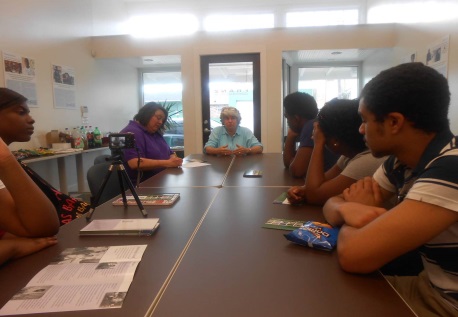
By taking such a unique and global perspective on economics, teachers Biba S. Kavass and Landon Hawthorne are insuring their students will have a much easier time navigating the global market place due to the early exposure to real economic disparity issues and their subsequent research and involvement.
Project-based learning and integrated curriculum are powerful opportunities to engage students and build real world skills. Here are some resources to explore for developing similar projects for your students.
- Future Problem Solving Skills Program
- KivaU
- OneHen
- Integrating Globalization into the Curriculum
- Three Ideas for a 21st Century Global Currlculum
- Teaching Global
- New York Times Learning Network: Globalization
Related articles
- Pbl (pcreadingposts.wordpress.com)
- The Joy of Project Based Learning (nsparks89.wordpress.com)
- Project Based Learning in a 1:1 School (karenmcvay.com)
- The PBL Super Highway… Over 45 Links To Great Project Based Learning (21centuryedtech.wordpress.com)
Share this:

Digital Art Afterschool Studio: An example of a Career Oriented Curriculum
Why does this matter in real life?

One of the chief complaints you hear from students is “How can I actually apply what I’m learning to the real world?” And while there is no helping Algebra in that department, there are a myriad of other subjects that can benefit from a dose of real world interaction. This is what the Digital Art Afterschool Studio is doing. It’s taking a cue from larger real world curriculum programs, such as Career Oriented Curriculum and focusing on digital artistry and community involvement.
What is Career Oriented Curriculum and how can it benefit students?
According to District Administration, a website focused on creative solutions for school districts: “A summer job for a 16-year-old typically involves serving coffee, scooping ice cream, or babysitting the neighborhood children. Some students at Miami-Dade County (Fla.) Public Schools, however, spent their summer vacation designing a children’s Web site for the city of Miami Beach. An increasing number of students are finding themselves mingling among professionals with internships in local businesses—the culmination of a work-based learning curriculum.” These real world experiences are invaluable to students as they do two things:
- Reality Check Experiences like this show the students the real life application for what they are learning.
- On the Job Experience Projects like the digital after school studio create professional connections that go beyond graduation and help move our students forward professionally.
One organization with a stellar track record in this area is the National Academy Foundation (NAF). Since 1982 they have worked tirelessly with teachers and schools to create and implement career-oriented curriculum. Schools that work with the NAF will frequently require an internship with a local business before allowing the student to graduate. According to NAF:
“Over 90 percent of NAF students graduate from high school, and four out of five students continue to college or postsecondary education. Of those students, 52 percent earn a bachelor’s degree.”
How do you do it?
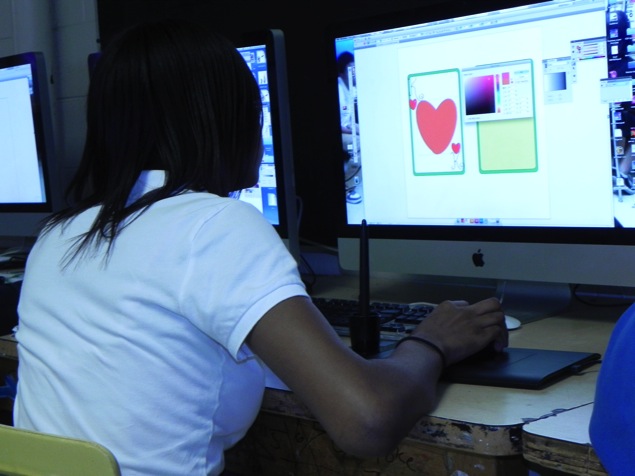
So how are the teachers and students at Overton High School, where the Digital Art Studio program has been in full swing for two years, applying the idea of career oriented curriculum to their specific needs?
According to their proposal “The after-school Digital Arts Studio program … enables students to build professional-level skills, as they develop their artistic portfolios. … The students will be introduced to client-based projects where they are expected to develop a working relationship with the client resulting in a marketable product.”
The program operates similar to a small graphic design studio. Taking place three times a week for two hours after school, students have the opportunity to really put work into a portfolio, and increase the possibility of scholarships and if a professional internship is tacked on, some AP credit. Projects are introduced from the needs of real world clients who the students and teachers reach out to. The projects can be anything from helping a local business create a print add to designing a website for a church event. This helps create crucial bridges between the school and the community around them, ultimately strengthening both.
This program has had to start small, accommodating only a few students at first. The principal and instructors consult with local ad agencies to create an interview process for students to simulate a job interview. The students selected work together to create a marketing campaign to alert the community to their presence and start soliciting clients. It is their hope that this model will, after a couple years, become self-sustaining.
What is the impact of a Career Oriented Curriculum?
So where are the students that have already passed through this program? Here are just a few of the success stories.
- Olivia Campbell, a second year participant, was awarded a full scholarship to attend University of Tennessee’s summer program for her Digital Art exhibited in the West Tennessee Regional Art competition last winter.
- Darion Beasley, King Hobson, and Maurico Farmer (all second year participants) were selected as three of the thirty-three students chosen to be represented in the Frist’s Museum’s exhibition Tennessee’s Top Young Artists.
- This year’s West Tennessee Regional Art Competition just released their awards and participants currently in the program won Best Graphic Design work, Best Photographic work, and placed in several other categories.
- One of the program’s participants, Cesar Pita, was just offered a $66,000 scholarship, the Presidential Scholarship, from Maryland Institute College of Art in Baltimore, one of the finest art colleges.
And these are just a few stories of success as this program continues to grow.
It’s clear from the work that NAF does and how Overton High School applies it to their own program that career-oriented curriculum puts students at a huge advantage over their peers that do not participate. By giving students an education grounded in reality, rather than existing in the abstract on the white board, we strengthen their chances of succeeding in the real world. Forging professional connections early on only increases the chance of future employment and education. By also giving students a personal stake in how their work is perceived by the community at large we give them the opportunity to push themselves to create something they can be proud of.
Learn More with these Related Links
- Career and Technical Education: Research
- Linking Learning to Life
- Career-Oriented Curriculum Delivers Critical Skills
- Proof is in: Career-oriented education works
Share this:

Inquiry, Relevance, and Citizen Science: A Roadmap to Successful Science Projects
When students tackle science hands on, they can save the world!
If inquiry is meaningful, real world practices improve student understanding.
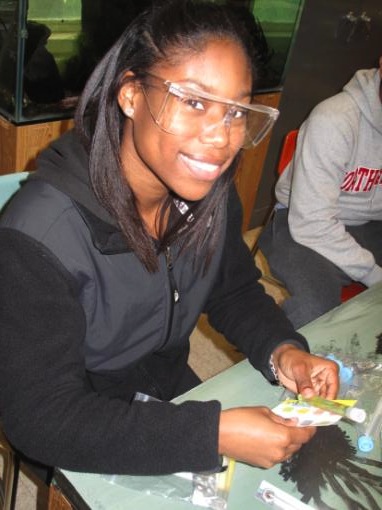
Memorizing the periodic table, a formula to determine the circumference of an atom, or the genus of a frog can be important, but let’s face it… you’re looking at an uphill battle when you are staring down the barrel of sixty drooping eyelids trying to explain why it is important that the student retain this information.
There is ample evidence that students retain very little from lectures in science classes. There is a reason for this – when you are given lists of equations, tables, or dozens of names to memorize it can be difficult to see where this makes an impact in the real world.
So how do we change this?
Simple. We help students impact the real world using practical inquiry into local and global science. Or better yet, take the classroom to the science! Whether students are contributing data to global honey bee research or graphing the skies, citizen science allows students to participate in global scientific inquiry. As explained here, integrating inquiry based science meaningfully in the real world is a tall order for any educator. In this post, we will share with you an example project and supporting resources to inspire this integration in your classroom.
How do educators integrate scientific inquiry and real world relevance?
The Water Quality Project: A Map to Understanding was reported by Linda Weber of Natick High School in Natick, Massachusetts. The goal of this project at is to let students “do” science like real scientists by observing, questioning, and ultimately coming up with a solution to a problem that can be shared with the larger community. In the short term, participation allows students to see and experience the process of scientific inquiry first hand, rather than having someone dictate it to them. In the long term, students who participated would see how the decisions they were making now would impact their lives in the future. According to the National Science Teachers Association’s position statement:
“Scientific inquiry reflects how scientists come to understand the natural world, and it is at the heart of how students learn. From a very early age, children interact with their environment, ask questions, and seek ways to answer those questions. Understanding science content is significantly enhanced when ideas are anchored to inquiry experiences. “
What strategies can be used to increase the real world relevance of the inquiry process?
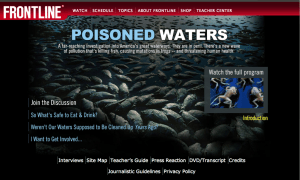
One of the long term goals of this project included helping students see how the decisions they make today influences their future. This ambitious goal required teachers to frontload curriculum earlier in the year and to engage students with relevant narratives (like PBS’ Poisoned Waters) and a guest speaker assembly including local and regional water quality scientists.
All of this preparation helped students prepare for real world and hands on activities for the project. These included:
- Helping out their community
For the annual Charles River Watershed Association’s clean-up day, students and teachers removed a variety of trash, from traditional cigarette butts and paper to more unusual things like television sets. For the nearly 50 students that participated (on a school vacation weekend, mind you) the experience was insightful. Class discussions about and concern for their environment lingered into the following weeks in class. These shared experiences became the “reason” to investigate water quality in the community rather than the “just the wrap up activity” of the project.
-
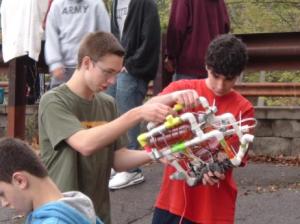
Environmental Science and Robotics classes at collection sites test and launch robots, then collect water samples to be analyzed at the site and in class. Photo from Linda Weber, Project Awardee. Collecting local data
After the students had returned to the area to collect water samples. They used collection robots they built during their classroom time to reach water samples they couldn’t normally get to. Using technologies like wikis, blogs, and Google Maps they were able to share their results instantly with their classmates. - Contributing to global datasets
The project also included research for the testing parameters of The World Monitoring Day Organization or World Water Monitoring Day. The Water Quality Project isn’t the only program in the United States doing this. Many other schools (in over 24 countries) are participating in The World Water Monitoring Challenge. It charges its members to educate and engage students and citizens in the protection of international water resources.

- Presenting the results
When all the research was said and done there was a “massive poster presentation” where every student was required to present his or her findings and share ideas for how to improve the water conditions in their community.
Why does it work?
When learning is meaningful, the impact is tangible.
When students have the opportunity to showcase their skills to a larger audience than their teachers or peers it helps to internalize the lessons they learn in the classroom. This benefit accumulates when the students can see themselves using inquiry-based science to make a real difference in their communities.
Learn more about integrating Citizen Science in education
- British Science Association: The 3Rs of Citizen Science in Education
- Zooniverse
- Audrey Watters: Five Apps that Encourage Citizen Science
Share this:

New York City Urban Debate League
When debate and students come together, great debates happen.

This month’s blog presents the New York City Urban Debate League (NYCUDL) and how it has flourished despite few resources. It’s been rated among the nation’s top after-school programs by many leading education organizations including the National Endowment for the Arts, National Council for the Humanities, and First Lady Michelle Obama calling it, “one of the top arts and humanities based programs in the country.”
According to Erik Fogel who is the driving force behind the NYCUDL,
The Great Debaters program is so successful and so simple and can be replicated to any school. All students can be Great Debaters!
Why debate?
With our nation slipping behind many other countries in the subjects of math and science (2013, CNN) one may find it hard to justify a course of study with no immediate application to tests on basic skills. Unless you’re a lawyer there are very few jobs that will pay you to research and argue a subject.
So again, why debate?
Debate engages students on a deeper and more meaningful level than most classes because it forces students to engage in more serious subject matter and view important issues from many angles.
What type of knowledge, skills and abilities does debate support?
- Rigorous and Critical ThinkingDebate participation promotes problem-solving skills, viewing issues from multiple angles and teaches students to synthesize a large amount of information.
- Master Multiple Subject AreasDebate students learn about current events, politics, philosophy, critical studies, economics, environmental studies, international studies, geography, culture, race, and public policy.
- Listening and Note-taking SkillsDebate requires that you become an excellent listener and good note taker. This helps students learn the material more profoundly and helps them to get better grades.
- Cognitive and Academic Vocabulary SkillsDebate students often read and write at a level 25% higher than their peers.
- Mental and Emotional MaturityDebate forces students to engage each other in a mature and professional manner. It teaches students how others think, how to stand in the face of adversity, and ultimately teaches them self-confidence.
- Academic and Professional AchievementThe average debate student is in the top 10% of their class. Ninety-five percent go on to college and many debaters go on to have very productive professional lives and tend to be more politically active and engaged.
A great many leaders and important thinkers participated in debate. A few famous examples include Justice Sonya Sotomayor, and President’s Kennedy and Johnson.
…I joined the debating team…. That’s where I developed my speaking skills and learned to think on my feet…. You can have brilliant ideas, but if you can’t get them across, your brains won’t get you anywhere.”
-Lee Iacocca, former CEO of Chrysler
So what does a model debate program look like?
Debate competitions traditionally have been reserved for only the schools that could afford the very steep price tag. This means that the vast majority of inner city public schools lack the debate opportunities of their more well off counterparts. But if you want to see the exception that proves the rule, one need look no further than the New York City Urban Debate League (formerly the Bronx Urban Debate League) to find an ideal model. From humble beginnings in a single school in the Bronx, they have since expanded to over thirty-five schools, covering the entire New York City area with plans to expand further. Mr. Fogel said, “Thanks to the McCarthey Dressman Education Foundation we were able to expand our debate team to the entire Bronx and New York City by offering free debate tournaments to all students.”
Essential components of the program include outreach to schools and a wonderful website – but that’s not all. Once a school is identified, “we meet with schools and customize a plan to start a program (recruitment of debaters, curriculum, and teacher training). We match paid and/or volunteer high school, college, and alumni debaters to each school to serve as assistant coaches.”
The League offers specialized programs including policy debate, public forum debate, parliamentary debate, a girls debate league and more. Along with community and school efforts, NYCUDL also holds a free debate camp each summer. Alumni of the program receive college and career advising.
So who is the New York City Urban Debate League (NYCUDL)?
The NYCUDL, led by Erik Fogel consists of a collection of teachers, administrators and other volunteers. They meet with schools on an individual basis to plan customized programs, build a debate curriculum which includes hundreds of files of arguments and evidence, recruit student debaters, train teachers and other volunteers, and organize leagues. They provide the schools with free debate resources (books, handouts, lessons, and videos). Additionally, with all that they also hold two free tournaments every month, more often than not with free transportation to and from schools. Fogel explains, “These tournaments are foremost educational and motivational and so we distribute numerous awards. We provide support for member schools to participate in city, regional and national tournaments for free.”
So what has the impact been thus far?
One need only look at the NYCUDL’s yearly report to know that any resources spent on them is well worth the cost.
- Originally planned to expand into three to five schools, NYCUDL expanded to over twenty.
- Instead of offering a few free tournaments, they offer whole free leagues including an after school league, a weekend league, and a young woman’s league.
- NYCUDL teams have won the City Championship, State Championship, and 3rd, 4th and 5th places at the National Championships (a first for that Title I school).
Most importantly, students in the NYCUDL have 100% college acceptance among their graduating seniors. In fact, NYCUDL alumni often win multiple scholarships. If those facts don’t inspire a debate about the academic enrichment efforts you are implementing in your school, perhaps they should.
Considering starting a debate enrichment program?
To learn more about NYCUDL and the strategies highlighted in this project, visit these resources.
A Meta-analysis of the Impact of Forensics and Communication Education on Critical Thinking
Share this:

- ← Previous
- 1
- 2
- 3
- Next →
 McCarthey Dressman Education Foundation