
Uncategorized
The Rural Library Traveling Exhibit Project
Connecting Communities: The Impact of Great River Children’s Museum Education Kits
The Great River Children’s Museum (GRCM) brings engaging, hands-on learning experiences to children and families across Central Minnesota. Through a unique partnership with the Great River Regional Library (GRRL), the museum developed an educational initiative that reaches children who might otherwise lack access to exciting museum content. This program, which involves the distribution of rotating educational kits to libraries in the region, has already made a significant impact in the community.
Expanding Access and Building Relationships
The Great River Children’s Museum was successful in:
Raising Awareness about the Museum’s Future Location
The educational kits provided library staff with materials that helped them share information about the museum’s future location and offerings. Extra Experience programming, a collaboration between the museum and library staff, further helped raise awareness through community outreach.
Providing Access to Engaging Content
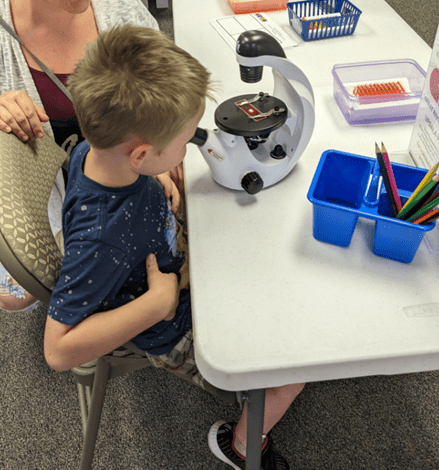
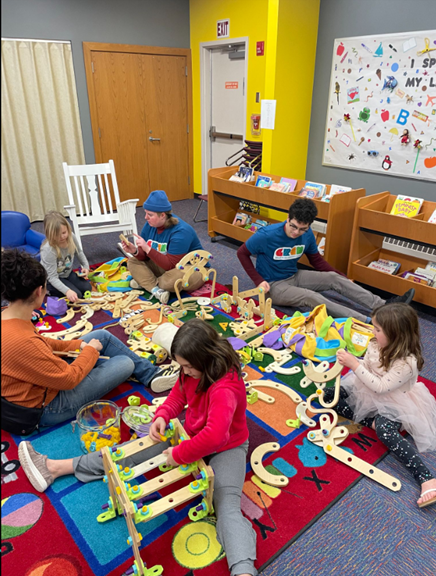
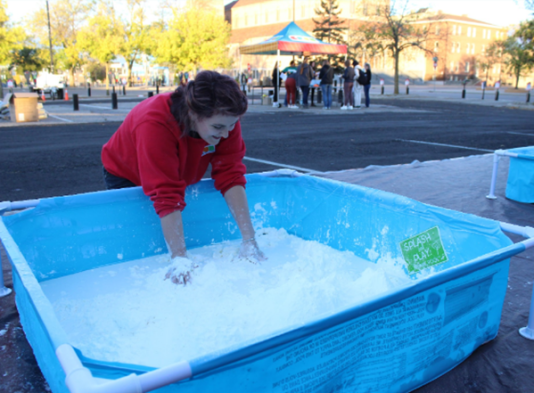
The project provided children and their families with educational materials and experiences that would otherwise be inaccessible. Each kit was carefully designed to reflect the content of the museum’s permanent exhibits. These kits included a variety of engaging materials, from coding bugs and foam dinosaur blocks to novel science experiments and weaving looms.
Strengthening Partnerships with GRRL
By building a collaborative relationship with GRRL, the project provided librarians with the training, materials, and programming needed to support their educational initiatives. This collaboration not only helped enrich library programs but also established a foundation for future partnerships between the museum and the libraries.
In parallel, GRRL aimed to:
Develop Lifelong Learning Partnerships
The museum’s programming aligned with GRRL’s strategic goals to promote lifelong learning. The kits encouraged individual libraries to collaborate with GRCM, ensuring that programming needs were met while fostering strong community ties.
Enhance Literacy Skills Through Museum Exhibits
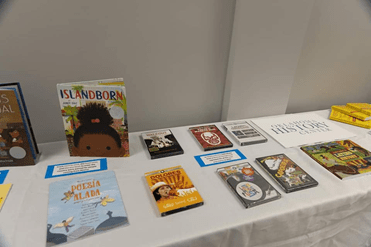
As part of the grant, library staff were encouraged to create themed book displays that complemented the kits. These displays further reinforced the connection between the kits and the development of literacy skills for children, offering a holistic approach to learning.
Connect Library Users to Museum Resources
Library staff encouraged visitors to sign up for the museum’s newsletter, keeping them informed about the progress of the museum and additional resources available as the project moved forward.
Impact on Learning: Connecting with Thousands of Children and Families

The museum’s educational initiative has already had a profound effect on learning in rural communities that are typically far from larger metro areas like Minneapolis and St. Paul. Many of the children served by this program would not have had access to the type of museum-quality programming provided by GRCM.
Additionally, the program has opened up new opportunities for collaboration with local daycares, schools, and early childhood programs. These partnerships have allowed the museum to pilot future exhibits and programs, which will support long-term learning as the museum prepares to open its physical doors in the Spring of 2025.
The museum’s outreach efforts have been met with enthusiasm, and the libraries involved in the program have often requested additional Extra Experience events due to their success. In fact, the program’s popularity led to GRCM being invited to present at two conferences to share insights into how the project has shaped community partnerships and educational efforts.
Continuing to Serve Central Minnesota
As the Great River Children’s Museum moves toward opening its doors, the success of this project will undoubtedly play a key role in shaping the museum’s future programming. The relationships built with libraries, schools, and community organizations during this project will provide a solid foundation for continued collaboration.

With the ongoing support of GRRL and the museum’s growing presence in Central Minnesota, the project will continue to inspire and educate children, fostering a lifelong love of learning and exploration in a way that’s accessible to all. Click the link below for updates on the Great River Children’s Museum.

Share this:

Breaking Barriers with “Aire Libre”
At Yerba Buena High School in San Jose, California, a groundbreaking initiative is transforming the educational experience for at-risk students. Introducing “Aire Libre,” a project designed to remove both literal and metaphorical barriers, provides students with the freedom to explore the natural world and unlock their intellectual and creative potential.
“Aire Libre” translates to “free air,” and encapsulates the vision for the project. Many students face challenges that limit their opportunities—being students of color, low-income backgrounds, and often part of immigrant families. The project has created an environment where they can break free from these constraints and thrive.
The TERRA Club: A Foundation for Growth
The journey began with the TERRA club, co-led by Karen Lo and Ivon Rodriguez. This inclusive space teaches students about gardening and animal husbandry, including caring for a flock of chickens. What started as a beautiful garden on campus has evolved into a dynamic learning environment, fostering “unintentional” learning through hands-on experiences.
Connecting Education and Nature
Aire Libre is not just about gardening; it’s about education that is relevant and enriching. The curriculum is linked to student learning outcomes and focuses on:
- Environmental Education: Students engage in activities that promote awareness of environmental issues while hypothesizing and experimenting with solutions.
- Culinary Exploration: By cooking recipes from various cultures using fresh, organic produce, students learn about nutrition and the importance of healthy eating.
- Mental Health Awareness: Gardening has been shown to alleviate stress, anxiety, and depression, making it a vital component of our project.
- Personal Development: Lessons centered around perseverance, responsibility, and patience help students grow into well-rounded individuals.
A Collaborative and Community-Centric Approach
Aire Libre was integrated into the AVID (Advancement via Individual Determination) program and made available to all interested teachers. A collaborative spirit among educators was developed while ensuring that every student had access to these transformative experiences.
Further, families participated in the garden alongside their children. This initiative not only strengthened community ties but also emphasized the importance of holistic health, encouraging families to bring fresh produce home.
Cultivating Learning: The Impact of the Aire Libre Garden Project
The Aire Libre garden project was initiated with clear and impactful goals: to establish a spiraling curriculum that integrates Schoolwide Learner Outcomes, environmental education, and the promotion of physical, mental, and emotional health. Our aim was not just to create a green space, but to turn it into a vibrant educational hub accessible to every teacher on campus.
In our efforts to integrate the garden into the curriculum, we collaborated with former students now at UC Berkeley to develop five reproducible lesson plans for grades 9-12. These lessons have been embraced by teachers across various subjects, including AP Environmental Science, Photography, Art, and English Language Development. The results have shown an impressive increase in student engagement. In 2023-2024 alone, over 2,300 students interacted with the garden—a remarkable jump from just 678 in 2018-2019. This growth reflects a deepening connection between students and their environment, and a growing interest from teachers to utilize this outdoor classroom for core instruction.
Led by five dedicated teachers, curriculum lessons were implemented in eleven classes. Through student surveys, we tailored lessons to reflect their interests, ensuring that the garden remains a space where learning is both relevant and engaging. Mini-lessons, often centered around student curiosity, have proven effective. For instance, one student with aspirations in entomology worked with peers to explore the role of insects in our ecosystem, leading to the introduction of beneficial insects like Black Soldier Fly Larvae in the garden.
Impact on Students and Teachers
The impact of the Aire Libre garden on student learning has been profound. Self-evaluations indicate that students feel they have improved across all areas of the Schoolwide Learner Outcomes. The garden has become a sanctuary for personal growth, fostering mental health and motivation among students. Teachers are also noticing the benefits; the experiential learning opportunities provided by the garden have sparked interest and engagement in subjects that may have once felt distant from students’ lives.
The Aire Libre garden has blossomed into a vital resource for our school community. With ongoing dedication and adaptability, we look forward to enhancing the curriculum and further enriching the educational experiences of our students. Together, we are cultivating not only plants but also a love for learning and a respect for our environment.
Be sure to visit the Instagram page for an in depth look: https://www.instagram.com/terra.ybhs/
Share this:

Bringing History to Life: Education Trunks Connecting Oklahoma’s Diverse Communities
To engage Oklahoma students with the rich, yet often overlooked, history and culture of the state, a transformative educational initiative was launched—creating two educational “exhibit in a box” trunks available for teachers to check out at no cost. These trunks focused on topics vital to understanding Oklahoma’s diverse communities: Latinos in Oklahoma and Migration and Oklahoma. By making these resources accessible to educators across the state, the project aimed to preserve and share the histories of Oklahoma’s people while supporting classroom learning.
Oklahoma is home to many communities, including a large Latino population, and the educational gaps regarding their contributions and stories have been significant. For example, many of the histories and experiences of Latinos in Oklahoma were undocumented, making research and preservation essential.
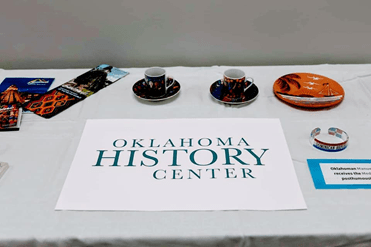
The project proposed created two educational trunks, one focused on Latinos in Oklahoma and the other on Migration and Oklahoma. The trunks were designed to be comprehensive educational resources that can be checked out by teachers, community organizations, and other educators, offering a hands-on way to engage students in learning about Oklahoma’s diverse history.
Research, Community Engagement, and Collaboration
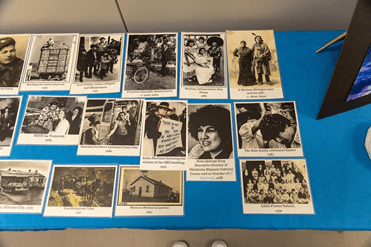
Because the history of Latinos in Oklahoma had not been widely documented, the team involved community experts. By working closely with local leaders, historians, and community members, the project grew beyond the original scope. Not only were the trunks developed, but valuable partnerships were formed, new educational materials were created, and additional resources for future research were collected. This collaboration allowed for a deeper understanding of the subject matter and ensured that the trunks would resonate with the communities they represented.
Impact on Students, Teachers, and the Community
The Latinos in Oklahoma trunk has had a significant impact on students. For many, it fills a critical gap in their understanding of the state’s history. For example, one teacher shared how the trunk materials enabled her students to connect with the subject matter in a deeper, more meaningful way than traditional textbooks could. Beyond classrooms, the project has also inspired new academic work. Jorge Luis Chavez, a public history graduate student at Oklahoma State University, used the research materials created for the trunk in his thesis and joined the team in a new role—showcasing how the project has led to further opportunities for the next generation of scholars.
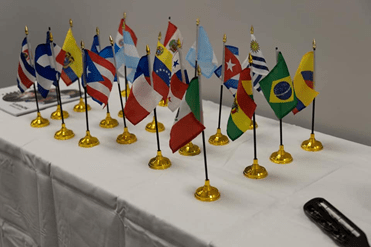
The project’s broader impact extends beyond the classroom. For instance, oral histories from members of the Latino community are now being collected and preserved for future research. These histories are included in the trunks and are being sent to research libraries for broader access. The partnership with Oklahoma City Public Schools’ Language and Cultural Services department has been instrumental. The department has helped refine the trunks and will support English Language Learners (ELLs), particularly through the inclusion of stories from newcomer students in the book Where the Rainbow Ends. This collaboration has emphasized the importance of culturally relevant, hands-on materials for ELL students.
Expanding Reach and Impact
As both trunks become available to a broader range of educators, they will become an integral part of Oklahoma’s educational landscape. With additional partnerships, continuous feedback, and the ongoing creation of supplementary materials, these trunks will play a key role in helping students across Oklahoma connect with the state’s rich and diverse history.
This project stands as a testament to the power of collaboration, education, and the importance of preserving the stories of all communities.
To request a trunk or view its contents, please visit https://www.okhistory.org/historycenter/trunktopics
Share this:

MDEF Recognizes Demands on Educators, Extends Deadline for 2022
McCarthey Dressman Education Foundation extends funding opportunity deadline to address educational enrichment for a generation impacted by the pandemic.
The Foundation website https://www.mccartheydressman.org includes information about eligibility requirements, program overviews, and previously funded projects. The extended deadline for applications is May 1, 2022.
Over $197K in funding was awarded by McCarthey Dressman Education Foundation for the 2021-2022 school year. According to Sarah J. McCarthey, Chair of the Foundation’s Board of Trustees, grants and scholarships awarded by the Foundation serve as a catalyst in maximizing the skills and creativity of educators at the K-12 levels and in cultivating pioneering approaches to meeting the needs of a generation impacted by the global pandemic.
“We are looking for proposals geared to enrich the education of a generation of learners who have survived the multiple years of dramatic educational change. We know that there are many demands on educators the past several years. Grant submissions have been lower than average and we recognize this as an outcome of the many issues impacting districts, schools and classrooms” noted Professor McCarthey. Successful applicants may receive funding of up to $10,000 per year for a maximum of three years by proposing a project, completing an application including letters of recommendation to show evidence of project need and possible impact.
Individual and small teams of teachers may apply for Teacher Development Grants to fund projects that provide groundbreaking K-12 classroom instruction. A recipient may receive up to $10,000 per year for a maximum of three years. Funded projects will impact unmet needs for students and encourage professional development in innovative areas for teachers. Applicants are not required to have a signed contract for the 2022-2023 school year as the funds are disbursed in the following school year when teaching assignments are in place.
Full-time students specializing in elementary or secondary education and who are in their final year of teacher education programs at New Mexico State University, University of California at Santa Cruz, University of Texas at Austin, and Steven F. Austin State University are eligible to apply for one-year Student Teaching Scholarships of $6,000 each. “Our objective,” commented Professor McCarthey, “is to help scholarship recipients acquire and strengthen exemplary teaching practices that inspire learning.”
About the McCarthey Dressman Education Foundation (501c3)
The mission of McCarthey Dressman Education Foundation (mccartheydressman.org) is to serve as a catalyst in maximizing the skills and creativity of educators at the K-12 levels and in cultivating pioneering approaches to teaching that result in dynamic student learning. The Foundation sponsors proposals that enhance student learning and educational quality, paying particular attention to those that best serve under-funded schools. Only 350 applications will be accepted this year. The application deadline is May 1 for proposals with significant potential to enrich the educational experiences for youth, but the application will close before that date if 350 submissions have been received.
Share this:

Growing to Scale: Theatrical Journeys-Embedding STEAM into Early Childhood Education Through Multi-sensory Guided Pretend Play
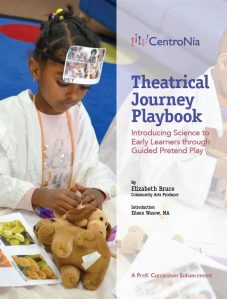
As students attend school during the COVID-19 pandemic, it is important to support learners in thinking “outside-the-box” and practice problem solving skills. Young children often engage in pretend play, acting out observations and experiences they have. Educators know children learn through play and the importance of providing children with interdisciplinary learning opportunities in languages they are familiar with. Through, her project, Growing to Scale: A 3-Phase Teacher Development Initiative of The Theatrical Journey Project, veteran CentroNía staff member and theater artist Elizabeth Bruce, developed and published a bilingual STEAM curriculum enhancement for Pre-K children to “become science problem solvers who remedy science problems through hands–on simulations of real phenomenon. They are experts who solve the problems and emergencies presented in each journey.”
The concepts presented in The Journey Playbook are valuable to educators as The Journey Playbook provides fun opportunities to guide young children through play as they learn STEAM concepts and develop problem solving skills to become experts in solving problems most children experience regardless of socioeconomic factors and educational setting. Located in Washington D.C., CentroNía overwhelmingly serves low and moderate income and immigrant families, a majority of whom are Latino, African, African-American, or bicultural. CentroNía’s holistic approach provides a bilingual, multicultural environment where children and families they serve receive the support and encouragement they need to succeed.
What were the goals of the project and how were they achieved?
Elizabeth Bruce wanted to support the expansion of the strategies presented bilingually in the Theatrical Journey Playbook: Introducing Science to Young Children through Pretend Play to scale by expanding a previously funded Teacher Development Initiative locally, regionally, and internationally through CentroNía’s Institute. To reach her goal, she created the project, Growing to Scale: A 3-Phase Teacher Development Initiative of The Theatrical Journey Project.
As one can imagine, with the undertaking of her project, there were many steps Elizabeth Bruce needed to accomplish. She planned to produce and translate The Journey Playbook, train educators, collaborate with educational and community partners and disseminate The Journey Playbook.
She planned to :
- Embed the Journey Project Teacher Development with CentroNía Institute’s Development of Laboratory Pre-K classrooms led by Master Teachers, who will become Trainers of Trainers with Four CentroNía Sites.
- Have participation from Pre-K Colleague Centers through linkages with DC Public Schools, Public Charter Schools, and Early Childhood Centers.
- Collaborate with the CentroNía Institute to present about The Journey Project’s methodology within the Early Childhood Education, STEM + Art =STEAM, or arts education sectors, locally, regionally, and/or internationally
- Create and distribute low-tech teaching tools for Journey Kits for participating Lab Classroom Master Teachers.
- Partner with CentroNía’s pro-bono partners, including engineering professionals to conceptualize/design low-cost, multi-use, inter-changeable, space-saving devices as Journey teaching tools.
- Print and broaden promotion of The Theatrical Journey Playbook and Teacher Development Program through press, social media, and professional networks.
What progress was made toward her goals?
Elizabeth completed final production and translation of The Journey Playbook! She co-facilitated in Spanish with CentroNía’s Food & Wellness staff, providing Professional Development/Teacher Training Workshops with CentroNía Teachers through a bi-weekly series of workshops on The Theatrical Journey Project to Early Childhood Educators. Educators participated in either the English or Spanish cohorts. The workshops/training included The Theatrical Journey Project content and process and integrated nutrition and wellness content explored through the journey process. She also provided bi-weekly Journey Project demo/training workshops with all Pre-K Lead Teachers and Assistant Teachers at CentroNía Maryland and co-facilitated (with Robert Michael Oliver, PhD, of The Performing Knowledge Project) workshops on Creativity and Dramatic Engagement for CentroNía Early Childhood, StudioROCKS, and Family Center teachers and staff. Here are a few other highlights from the project efforts:
- Facilitated year-round journey workshops with: Pre-K/Junior Pre-K/Early Headstart Classrooms at CentroNía.
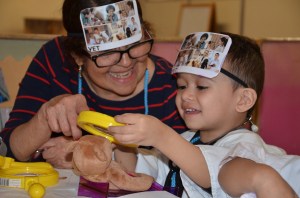
- Presented bilingually with Spanish translation workshops engaged in 1 ½ hour hands-on demonstration of The Journey of the Sick Teddy Bear, complete with teddy bears, stethoscopes, thermometer, vocal/physical warm-ups, etc. Explanatory debriefs followed each section of the workshop, with a Journey Project one-pager, sample journey, and curriculum methodology handouts were provided. Through this experience, Elizabeth received “Excellent engagement and feedback!”
- Presented a Training of Trainers on the methodology and pedagogy of the Theatrical Journey Project for Early Childhood Home Visitors.
- Facilitated a collaboration between CentroNía Family Center and the Society of Hispanic Professional Engineers (SHPE).
- Nurtured additional elements of the Journey Playbook/Project Teacher Training Project including:
- Disseminating mini Journey Kits to Early Childhood Classrooms.
- Planning CentroNía Family Center parent-child journey workshops.
- Developing new journeys with CentroNía Food & Wellness , specifically on topics of hydration, circulation, vitamins and nutrients, and oxygenation.
- Highlighting Journey Project techniques and methodologies
during teacher assessments using the “CLASS” assessment tool.
- One bilingual Journey Project collaborating teacher, Phoenix Harris, previously adapted her own variation of a Teddy Bear Journey as a final project for her Masters’ Degree at Trinity Washington University.
Exciting plans for the future
Project leaders participated and networked extensively at conferences and submitted proposals to continue to present, disseminate, and train teachers on The Journey Playbook.
The Journey Project is collaborating with the “Changing the Face of STEM: A Transformational Journey” event targeted to under-represented communities (Latinos, African-Americans, Native Americans) at the National Academy of Science in June 2018.
Elizabeth Bruce and others within CentroNía leadership have engaged in/are pursuing extensive and accelerated outreach to educational colleagues and organizations (nationally and internationally) receptive to Journey Project/Playbook teacher training, project collaboration and replication including English-language cohorts and one Amharic-language cohort (with translation). Additional plans include continuubg to facilitate workshops at CentroNía with Kinder/1st Graders; having weekly Journey workshops with CentroNía Universal Pre-K Classrooms, and continuing with fundraising for Journey Project Replication/Video Tutorials.
How has The Journey Playbook affected the learning of students and/or teachers?
The learning of students and teachers has been deeply affected both directly, through the extensive hands-on Journey workshops, hands-on teacher trainings/professional development, conference presentations, and indirectly through the production, promotion, and dissemination of the Theatrical Journey Playbook: Introducing Science to Early Learners through Guided Pretend Play, as well as promotion of the Journey Project introductory video, webpage, and promotional materials.
Extensive outreach to major educational partners, schools, and institutions has been and continues to be underway, with projects for teacher training/project replication or adaptation with educational colleagues and Journey Playbook distribution to at least 135 educational colleagues and targeted teacher training/project replication, funding, or other support activities.
PreK/Early Childhood Educators/Teachers engaged directly in collaboratively journey workshops, collaborations, mentoring/modeling, and other teacher training. The Journey Project began working for the first time with younger children, ages 2 ½ to 3 years old, with remarkably successful results when the project was adjusted to a slower pace with fewer activities per journey, plus repeating the same journey from week 1 to week 2. This addition allows the Journey Project at CentroNía to engage the same cohort of children for a full three years.
What challenges were experienced along the way and ideas for improving the project?
Elizabeth states, “I have learned that the process of engaging educational colleagues and their organizations as
targeted teacher training/project replication collaborators is a longer, more gradual process of deepening relationships and inviting educational leadership to observe/engage with the Journey Project, and especially to commit to teacher training/project replication. Colleague educational organizations, like most nonprofits and schools, are deeply engaged with their ongoing operations and missions and extensively committed to operationalizing, maintaining and funding their organization’s endeavors. Hence, learning about and embracing a new, even highly simpatico, methodology or pedagogy calls for a strong relationship and decisions by leadership to advance mutual commitment to in depth teacher training and project replication. Laying the groundwork for such partnerships, however, promises to come to fruition within a time frame of 1-2 years. Reaching critical mass for project replication/teacher training, thus, is anticipated once extensive ground-laying has been done.”
Further reading
Three Core Concepts in Early Development
Share this:

No Benchwarmers Allowed: Student Sportswriters
It’s pretty common to use sports as a means to get kids out of their seats and on their feet. But what if we flipped that thinking? What if there was a way to use sports as a way to engage students in writing and literature that they normally wouldn’t look at twice. That is what Jeff Mann at Belzer Middle School is trying to do with his program No Benchwarmers Allowed.
What is the project and their goals?
No Benchwarmers Allowed is a unique, hands on literacy project that will connect middle school students’ love of sports to reading and writing. This project will create two key components that no middle school has ever offered:
- Create the first nationally available sports magazine written entirely by middle school students,
- Create and offer the first middle school language arts class that will teach the traditional standards in a non-traditional and engaging way using sports literature and sports writing.
In short, sports will be “the bait” that lures students to becoming better readers and writers. What’s exciting about this project is Jeff’s clear knowledge of his students interests and passions, and how he planned on using a near universal love of sports to get them excited about reading.
What did they accomplish?
In August, the sports class was created and put into place. Once established, the planning for the curriculum was ongoing throughout the year. Meanwhile, the writing and reading for the course was adjusted to not only fit the students interests but also to help have completed writings from which to select for the magazine.
According to Jeff, the students displayed a clear interest in writing and reading more than they would have in other traditional language arts classes.
Students began submitting pieces from about October and they concluded the writing portion at the end of March. This left April for selection, editing, ideas, and publication of the journal. The journal was a big success, despite some timing hiccups that prevented publishing by the original date. But they were distributed by the principal throughout the school and a number of other educators were asking about how they could get involved.
In the end No Benchwarmers Allowed made students work harder than they thought they were going to have to, the writing took much more time than any of them anticipated, and the final product came out much better that they’d had hoped.
What challenges did they come up against?
While most students took a sports centered approach, there were still some outliers and the teachers needed to make adjustments to keep those students engaged as well.
Some of the larger challenges dealt with the publishing of the sports magazine, but with the premier issue out, and now armed with the knowledge of how it works timing wise – they ae much better prepared to tackle this in the new year.
Another idea for improvement would be to bring in more professional sports writers in order to demonstrate how a love of sports and a love of the written word can find a great synthesis between the two. Hopefully, this exciting program will continue to turn out great products in the form on their magazine as well as to keep the students plugged into books.
Further Reading
Share this:

Quest for STEM
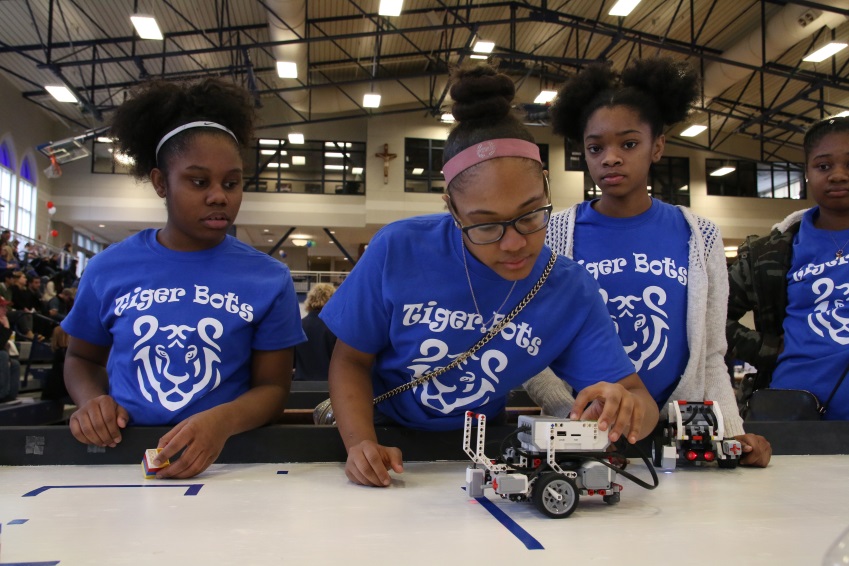
There are a lot of gatekeepers in this world, barring women from careers, hobbies, and involvement in popular culture. And this year is, for many reasons, been called the year of the woman. So, what better time to focus on getting our girls plugged into fields of interest that have been traditionally closed off to them by these arbitrary, and mostly unwritten, rules. This is what the Quest/STEM program at Marian Middle School is all about. Marian Middle School is an all girls school, so what better place to put this pilot program into practice.
Goal
In order to understand the things they’ve accomplished, we need to understand what their stated goal was when conceiving the program. The goal was to get Marian Girls to be workforce ready critical thinkers, creative problem solvers with the skills to be highly employable in STEM careers. But even simple goals often require multi-pronged approaches as there is no one avenue into the myriad of career possibilities in the STEM field.
What did they accomplish?
Broken down into a three-pronged approach, the educators focused on the following:
- Learning through project- and inquiry-based learning and the Engineering Design Process
- “Through their STEM Quest classes this year, students were given a choice in the projects they wanted to take on based on their interests and passions. Some projects that were undertaken included rebuilding two motorized scooters, creating original video games, developing animal-friendly beauty products, designing a school prayer garden, and building a virtual school tour for the school’s website, among other projects. All projects were real-world tasks requiring students to research, plan, design, build, and evaluate. They applied learning from their traditional courses to create original work. Working with peers through the design process challenged students to think creatively, to work collaboratively, and to continuously evaluate their work to improve their product. Though it can be difficult for adults and middle school students alike, through this process Marian students are building a myriad of skills that make them highly employable for internships, positions, and opportunities available to them at their age and on which they can grow in the future.”
- Increasing interest in STEM careers
- By using a simple survey to collect data from students regarding their top three career interests they were able to categorize these careers, identifying those with a STEM focus. Year after year, comparisons are made and trend lines are established as each class moves from fifth grade through eighth grade. Students who named a STEM related career in one of their top career choices this school year include:
- 13/15 5th graders (87%)
- 15/17 6th graders (88%)
- 16/17 7th graders (94%)
- 17/17 8th graders (100%)
- Overall Total — 92%
- Through their STEM classes and Marian programming, they have been exposed to professional careers they may not have previously considered. As a result, the range of occupational interest’s students are considering for their futures is as impressive as it is diverse. Careers of interest from the survey include music producer, veterinarian, architect, marine biologist, computer engineer, paramedic, farmer, pediatrician, plastic surgeon, photographer, zoologist, neurosurgeon, cardiac surgeon, entrepreneur, obstetrician/gynecologist, film editor, forensic psychologist, federal agent nuclearmaterial courier, nurse, and occupational therapist, among others!
- Making statistically significant gains on STEM areas of standardized tests.
- Marian students took the Iowa Test of Basic Skills in September 2017 which includes Science and Math components. 72% of eighth grade students made significant gains in math and 67% made significant gains in science as compared to previous scores. The small sample size makes 1 or 2 outliers significant. All sixth and seventh graders made significant gains in math. Science averages of our student body increased in 5 of the 6 domains tested. Student averages in 4 of the 6 domains are now above the national average as compared to only 1 above the national average last year.
- By using a simple survey to collect data from students regarding their top three career interests they were able to categorize these careers, identifying those with a STEM focus. Year after year, comparisons are made and trend lines are established as each class moves from fifth grade through eighth grade. Students who named a STEM related career in one of their top career choices this school year include:
A couple of exciting projects
One of the more exciting projects is the Prayer Garden. Students performed research on prayer gardens, as well as a number of other themed types. By assessing the needs and space available to them they were able to identify the elements they would propose. After a presentation, complete with visual aids, to the principal they were given the go ahead to purchase supplies and begin construction.
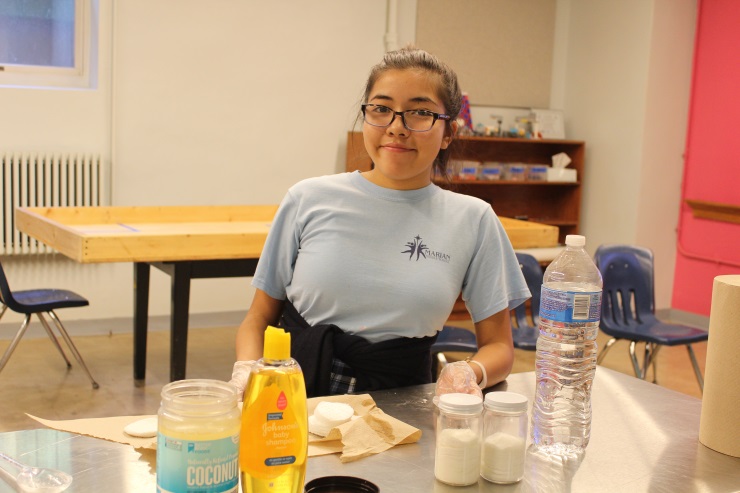
The other project is the Animal-Friendly Beauty Products. By researching practices that impact animals and products that already exist they planned, budgeted, purchased and actually made some products including animal-friendly nail cuticle oil.
In order to evaluate the success of the products, they created a survey that was distributed with the products to solicit feedback They subsequently revamped their products based on feedback for redistribution.
Not only that, but 19 Marian Girls competed in the Clavius Project Robotics Jamboree at St. Louis University High School in January. Out of 27 participating schools, Marian students won the first-place platinum award, and on top of that, were also awarded the Leadership with Distinction Award for their evident teamwork, persistence, and problem-solving skills.
And an even more unique feather for this projects cap: An article was written on the National Nuclear Security Administration website about one of their 7th grade student’s curiosity in becoming a Nuclear Material Courier! This is a testament to the students’ increased interest in many different STEM related careers!
What are some of the challenges they faced?
As exciting and successful as this project has been – it is not without challenges.
They’ve tried to be proactive about revising the programming and goals based on student interest, progress, and feedback. One difficulty they faced was the length of time students need to complete a project and how difficult it is to determine at the outset. They plan to figure out how to include more flexibility in scheduling. Additionally, timing is important in the optimal utilization of workshop space and sharing of available technology to meet everyone’s needs. Ideally, they could more regularly engage community experts in STEM fields as facilitators and instructors for the students. However, school hours are also work hours, which makes optimal engagement difficult.
These challenges aside, they have made great strides in accomplishing their goals and we at the McCarthy Dressman Education Foundation are excited to see how this project progresses.
Share this:

Girls Quest for STEM
There are a many gatekeepers in this world, barring women from careers, hobbies, and involvement in popular culture. And this year is, for many reasons, been called the year of the woman. So, what better time to focus on getting our girls plugged into fields of interest that have been traditionally closed off to them by these arbitrary, and mostly unwritten, rules. This is what the Quest/STEM program at Marian Middle School is all about. Marian Middle School is an all girls school, so what better place to put this pilot program into practice.
Their stated goal. 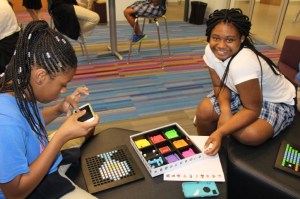
In order to understand what they have accomplished, we need to understand what their stated goal was when conceiving the program. The goal was to get Marian girls to be workforce ready critical thinkers, creative problem solvers with the skills to be highly employable in STEM careers. But even simple goals often require multi-pronged approaches as there is no one avenue into the myriad of career possibilities in the STEM field.
What did they accomplish?
Broken down into a three-pronged approach, the educators focused on the following:
- Learning through project- and inquiry-based learning and the Engineering Design Process
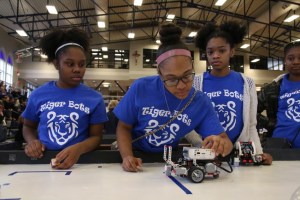
- “Through their STEM Quest classes this year, students were given a choice in the projects they wanted to take on based on their interests and passions. Some projects that were undertaken included rebuilding two motorized scooters, creating original video games, developing animal-friendly beauty products, designing a school prayer garden, and building a virtual school tour for the school’s website, among other projects. All projects were real-world tasks requiring students to research, plan, design, build, and evaluate. They applied learning from their traditional courses to create original work. Working with peers through the design process challenged students to think creatively, to work collaboratively, and to continuously evaluate their work to improve their product. Though it can be difficult for adults and middle school students alike, through this process Marian students are building a myriad of skills that make them highly employable for internships, positions, and opportunities available to them at their age and on which they can grow in the future.”
- Increasing interest in STEM careers
- By using a simple survey to collect data from students regarding their top three career interests they were able to categorize these careers, identifying those with a STEM focus. Year after year, comparisons are made and trend lines are established as each class moves from fifth grade through eighth grade. Students who named a STEM related career in one of their top career choices this school year include:
- 13/15 5th graders (87%)
- 15/17 6th graders (88%)
- 16/17 7th graders (94%)
- 17/17 8th graders (100%)
- Overall Total – 92%
- Through their STEM classes and Marian programming, they have been exposed to professional careers they may not have previously considered. As a result, the range of occupational interest’s students are considering for their futures is as impressive as it is diverse. Careers of interest from the survey include music producer, veterinarian, architect, marine biologist, computer engineer, paramedic, farmer, pediatrician, plastic surgeon, photographer, zoologist, neurosurgeon, cardiac surgeon, entrepreneur, obstetrician/gynecologist, film editor, forensic psychologist, federal agent nuclearmaterial courier, nurse, and occupational therapist, among others!
- Making statistically significant gains on STEM areas of standardized tests.
- Marian students took the Iowa Test of Basic Skills in September 2017 which includes Science and Math components. Seventy two percent of eighth grade students made significant gains in math and 67% made significant gains in science as compared to previous scores. The small sample size makes 1 or 2 outliers significant. All sixth and seventh graders made significant gains in math. Science averages of our student body increased in 5 of the 6 domains tested. Student averages in 4 of the 6 domains are now above the national average as compared to only 1 above the national average last year.
- By using a simple survey to collect data from students regarding their top three career interests they were able to categorize these careers, identifying those with a STEM focus. Year after year, comparisons are made and trend lines are established as each class moves from fifth grade through eighth grade. Students who named a STEM related career in one of their top career choices this school year include:
A couple of exciting projects.
One of the more exciting projects is the Prayer Garden. Students performed research on prayer gardens, as well as a number of other themed types. By assessing the needs and space available to them they were able to identify the elements they would propose. After a presentation, complete with visual aids, to the principal they were given the go ahead to purchase supplies and begin construction.
The other project is the Animal-Friendly Beauty Products. By researching practices that impact animals and products that already exist they planned, budgeted, purchased and actually made some products including animal-friendly nail cuticle oil.
In order to evaluate the success of the products, they created a survey that was distributed with the products to solicit feedback They subsequently revamped their products based on feedback for redistribution.
Not only that, but 19 Marian Girls competed in the Clavius Project Robotics Jamboree at St. Louis University High School in January. Out of 27 participating schools, Marian students won the first-place platinum award, and on top of that, were also awarded the Leadership with Distinction Award for their evident teamwork, persistence, and problem-solving skills. And an even more unique feather for this projects cap: An article was written on the National Nuclear Security Administration website about one of their 7th grade student’s curiosity in becoming a Nuclear Material Courier! This is a testament to the students’ increased interest in many different STEM related careers!
What are some of the challenges they faced?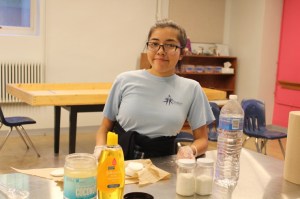
As exciting and successful as this project has been – it is not without challenges. They’ve tried to be proactive about revising the programming and goals based on student interest, progress, and feedback. One difficulty they faced was the length of time students needed to complete a project and how difficult it is to determine at the outset. They plan to figure out how to include more flexibility in scheduling. Additionally, timing is important in the optimal utilization of workshop space and sharing of available technology to meet everyone’s needs. Ideally, they could more regularly engage community experts in STEM fields as mentors, facilitators and/or instructors for the students. However, school hours are also work hours, which makes optimal engagement difficult.
These challenges aside, they have made great strides in accomplishing their goals and we at the McCarthy Dressman Education Foundation are excited to see how this project progresses.
Further Reading
· Girls in STEM: Answering the Call for STEM Skills in Our Global Workforce
· 10 Ways to Prepare Our Daughters for STEM Careers | NetApp Blog
· Preparing K-12 Students for Future STEM Careers – The Tech Edvocate
· Starting Early: How to Address the Lack of Female Engagement in STEM at School
Share this:

Tribute to Jane Abe, McCarthey Dressman Education Foundation Board Member
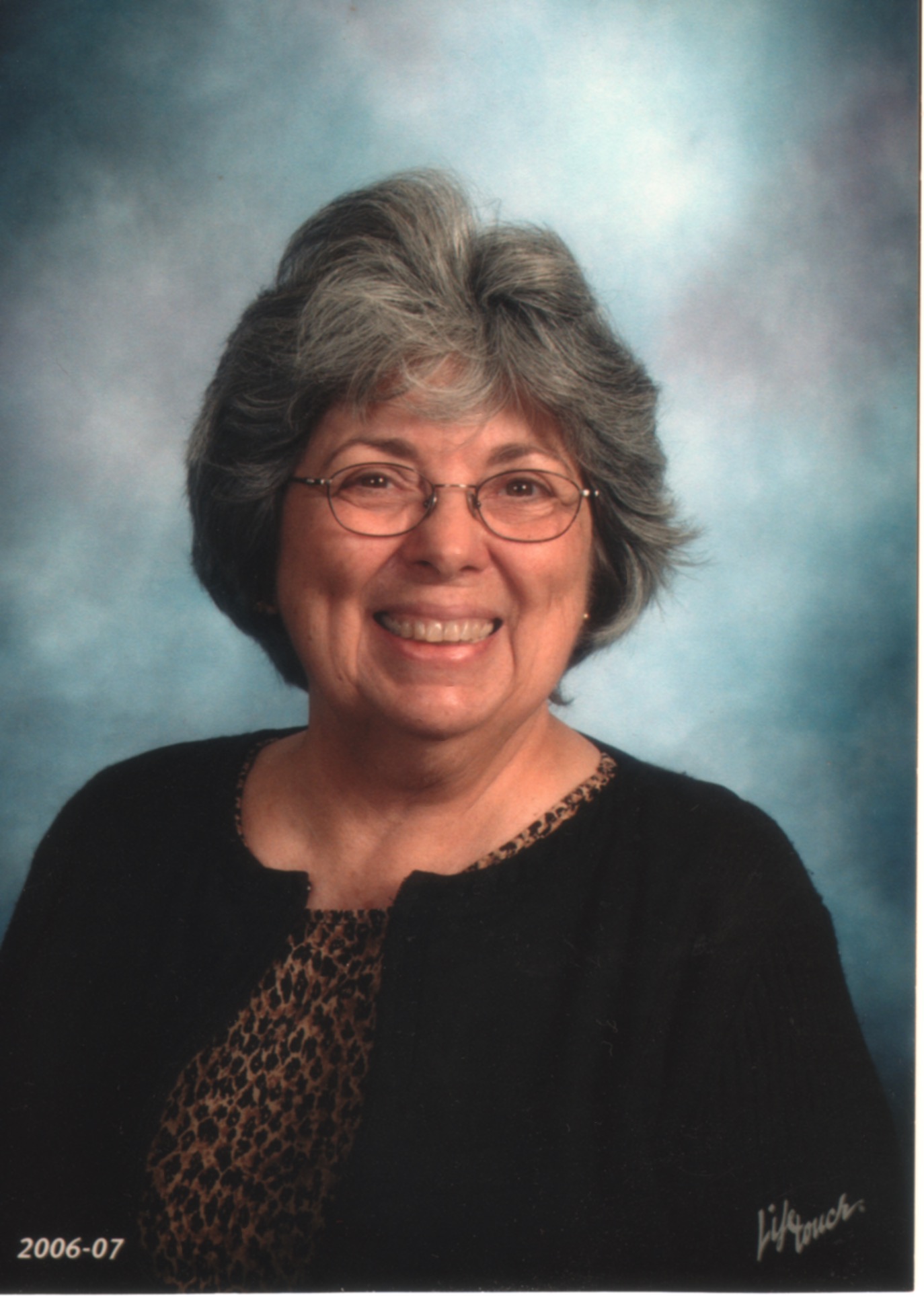
Jane Abe was a member of the Board of Trustees of the McCarthey Dressman Education Foundation
from its inception in 2000 to her death on March 15, 2016.
During her years of service Jane brought to the Board her passion for teaching, her extensive experiences working with children in the elementary grades, and her dedication to the profession. She deliberated over every proposal we received at the Foundation with deep empathy for teachers, a sharp eye for ideas that would make a difference to students, and a deep concern for the impact grants could make for teachers and students. Her mentorship of each project made a lasting impression on classrooms and all who had the opportunity to work with her will remember her commitment, guidance and care.
We miss Jane and will forever be grateful for having the opportunity to work with her on the Board.
Share this:

Future 2,000 Common Core emphasizes eBooks, improves curriculum
 Teachers and students need textbooks to be useful and relevant. With the release of the Next Generation Science Standards (NGSS) in 2013, the Science Department at Chapman High School in Chapman, Kansas, wanted to find a way to incorporate the NGSS as well as the Common Core Standards into classroom curriculum. In the process, they discovered that the textbooks they were currently using no longer met the needs of their students and classroom. In this update from Future 2,000 Common Core, you’ll hear about how educators used eBooks to meet curriculum goals for Physical Science, Biology, and Chemistry and improve understanding of standards while improving the students’ access to resources and increasing their motivation.
How does eBook creation improve curriculum?
Chapman High School science educators led by Sara Cook explained that starting with a blank canvas enabled them to “include the essential curriculum that students need to know rather than having them sifting through unnecessary material.” They planned to integrate multimedia, virtual labs, student work samples, projects, activities, and more. eBooks would allow their curriculum to come alive in ways that would engage students more than normal textbooks do. They focused on featuring student work to increase the expectation for projects over time. “They will make studying and teaching more effective,” Cook stated, “most importantly, we have the ability to revise and edit the books to best meet the needs of their students.”
According to project report, the goal was to create a book that met “the individual learning needs of their students, and better incorporates the Common Core Standards as well as the Next Generation Science Standards.”
An additional goal was to produce a textbook that the students would be able to access at anytime that could be easily updated with a changing curriculum. By saving a .pdf copy of the iBook and uploading the iBook to a website, the students could have access to the book on any web-based device.
How did educators evolve their curriculum with eBooks?

Participating educators started the project with a professional development day to learn how to use iBooks Author, a free software created by Apple for eBook creation on the Mac or iPad. Throughout the year they scheduled 4 other professional development days to work on eBook creation. During the school year, they collected student work to be featured in the book for the next group of students. Sara Cook published the eBooks online for all students to access and to share the project progress, you can view them at:
[https://sites.google.com/a/chapmanirish.net/scook/mccarthey-grant]
Below are some screenshots from a few of the eBook offerings created by Future 2,000 Common Core.
What did they discover?
All of the iBooks, except one, were used with students over the course of the year. The students are enjoyed viewing and using the books on the iPad and Computers. Students liked having access to the book at home especially when they were absent from class. Also, students loved competing to become “published.” They seemed to be excited about their work being used as an example for future classes.
As far as teaching, the creation of the eBooks allowed the department time to become more familiar with both the NGSS and Common Core standards. They were able to find better videos, animations, labs, websites and other resources to meet the needs of the new standards. Cook stated, “We personally feel like we have a better understanding of strengths and weaknesses of our curriculum than we did last year at this time. Since our iBooks are Standards Based, this has also allowed us to start discussing the possibility of integrating Standards Based Grading into our Curriculum. This would allow us to better see what our students know and don’t know in relation to the NGSS. Most importantly, this grant has provided us with time to collaborate and develop content that can be used in our classroom, which directly benefits our students.”
What advice would they give to others?
The biggest challenge for this team was the time that it takes to complete the eBook. It was their hope that they would complete more curriculum during the first year of the project. After the first work session, they quickly realized this process would take many more hours than initially expected. eBook creation is a time-consuming process to obtain content and find media appropriate to make the books as interactive as possible. However, they do feel that the time they are spending is well justified if it helps them meet the needs of their students.
One area of improvement for next year will be to come to the work sessions with all content, pictures and other resources already saved into files on the computer and ready to place into the book. This would allow more time to be spent on implementation & editing instead of gathering content. They plan to continue with work sessions during the summer and through next school year.
From a budget perspective, the project team learned that there were subscriptions for interactive simulations and labs that they wanted to incorporate into the eBooks. They decided to consider that as an important item in the next year’s grant budget, as the funding was not available from their institution.
Resources
If you would like to useeBook creation as a way of improving your curriculum, we recommend the following resources.
- Build Your Own Textbook (Audrey Watters, Edutopia, 2011)
- How to Create Your Own Textbook With or Without Apple (KQED Mindshift, 2012)
- CK12 Standards Aligned Flexbooks (CK-12 Foundation, 2016)
- Students as eBook Authors (The Creative Educator, 2014)
- NeBooks Teacher Resource Center (Nebraska Department of Education)
- Reading and Teaching with eBooks (EdTechTeacher)

 McCarthey Dressman Education Foundation