
Academic Enrichment
Breaking Barriers with “Aire Libre”
At Yerba Buena High School in San Jose, California, a groundbreaking initiative is transforming the educational experience for at-risk students. Introducing “Aire Libre,” a project designed to remove both literal and metaphorical barriers, provides students with the freedom to explore the natural world and unlock their intellectual and creative potential.
“Aire Libre” translates to “free air,” and encapsulates the vision for the project. Many students face challenges that limit their opportunities—being students of color, low-income backgrounds, and often part of immigrant families. The project has created an environment where they can break free from these constraints and thrive.
The TERRA Club: A Foundation for Growth
The journey began with the TERRA club, co-led by Karen Lo and Ivon Rodriguez. This inclusive space teaches students about gardening and animal husbandry, including caring for a flock of chickens. What started as a beautiful garden on campus has evolved into a dynamic learning environment, fostering “unintentional” learning through hands-on experiences.
Connecting Education and Nature
Aire Libre is not just about gardening; it’s about education that is relevant and enriching. The curriculum is linked to student learning outcomes and focuses on:
- Environmental Education: Students engage in activities that promote awareness of environmental issues while hypothesizing and experimenting with solutions.
- Culinary Exploration: By cooking recipes from various cultures using fresh, organic produce, students learn about nutrition and the importance of healthy eating.
- Mental Health Awareness: Gardening has been shown to alleviate stress, anxiety, and depression, making it a vital component of our project.
- Personal Development: Lessons centered around perseverance, responsibility, and patience help students grow into well-rounded individuals.
A Collaborative and Community-Centric Approach
Aire Libre was integrated into the AVID (Advancement via Individual Determination) program and made available to all interested teachers. A collaborative spirit among educators was developed while ensuring that every student had access to these transformative experiences.
Further, families participated in the garden alongside their children. This initiative not only strengthened community ties but also emphasized the importance of holistic health, encouraging families to bring fresh produce home.
Cultivating Learning: The Impact of the Aire Libre Garden Project
The Aire Libre garden project was initiated with clear and impactful goals: to establish a spiraling curriculum that integrates Schoolwide Learner Outcomes, environmental education, and the promotion of physical, mental, and emotional health. Our aim was not just to create a green space, but to turn it into a vibrant educational hub accessible to every teacher on campus.
In our efforts to integrate the garden into the curriculum, we collaborated with former students now at UC Berkeley to develop five reproducible lesson plans for grades 9-12. These lessons have been embraced by teachers across various subjects, including AP Environmental Science, Photography, Art, and English Language Development. The results have shown an impressive increase in student engagement. In 2023-2024 alone, over 2,300 students interacted with the garden—a remarkable jump from just 678 in 2018-2019. This growth reflects a deepening connection between students and their environment, and a growing interest from teachers to utilize this outdoor classroom for core instruction.
Led by five dedicated teachers, curriculum lessons were implemented in eleven classes. Through student surveys, we tailored lessons to reflect their interests, ensuring that the garden remains a space where learning is both relevant and engaging. Mini-lessons, often centered around student curiosity, have proven effective. For instance, one student with aspirations in entomology worked with peers to explore the role of insects in our ecosystem, leading to the introduction of beneficial insects like Black Soldier Fly Larvae in the garden.
Impact on Students and Teachers
The impact of the Aire Libre garden on student learning has been profound. Self-evaluations indicate that students feel they have improved across all areas of the Schoolwide Learner Outcomes. The garden has become a sanctuary for personal growth, fostering mental health and motivation among students. Teachers are also noticing the benefits; the experiential learning opportunities provided by the garden have sparked interest and engagement in subjects that may have once felt distant from students’ lives.
The Aire Libre garden has blossomed into a vital resource for our school community. With ongoing dedication and adaptability, we look forward to enhancing the curriculum and further enriching the educational experiences of our students. Together, we are cultivating not only plants but also a love for learning and a respect for our environment.
Be sure to visit the Instagram page for an in depth look: https://www.instagram.com/terra.ybhs/
Share this:

Bringing History to Life: Education Trunks Connecting Oklahoma’s Diverse Communities
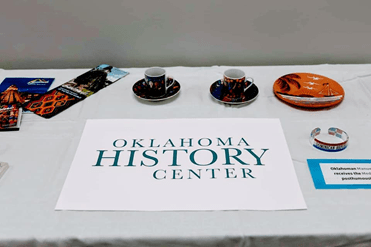
To engage Oklahoma students with the rich, yet often overlooked, history and culture of the state, a transformative educational initiative was launched—creating two educational “exhibit in a box” trunks available for teachers to check out at no cost. These trunks focused on topics vital to understanding Oklahoma’s diverse communities: Latinos in Oklahoma and Migration and Oklahoma. By making these resources accessible to educators across the state, the project aimed to preserve and share the histories of Oklahoma’s people while supporting classroom learning.
Oklahoma is home to many communities, including a large Latino population, and the educational gaps regarding their contributions and stories have been significant. For example, many of the histories and experiences of Latinos in Oklahoma were undocumented, making research and preservation essential.
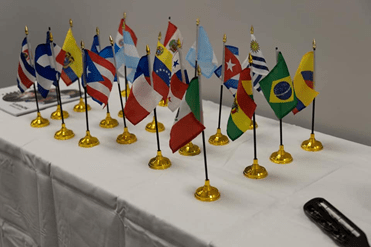
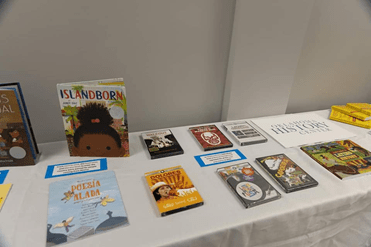
The project proposed created two educational trunks, one focused on Latinos in Oklahoma and the other on Migration and Oklahoma. The trunks were designed to be comprehensive educational resources that can be checked out by teachers, community organizations, and other educators, offering a hands-on way to engage students in learning about Oklahoma’s diverse history.
Research, Community Engagement, and Collaboration
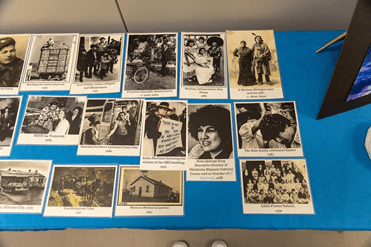
Because the history of Latinos in Oklahoma had not been widely documented, the team involved community experts. By working closely with local leaders, historians, and community members, the project grew beyond the original scope. Not only were the trunks developed, but valuable partnerships were formed, new educational materials were created, and additional resources for future research were collected. This collaboration allowed for a deeper understanding of the subject matter and ensured that the trunks would resonate with the communities they represented.
Impact on Students, Teachers, and the Community
The Latinos in Oklahoma trunk has had a significant impact on students. For many, it fills a critical gap in their understanding of the state’s history. For example, one teacher shared how the trunk materials enabled her students to connect with the subject matter in a deeper, more meaningful way than traditional textbooks could. Beyond classrooms, the project has also inspired new academic work. Jorge Luis Chavez, a public history graduate student at Oklahoma State University, used the research materials created for the trunk in his thesis and joined the team in a new role—showcasing how the project has led to further opportunities for the next generation of scholars.
The project’s broader impact extends beyond the classroom. For instance, oral histories from members of the Latino community are now being collected and preserved for future research. These histories are included in the trunks and are being sent to research libraries for broader access. The partnership with Oklahoma City Public Schools’ Language and Cultural Services department has been instrumental. The department has helped refine the trunks and will support English Language Learners (ELLs), particularly through the inclusion of stories from newcomer students in the book Where the Rainbow Ends. This collaboration has emphasized the importance of culturally relevant, hands-on materials for ELL students.
Expanding Reach and Impact
As both trunks become available to a broader range of educators, they will become an integral part of Oklahoma’s educational landscape. With additional partnerships, continuous feedback, and the ongoing creation of supplementary materials, these trunks will play a key role in helping students across Oklahoma connect with the state’s rich and diverse history.
This project stands as a testament to the power of collaboration, education, and the importance of preserving the stories of all communities.
To request a trunk or view its contents, please visit https://www.okhistory.org/historycenter/trunktopics
Share this:

Brave Space to Talk about Race and Racial Justice Teacher Development: Innovative projects to improve outcomes highlight strategies for all
“It only takes a moment, all you need is one partner, you can do this work on your own, it’s hard but you can do these things from the bottom up” – Emily Portle, Racial Equity Teacher Development
“People always object. I listen. I make myself available to talk.” – Jon Jagermann, Brave Space to Talk About Race
Educators and districts around the country have been working to take a hard look at racial equity; from discipline policies and dress codes to school climate and instructional methods, a re-examination of schooling has been underway. Addressing systemic racism is challenging and also controversial. Still, innovative educators have been seeking out ways to positively impact their students and communities. This blog highlights two of the courageous efforts awarded funding through the McCarthey Dressman Education Foundation’s annual grant program.
Awarded in 2020-2021 school year, the Brave Space to Talk about Race project and the Racial Justice Teacher Development project were both able to create opportunities for leadership, educators and staff to engage in a closer look at racial equity in their work. These projects are important to highlight, not only because they took on challenging topics but also because they help demonstrate how these efforts can be impactful. What can we learn from these efforts?
Instructional leadership takes on a new meaning
The Racial Justice Teacher Development project took multiple approaches to engaging the whole staff in professional development which would lead to a school wide vision where children on the edges became a central point of focus. The teachers shifted from focusing on the feedback from PTO to looking closer at conversations with parents who weren’t coming to PTO, but it wasn’t a journey that happened overnight – instead it grew over time through an instructional leadership perspective.
This project started by sending a school-based leadership team to attend summits and conferences where they could immerse themselves in learning about race and equity. They established a plan to engage the educators and staff. A cohort of educators planned yearlong strands of racial justice learning for their peers to increase their capacity as teacher leaders, including an equity strand for staff focused on increasing cultural competence and becoming an anti-racist educator. As part of their professional development staff also received The Racial Healing Handbook by Dr. Anneleise Singh and participated in their choice of book studies with a selection of books.
As a result of the professional development in the Racial Justice Teacher Development project, project leaders reported strengthened classroom communities and a decrease in behavior incidents. Through their professional learning efforts, they were able to begin redesigning instructional models and systems at their school toward a student-centered, restorative, inclusive school for all of their student body. Leaders in the school have also developed new ways to address equity in class placement, identification of students with advanced learning needs, and changes to instructional blocks that are more responsive to all students. The equity strands were impactful and will be a continued effort in the future.
Not a “Safe Space,” instead a brave one
Brave Space to Talk About Race is a project in Milwaukee Public Schools created to increase staff member conversations about race. The goals were to help identify actions the district could take to address issues of discipline disproportionality and school climate and to develop antiracist educators who could increase school capacity to maintain and sustain the work of having these conversations.
The project incorporated ways for staff members to engage with these topics through reading groups, by creating book study guides, participating in Jamboard reflections, offering viewings of the documentary “Pushout,” and offering programs for educators who were interested in participating . These included offering a Race Practitioner’s Cohort and planning a three-year program called Courageous Conversations about Race Exploration. In addition, the team worked to integrate action steps into school improvement plans for the coming year. At the end of the year project leaders shared cohort action steps with the district leadership and participating school-based cohorts had action steps to continue these conversations in the next school year.
Challenges along the way
Of course one of the major challenges for both project teams was COVID-19 and its impact on schooling. Some schools taught the first part of the year online and had a phased re-opening in the spring, which made it difficult to sustain professional development. Some schools were entirely virtual. This made book studies more challenging, but also opened up some virtual learning opportunities which can be useful in multi-school or district projects.
Recommendations for educators
Both of these projects took on challenging topics and both offer examples in their approach that could be beneficial to others who are working to improve racial equity.
- Getting buy in at all levels by building relationships
- Creating norms for conversations
- Engaging in reflection on policies and methods
- Facilitating conversations around meaningful texts, media and/or events
- Allowing people to engage with the project at their own comfort level
- Developing action steps for the next year
While the work of racial equity is not easy to do, it can be done by small groups of educators working together. These projects have shown some impactful ways that educators can develop projects that can grow to serve these communities over time, supporting the leadership and staff in an ongoing effort to support racial equity. As Emily stated, the message is: Don’t wait! Start Now!
Learn more about Racial Equity and Teacher Development
- 3 Ways Schools can Support Racial Equity (EDC, 2021)
- A guide to Equity and Antiracism for Educators (Edutopia, 2020)
- Understanding the need for change, discipline disproportionality (NASSP, 2020).
Share this:

Where the Light Travels: Creative Media Builds Confidence and Digital Literacy
“Soon the digital divide will not be between the haves and the have-nots. It will be between the know-hows and the non-know-hows.”
– Stanford lecturer Howard Rheingold
Where the Light Travels is an after-school enrichment class designed to integrate photography and digital media into core areas of learning such as English Language Arts and Social Science. This project supports refugee youth in San Diego, creating engagement and connection by bridging hands-on creativity with technology and art.
The need for technology and visual communication has never been more important. This was highlighted as the world was sent into isolation with the impacts of COVID-19. “We use digital photos and videos to share our understanding, to connect with our communities, and to express ourselves,” stated Jana McBeath, Media Educator and Youth Council Coordinator with Outside the Lens. Receiving a three-year grant from the McCarthey Dressman Education Foundation is allowing McBeath’s project, Where the Light Travels, to transform an elementary after school digital media class into a safe space to build confidence while increasing digital and media literacies. She has seen firsthand how having media skills to use in life can change a student’s focus from self-identity, to family, community and eventually become a new language to use worldwide.
What were the goals of the project and how were they achieved?
Where the Light Travels was implemented virtually in partnership with the San Diego Refugee Tutoring Program as an after-school class with goals to:
- integrate ELA and core academic subjects using photography, videography, animation, and mixed media
- build confidence and engagement in students and their academic subjects
- create a safe space to encourage storytelling, identity and creativity
- showcase projects at a community exhibit honoring student work from throughout the year
Craft boxes with various art supplies and props were provided, as well as sealed envelopes with project materials. iPads loaded with apps for animation, photography, digital art, film editing, and other resources were also given to each student. To help combat screen fatigue, now that all of the students were learning online every day, the focus of the projects relied on the incorporation of tactile and hands-on activities, even though the project was designed to enhance digital literacy.
Consistent engagement became one of the major components of success. This was achieved in many ways. In addition to opening the sealed project envelopes online together each week, an emphasis was put on daily connection, using digital tools like Flipgrid and Google Chat for sharing jokes, art and ideas separate from the specific project.
Students were encouraged to experiment, explore and create in their free time in whatever interested them most and report back with self-directed projects. This was an opportunity to see what interested each student most, and reinforce the ELA and Skill standards in the discussion and evaluation of each student’s work. The consistent engagement, paired with the flexibility to adapt the curriculum to address varying curiosities, concerns and interests made the pivot to a virtual afterschool program arguably more successful than originally envisioned.
What progress did they make to their goals?
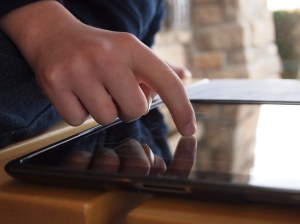
The projects created by the students really speak to the progress made in this program. The confidence of the students shines throughout and the results were far reaching. From comedic YouTube videos to dance performances and tactile science experiments, all of the projects incorporated some form of digital media problem solving, verbal and written communication, which addressed the crucial ELA, 21st Century Skills and digital media literacy needs.
What challenges were experienced along the way and what are the ideas for improving the project?
The onset of COVID-19 changed the goal for creative outlets to a necessity and was the biggest challenge for the project. What was meant to be an engaging in person experience now had to be redesigned to an accessible virtual setting that still allowed for meaningful connections for students who were already spending the day learning online. A lot of inventiveness went into pivoting this project to be something joyful for the students to look forward to during what ended up being a very difficult year for them in so many ways.
How has Where the Light Travels affected the learning of students and/or teachers?
Based on feedback from the students, parents, tutors and partners of the San Diego Refugee Tutoring Program, the effect on students was solidly positive. Engagement was achieved, as well as a returning student base. The students were truly able to nurture and develop their identity using their own passions and hobbies to explore interests and curiosities using the iPads and craft kits.
Exciting plans for the Future
As the project entered its second year, still virtual, the number of participating students doubled and included all previous students from the first year. Whether the program continues online, in person, or possibly even as a hybrid, the plans for the future include continuing with the student-led curriculum, utilizing techniques to stay highly adaptable, focus on mixed media projects, introducing advanced photographic processes, and keeping the asynchronous work and connections between classes.
Additional Resources
Learn more about supporting digital literacy for learners who are refugees:
- The Tech Advocate: Digital Literacy and Lifelong Learning
- Migration Policy Institute: Bridging the Digital Divide for U.S. Children in Immigrant Families
- International Rescue Committee: Digital Skills in Refugee Integration: Lessons Learned from Research and Practice
Share this:

HawkWatch International: Using Hands-on, Real-life Learning to Improve Student Achievement
What were the goals of the project?
The goals of the “Cavity Nester Citizen Science Study” fall into four categories:
- To improve science proficiency in local high school students by giving students the opportunity to participate in real scientific research.
- To get students outdoors as part of their education.
- To support the community and create community awareness of cavity-nesting species.
- To learn more about the movements, environmental impacts, and causes behind declining populations of local cavity-nesting birds and what we can do to conserve these species.
How were these goals achieved?
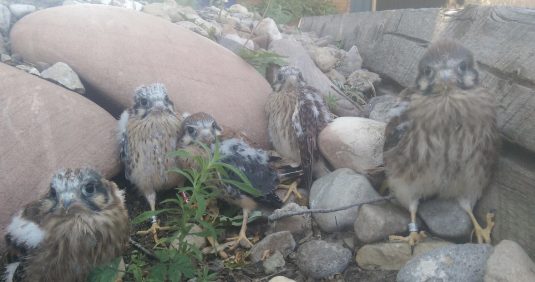
The project team hosted professional development workshops for teachers to introduce them to the project and explain how it supports the state’s curriculum. Lesson plans in biology, statistics, and environmental science were created. The lesson plans are shareable so the project can be replicated in other schools.
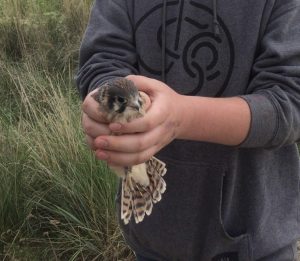
Students were trained how to properly monitor next boxes and cavities. HawkWatch International led trips for students to learn about and assist with banding birds. Utilizing their new skills, students monitored nest boxes and cavities near their school, conducted weekly habitat assessments, and recorded their data observations in field journals. They formulated hypotheses, analyzed the data collected, and formed conclusions about the birds being studied. Students presented their findings in a symposium open to their peers, families and the broader community.
What challenges were experienced along the way and how were they addressed?
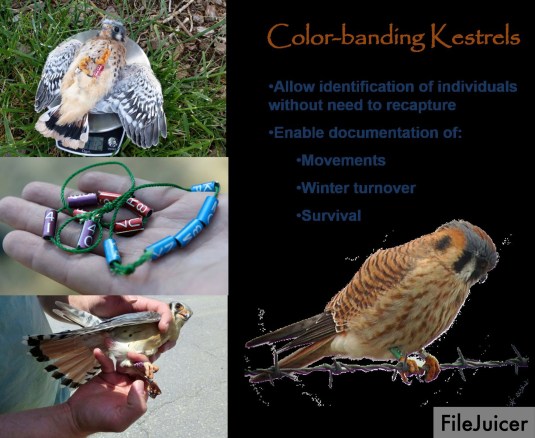
Like most organizations, HawkWatch International was deeply affected by the COVID-19 pandemic. Of the four schools originally involved, two had to drop the program and the remaining two temporarily closed. Since they were unable to physically visit classrooms or take students out to check nest boxes, they were forced to pivot to virtual visits. The project later transformed into a hybrid approach, providing a mix of virtual and real-life visits to classrooms.
Exciting plans for the future:
HawkWatch International hopes to eventually pilot this project outside of the Wasatch Front in Utah to reach more students and transform them into conscientious environmental stewards eager to take an active role protecting the habitats of cavity nesting birds.
Additional resources:
- The Benefits of Environmental Education
- Scientific Method for Grades K-12
- Make Outdoor Learning Your Plan A
Share this:

The Best of Buena Vista: Empowering Community through Social Media
Just as we learn through experience, multi-year projects learn from previous years implementations. The Best of Buena Vista is a multi-year project that continues to build momentum each year it is repeated. Project leaders built on their success, addressed past challenges, and incorporated new opportunities and ideas.
Located in Buena Vista, VA, the project team at Parry McCluer High School sought to collaborate with their community to create optimism by celebrating the The Best of Buena Vista.
The goals of “The Best of BV” were to expand the current program of weekly video announcements made by and for the PMHS student body. In the second year of the project, the team built on the excitement and eagerness of new and returning students in their Blue Library and Film/TV classes. At the request of the their students, they sought to provide additional inter-generational opportunities and experiences utilizing film and written media.
The project aspired to disrupt the negative small-town mindset as their students engaged in interviewing adults about their positive contributions to the community.
The team also wanted to allow their students to benefit economically as they increased their communication, writing, and storytelling skills, while practicing responsibility and accountability.
What progress did they make towards their goals?
The project continued to make progress towards all of their goals. They Best of Buena Vista established and produced a regular pattern of publication which included promoting student achievement.
The negative small-town mindset continued to be disrupted as students connected with community members and created platforms of growth for both students and elders. PMHS students have a stronger connection to their school and community though the deep and meaningful relationships they have created with the community elders. Project lead, Rishi Richardson, reports that every experience has been richly rewarding as each interview and interaction is met with surprise and delight by all the participants.
Academic opportunities for their students have expanded while the students and community members are empowered was a new, positive perspective. Students are becoming progressive story tellers of their communities’ rich and complex history. Furthermore, the elders in the community also learn as they are excited to access their interview on social media and share with others.
What did students learn while participating in and producing The Best of Buena Vista?
PMHS students learned how to use camera equipment and practiced being in front of the camera. They increased their communication skills, writing skills and confidence through mentoring, interviewing, filming, creating content, and successfully producing film and writing products for “the Best of BV”. One student who needed help to write a paragraph when she first started the program is now completing rough drafts on her own! Another student with developmental challenges has gained confidence and improved his ability to share his ideas in front of the camera.
What challenges did they face and how did addressing these challenges shape future plans for the project?
From slowing down the project to a snail’s pace to stopping the project in its tracks, COVID and COVID related restrictions continued to be a major challenge for the project team Addressing these challenges head on, the project leaders rethought and reorganized how the project moved forward. They consulted closed with the communities’ elders and created contracts with students to complete the unfinished work from this year’s project.
After meeting with the communities’ elders, the project team revised their methods and took two directions towards completing their project goals. After all, “the Best of BV” was contributing to an optimistic mindset for the community, they could not let COVID hinder the momentum. The first direction was to continue interviewing elders as they have done in the past. The second direction was to create teams of students who would study one aspect of the community more deeply and for a longer period of time. Aspects of the community that have been studied thus far include the Buena Vista Colored School (a place where African-Americans attended school under segregation) and the Paxton House (a home built in the 1800’s which has been restored).
Both directions have been successful. In the first direction, community elders stepped forward to share their experiences with the students. In the second direction, student commitment to the project increased. So much so, project leaders have decided to expand the project into the summer months and the students are excited to participate!
Plans for the future
As students take on more responsibility, become more courageous, and find their inner voice, they are beginning to look for ways to shape the town’s future. With COVID restrictions starting to relax, community elders have once again come to the school to have conversations with the students.
The program is looking forward to the next school year and anticipate that the students will continue to grow and succeed in their participation. We at McCarthy Dressman Education Foundation are excited to see how “the Best of BV” continues to positively impact the students and community!
The project team is thrilled to share this video describing their accomplishments.
Additional Resources
Golden Rules for Engaging Students in Learning Activities
How School and Community Partnerships Enhance Student Learning
12 Ways to Use Social Media for Education
Share this:

The Best of Buena Vista: Community Based Learning and Student Journalism
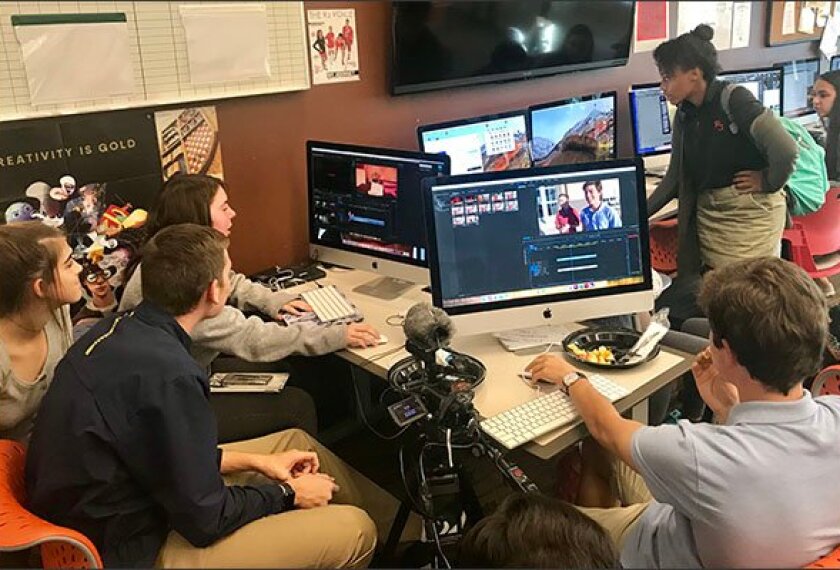
As students embarked on “the Best of BV” they strengthened writing skills, practiced responsibility and accountability. Their plan was to work with the arts council to empower students to cover local sports, art, academics, business, city government, events, nature, hiking, and personal topics on social media. This program set out to expand academic opportunities for students while improving community relations. As the students become progressive storytellers, they would also examine their community and their assumptions about it.
What were the goals of this project and how were they achieved?
The Goals of the Best of Buena Vista were to expand the current program of weekly video announcements made by and for the student body of Parry McCluer High School (PMHS). This goal was met through the Facebook edition of the Blue Library. It is where the Best of Buena Vista stories are published, read, and commented on by the school and local community. The project team created opportunities and experiences for the students to interact in an intergenerational setting allowing them to learn from community elders. Student led interviews allowed for interaction with community elders.
The team also wanted to disrupt the negative small-town mindset by engaging students in interviewing adults about their positive contributions to the community. This goal was achieved in every single story published.
The project also aimed for students to benefit economically by increasing writing skills; exercising responsibility and accountability; and improving their storytelling and communication skills. They were also very successful with this goal as students wrote articles, met deadlines, mentored one another. While doing this, they managed coordinating interviews and and publishing articles. The program was successful despite interruptions due to COVID-19.
What did the project participants learn?
The team determined students were successful with little assistance from the mentors. Since the students were prepared with questions and knew what to do it was clear that eliminating this role would help the program. They reevaluated and began using student “assistant editors.” Their main responsibility was determining what stories should be written and which students would write them as well as working with the “reporters” to edit stories turned in. They oversaw the entire process for one week’s worth of stories.
With this new plan and practice in place, they began to present to the entire student body. During presentations to individual English classes, there was a need to combat some students’ negative points of view. but many offered the response, “I didn’t know that about Buena Vista.”
What was the impact of this project?
Despite COVID-19 challenges there was overwhelmingly positive feedback about the program, from students and community members alike.
One student interviewed the town historian. He was so impressed by the experience that he chose to donate his payment to the scholarship fund in the historian’s name. Many students acknowledged how nerve wracking it was to talk to the person they were assigned. Whenever they finished, they always had a smile on their face and pointed out several things they had learned. The intergenerational interactions were key to the success of this program. Students, parents, and community members consistently liked and followed the page when each story was published.
A local supporter of the program, Dawn Dickinson, wrote about the community’s response in this way:
“The Blue Library has been a meaningful, informative asset to our school and community. Stories of people and local memories have served as a bridge to the past and allowed our student body to react to our city’s strong heritage. Student interaction with people who can share local history and lore has given our young writers a new perspective on what’s good about our small ciity…..
This grant, coupled with an enthusiastic leader, has awakened a new generation to the positive aspects of our beautiful city. The timeliness of this positivity is perfect!”
Explore Community Based Learning
- Community Based Learning, CTE
- Community Based Instruction for Special Education, Noodlenook
- Community-Centered Learning Environments, CEI
Share this:

Global Learning Experiences Take Students to New Heights: Collaborating with Students in Other Countries On The United Nations’ Sustainable Development Goals
It is often said that teachers create magic in their classroom. Kathryn Crawen at Ashford School in Venon, CT took creating magic to a global classroom with the project, Global Learning Experiences Take Students to New Heights.
They are developing an exciting and immersive cultural exchange for students from Kindergarten to 8th grade using the United Nations Sustainable Development Goals as a launching point for project based learning and collaboration with students in other countries (both in person and virtual). Students in K-8th grade will be immersed in school-wide projects that connect them with their global peers, working to engineer solutions the United Nations Sustainable Development Goals. This project is the first of its kind to utilize these parameters and tools laid out by the United Nations.
What is the project and their goals?
The goal of the project was to create global competency opportunities through international student-led collaborations focusing on the United Nations’ Sustainable Development Goals. Students met the following criteria defined by the Asia Society:
- Recognize perspectives from around the globe
- Communicate ideas to diverse populations
- Take action to design innovation solutions to global problems
- Investigate the world
Prior to their collaboration, 7th and 8th grade students completed a reflection rubric on their global leadership skills. The rubric included questions and scales for the four criteria from the Asia Society (above). The same students completed the survey at the mid year point and on average they moved 1.8 levels on the global leadership rubric.
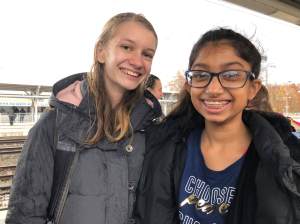
The students had the opportunity to practice recognizing perspectives from around the globe by using Skype with German students on topics such as climate change, gender equality, and sustainable economics. They communicated ideas through presentations both in Germany and within the local community. They took action through creating an interactive GIS map of indicators of the U.N. Sustainable Development Goals. And, most importantly they had the opportunity to investigate the world through the district’s first exchange program.
What did they accomplish?
Students created the first part of a StoryMap on ArcGIS. Each student generated a question based on a United Nations Sustainable Development Goal. As a whole school, they collaborated with their German friends to discuss the United Nations Sustainable Development Goals and how to meet them. Most of these collaborations were done via Skype, though they had substantial collaboration while in Germany as well. Kathryn Craven states, “It was fun to watch them all grow while working to meet the United Nations Sustainable Development Goals.”
How has this project affected the learning of students and/or teachers?
Katheryn Craven and her colleagues were thrilled and honored by how involved their whole district got in the Global Learning initiative. In addition to making progress towards the goals listed above, their major achievements for this year were:
First International Exchange for Ashford School:
They participated in the first international exchange ever for their district. Most of their students had never been out of the country or on a plane before and grew enormously while in Germany. This exchange was life-changing for the core group of 20 students, and also reached every part of their school through virtual collaboration and exchanging ideas and solutions back and forth. See students working on their exchange here: http://ashfordabroad.weebly.com/
First District Wide Teacher Exchange in the state of Connecticut:
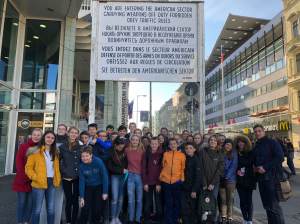
While they were in Germany collaborating with other schools, they realized that teachers could also benefit from teaching abroad. They met with administrators at the German partner school and then in their home district, and came up with an idea for a reciprocal exchange in which teachers
switched classes for three weeks. Since their district is so enthusiastic about the partnership, it allowed them to use district funding for this – a sign that the relationship is going to continue for a long time!
Schoolwide Global Learning Initiative:
All students have engaged in Skype sessions with partner classes where they talk about the United Nations Sustainable Development Goals. In addition, they were accepted as one of four Empathy Project schools in the United States. This means that each student in the school in grades 1-6 will have a virtual partner school in a different country.
Collaboration on the United Nations Sustainable Development Goals:
Their collaboration focused primarily on students developing solutions to the United Nations Sustainable Development Goals. Students have worked on solutions to goals like UNSDG-13 (Climate Change) by holding a maker drive.
What challenges did they experience and how they are addressing the challenges to improve the project?
One challenge that they faced with getting the program up and running was that some people in small towns can feel intimidated to get involved with international exchanges. In fact, prior to the proposal, their school had never had an international exchange before, and many students had never even spoken to someone from a different country. However, the support and the enthusiasm about global learning garnered by this grant helped them to overcome these problems. They used to have children who struggled to converse with anyone with an accent. But through these in-person and virtual exchanges, their students’ natural curiosity helped them overcome these challenges as they learned that people in other parts of the world have amazing stories to tell. Currently, each classroom has a virtual partnership, and they were blown away by the difference in their students when it came to talking with people from around the world. To continue their growth in this area, they would like to begin collaborations with non-Western countries so students can continue to gain different perspectives from around the world.
Further reading
Share this:

Cavity Nester Citizen Science Study: Field Biology Boosts Math and Science
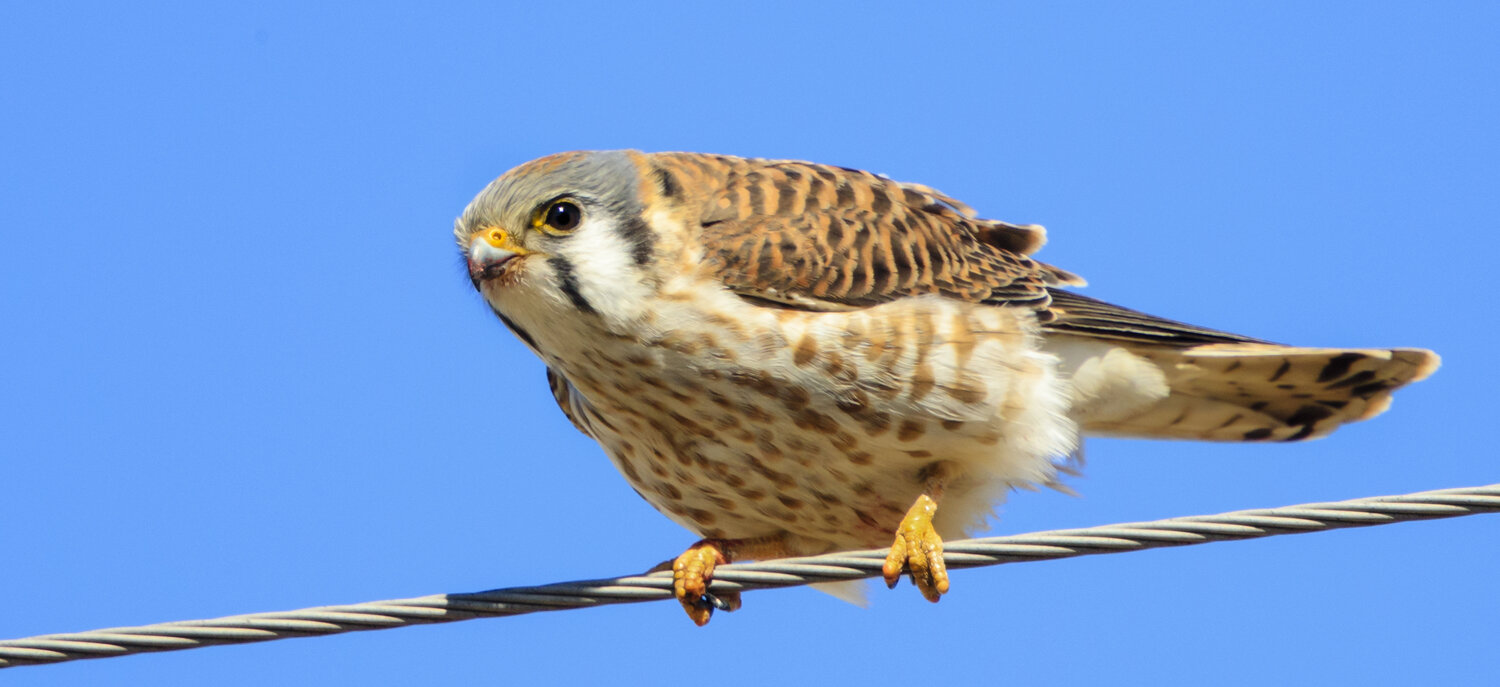
In 2012, HawkWatch International (HWI) created a school-based “Cavity Nester Urban Bird Study” in partnership with the Salt Lake Center for Science Education (SLCSE) in 2017. Designed to be a student-led expansion to the project, the study has allowed them to start studying all cavity-nesting birds living in urban settings.
In this project you’ll learn more about how citizen science increased student awareness related to cavity nesting species, specifically the American Kestrel, a species in decline across much of its natural range. Both the Salt Lake Center for Science Education (SLCSE) and Farmington High School participated.
What were the goals of this project?
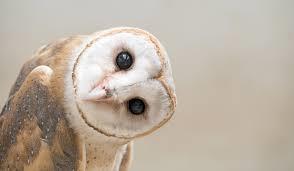
The goals for this project were to collect data that allowed an understanding of the
survivorship and reproductive success of the American Kestrels, and to reinforce high school math and science concepts by allowing students to gain hands-on experience in field biology. Students would complete a field journal where they would record observations, collect data, and draw conclusions. They would also present their findings at a symposium open to their peers, families, and the broader community. The journals and presentations were to be shared to draw attention to the project and its benefit to local students.
How did they approach the project goals?
This goal was achieved through several visits to each classroom, a total of eight visits — focusing on project and monitoring procedures, natural history information about American Kestrels and other cavity nesters, nest check ethics, and how to determine the age of nestlings. They brought in live birds to connect students to the natural history of raptors, as well as actual monitoring equipment for the students to become familiar with the technology used and to ensure a comfort level with the process.
Participation in Large Scale Citizen Science
Working directly with the students and teachers in the classroom and in the field to practice and understand the necessary protocol to monitor the nest boxes, capture photos and videos of the activity in the boxes, and to enter their nest box data. Project leaders worked with students and teachers to learn how to use the technology employed to check the nest boxes and how to use the data platform, Jotform, to enter the data. And they participated in the regular monitoring of the nest boxes.
Journaling for students and lesson plans for teachers
They developed sixteen lesson plans related to both math and science, as well as a journal developed with teachers for students to keep track of their own data. The journal also included some valuable reference information about the American Kestrel and the nest box procedures.
How did they achieve their goals?
Through the project, three visits were offered to SLCSE and five visits to Farmington High School. These visits helped develop relationships with students and teachers. At each visit, they established an aspect of the project, covering the concepts of natural history of cavity nesters, procedures for the project, and practiced how to use the technology and equipment necessary for the project. This was accomplished using Powerpoint presentations and actual equipment in the classrooms.
Additionally, they went out with the students and teachers on nest box checks to make sure they understood the process and equipment use.
What was the impact of this project?
Here is a quote from one of the participating teachers.
“We have a student at our school who is autistic and struggles socially and academically. In an effort to provide opportunities for students of all abilities, we’ve invited this student to participate in our nest box monitoring because of his love of birds. Each week we checked the nesting boxes, and this student was required to complete all of his homework to attend because he was not actually in the statistics class. He did not miss a week. He is constantly telling me about the new information he is learning about random raptors. Just today he went out with his group to check his assigned boxes and there were some people there from Hawkwatch who were kind enough to point out some nearby raptors. His enthusiasm about birds keeps growing.” -Emma Chandler, SLCSE science teacher
Working on this allowed educators to develop and execute an in-depth citizen science program. They often only see students for one class period and then part ways, but with this project, programs were offered for teachers and students on a regular basis throughout the semester. They were able to share their passion with them and engage students in a way wherein they started looking forward to checking boxes and developing “relationships” with the nestlings in their assigned boxes. Having the students see science careers that happen outside the lab and working directly with scientists was beneficial for students in considering higher education and career opportunities in science.
What challenges did they encounter?

They budgeted for 12 cameras for Farmington High School, but had to allocate 4 of those cameras to SLCSE due to wear and tear on the older cameras. In an effort to mitigate this challenge next time, they plan to meet with the administration of Farmington High School to encourage support for allowing the students to check boxes during school hours. They will also ensure there is a camera and set up for each group, rather than a certain number per school.
The other challenge faced was ensuring timely and accurate data entry by the students. A greater focus was needed in emphasizing the importance of entering the data in a timely manner from the nest box checks. The same is true for the accuracy of the data entry by the students. A fair amount of time was spent by staff going back and verifying data entries with students and/or teachers. In the future, they plan to practice data form entries more diligently with the students prior to actually checking nest boxes in an effort to prevent these kinds of challenges moving forward.
Explore Citizen Science
- Students as Citizen Scientists – It’s Elementary, NSTA
- Unlocking the Potential of Citizen Science, ESRI
Share this:

Design Thinking in Middle School: A Human-Centered Approach to 21st Century Learning Vision
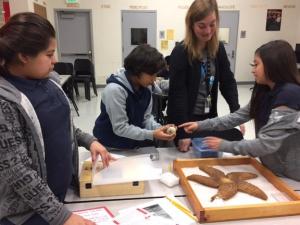
Technology advances at a rapid pace. So fast that it often outpaces advancements in education policy and practice. Students are often way ahead of the curve while teachers who learned pedagogical methods in days when there were many less avenues for incorporating technology into classrooms lag far behind them in terms of technological facility. This is compounded by the fact that every student learns in a different way, and with more and more options, it gets increasingly difficult to cater to the individual needs of students. This is what makes the Design Thinking in Middle School: A Human-Centered Approach to 21st Century Learning Vision project really stand out. They aim to bolster the technological aptitude of their educators while designing more individualized curriculum for their students. In pursuit of this vision for student learning, a team of teachers at Southeast Middle School applied with their Board of Education to open a magnet center on campus. The focus of this magnet center is to bring a three “I” – Interest, Impact, and Innovation- driven approach to teaching and learning.
Goals
In order to better understand where they find themselves as of their last progress report, it’s important to understand the goals they set out to accomplish.
Students will work on collaborative, cross-curricular projects that center on design thinking, a powerful learning tool that teaches students to use empathy and critical thinking to tackle problems of any kind from a human-centered point of view. In their model, the teacher’s role is to provide opportunities for discovery and to guide students to understanding through their innovation projects. The transition from a teacher-centered, depository learning framework to a student-centered, design-based learning approach requires teachers to work in a highly collaborative environment to develop cross-curricular and student-centered projects.
So, in their first year, how did they go about doing this?
Before they could start they had to answer a few key questions for themselves, and anyone looking to replicate this program would do well to do the same.
- What resources are currently available and/or necessary to obtain in order to successfully realize their stated vision?
- How might the concepts learned in the theme-based professional development activities be applied to their specific school context?
- What effect(s) might a design thinking approach to teaching and learning have on school performance, as measured by five instructional pillars (teaching) and the ISTE 21st century skill standards (learning)?
These questions guided their approach and the following methods were applied.
- Conduct a needs assessment and establish a teacher growth plan,
- Plan and implement teacher developed lessons tailored to the classroom context, and
- Evaluate the impact of the project on student learning and extract teacher learning through reflective practices.
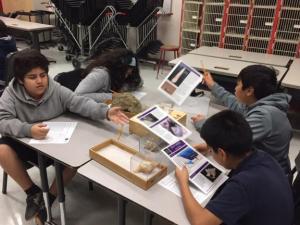
Their first year found its focus in the first two milestones. One of their priorities this year was to help the new magnet teachers build a theoretical grounding in the foundations of design thinking in K-12 education. They found early on in the project that this looked different for every teacher, based on their subject area, experience level, and their personal interests in areas of growth. Because of these disparate levels of experience, as a team, they decided that more experienced teachers would take on a more robust menu of learning opportunities that were designed to fill in gaps in theoretical and clinical knowledge and to prepare themselves to be teacher leaders in the new school. Their primary learning focus as a teacher leader team was to increase their capacity to understand and teach in alignment with a program theme of design thinking through project-based learning.
So, a year in, where are they?
Their collection of professional development opportunities during Year One has helped teachers develop a greater capacity for executing the magnet program’s vision of developing a human-centered approach to 21st century learning. Teacher leaders are using their learnings from model school visits, workshop and trainings, and collaborative planning sessions, to develop a comprehensive instructional technology plan, to plan and implement theme-based lessons tailored to their classroom contexts, and to develop a comprehensive introductory professional development plan for novice teachers. This included the teacher leaders themselves sharing their learnings through professional development sessions that they curated from their experiences in Year One of the project.
Students were able to develop their skills as digital citizens, innovative designers, knowledge constructors, creative communicators, empowered learners, and global collaborators through design-based, project-based learning tasks throughout the school year. Additionally, they were able to showcase their learning at multiple community events at their school site and within the larger learning community of South Gate. News and pictures of the events were shared on the school website at <http://southeastms-lausdca.schoolloop.com/>. Teacher-leaders are currently designing their digital portfolios to showcase their student projects on the magnet program website <www.dreamsmagnet.org>.
But no project is without challenges. What were some that they faced?
The biggest thing they had to contend with was finding substitute teachers within the budget. This allowed the participating educators to take time off from class for professional development. This is being solved in the second year by reallocating some of the grant money to pay for that.
It’s never too late to educate yourself on the latest technology. Even though chances are, by the time you’ve mastered it there will be something new. But that shouldn’t stop us from trying to narrow the technology gap between students and educators, and this project sounds like one way to do it.

 McCarthey Dressman Education Foundation