
education
Breaking Barriers with “Aire Libre”
At Yerba Buena High School in San Jose, California, a groundbreaking initiative is transforming the educational experience for at-risk students. Introducing “Aire Libre,” a project designed to remove both literal and metaphorical barriers, provides students with the freedom to explore the natural world and unlock their intellectual and creative potential.
“Aire Libre” translates to “free air,” and encapsulates the vision for the project. Many students face challenges that limit their opportunities—being students of color, low-income backgrounds, and often part of immigrant families. The project has created an environment where they can break free from these constraints and thrive.
The TERRA Club: A Foundation for Growth
The journey began with the TERRA club, co-led by Karen Lo and Ivon Rodriguez. This inclusive space teaches students about gardening and animal husbandry, including caring for a flock of chickens. What started as a beautiful garden on campus has evolved into a dynamic learning environment, fostering “unintentional” learning through hands-on experiences.
Connecting Education and Nature
Aire Libre is not just about gardening; it’s about education that is relevant and enriching. The curriculum is linked to student learning outcomes and focuses on:
- Environmental Education: Students engage in activities that promote awareness of environmental issues while hypothesizing and experimenting with solutions.
- Culinary Exploration: By cooking recipes from various cultures using fresh, organic produce, students learn about nutrition and the importance of healthy eating.
- Mental Health Awareness: Gardening has been shown to alleviate stress, anxiety, and depression, making it a vital component of our project.
- Personal Development: Lessons centered around perseverance, responsibility, and patience help students grow into well-rounded individuals.
A Collaborative and Community-Centric Approach
Aire Libre was integrated into the AVID (Advancement via Individual Determination) program and made available to all interested teachers. A collaborative spirit among educators was developed while ensuring that every student had access to these transformative experiences.
Further, families participated in the garden alongside their children. This initiative not only strengthened community ties but also emphasized the importance of holistic health, encouraging families to bring fresh produce home.
Cultivating Learning: The Impact of the Aire Libre Garden Project
The Aire Libre garden project was initiated with clear and impactful goals: to establish a spiraling curriculum that integrates Schoolwide Learner Outcomes, environmental education, and the promotion of physical, mental, and emotional health. Our aim was not just to create a green space, but to turn it into a vibrant educational hub accessible to every teacher on campus.
In our efforts to integrate the garden into the curriculum, we collaborated with former students now at UC Berkeley to develop five reproducible lesson plans for grades 9-12. These lessons have been embraced by teachers across various subjects, including AP Environmental Science, Photography, Art, and English Language Development. The results have shown an impressive increase in student engagement. In 2023-2024 alone, over 2,300 students interacted with the garden—a remarkable jump from just 678 in 2018-2019. This growth reflects a deepening connection between students and their environment, and a growing interest from teachers to utilize this outdoor classroom for core instruction.
Led by five dedicated teachers, curriculum lessons were implemented in eleven classes. Through student surveys, we tailored lessons to reflect their interests, ensuring that the garden remains a space where learning is both relevant and engaging. Mini-lessons, often centered around student curiosity, have proven effective. For instance, one student with aspirations in entomology worked with peers to explore the role of insects in our ecosystem, leading to the introduction of beneficial insects like Black Soldier Fly Larvae in the garden.
Impact on Students and Teachers
The impact of the Aire Libre garden on student learning has been profound. Self-evaluations indicate that students feel they have improved across all areas of the Schoolwide Learner Outcomes. The garden has become a sanctuary for personal growth, fostering mental health and motivation among students. Teachers are also noticing the benefits; the experiential learning opportunities provided by the garden have sparked interest and engagement in subjects that may have once felt distant from students’ lives.
The Aire Libre garden has blossomed into a vital resource for our school community. With ongoing dedication and adaptability, we look forward to enhancing the curriculum and further enriching the educational experiences of our students. Together, we are cultivating not only plants but also a love for learning and a respect for our environment.
Be sure to visit the Instagram page for an in depth look: https://www.instagram.com/terra.ybhs/
Share this:

Bringing History to Life: Education Trunks Connecting Oklahoma’s Diverse Communities
To engage Oklahoma students with the rich, yet often overlooked, history and culture of the state, a transformative educational initiative was launched—creating two educational “exhibit in a box” trunks available for teachers to check out at no cost. These trunks focused on topics vital to understanding Oklahoma’s diverse communities: Latinos in Oklahoma and Migration and Oklahoma. By making these resources accessible to educators across the state, the project aimed to preserve and share the histories of Oklahoma’s people while supporting classroom learning.
Oklahoma is home to many communities, including a large Latino population, and the educational gaps regarding their contributions and stories have been significant. For example, many of the histories and experiences of Latinos in Oklahoma were undocumented, making research and preservation essential.
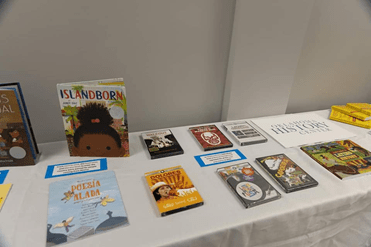
The project proposed created two educational trunks, one focused on Latinos in Oklahoma and the other on Migration and Oklahoma. The trunks were designed to be comprehensive educational resources that can be checked out by teachers, community organizations, and other educators, offering a hands-on way to engage students in learning about Oklahoma’s diverse history.
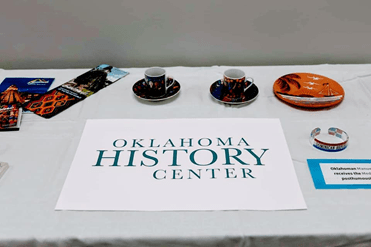
Research, Community Engagement, and Collaboration
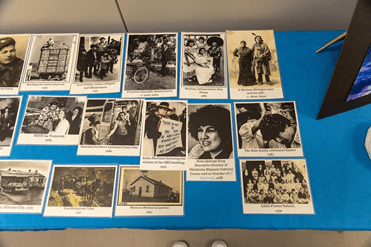
Because the history of Latinos in Oklahoma had not been widely documented, the team involved community experts. By working closely with local leaders, historians, and community members, the project grew beyond the original scope. Not only were the trunks developed, but valuable partnerships were formed, new educational materials were created, and additional resources for future research were collected. This collaboration allowed for a deeper understanding of the subject matter and ensured that the trunks would resonate with the communities they represented.
Impact on Students, Teachers, and the Community
The Latinos in Oklahoma trunk has had a significant impact on students. For many, it fills a critical gap in their understanding of the state’s history. For example, one teacher shared how the trunk materials enabled her students to connect with the subject matter in a deeper, more meaningful way than traditional textbooks could. Beyond classrooms, the project has also inspired new academic work. Jorge Luis Chavez, a public history graduate student at Oklahoma State University, used the research materials created for the trunk in his thesis and joined the team in a new role—showcasing how the project has led to further opportunities for the next generation of scholars.
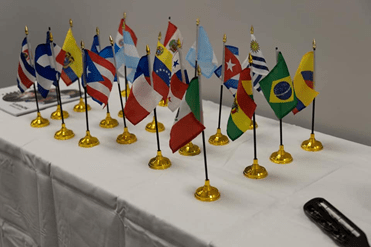
The project’s broader impact extends beyond the classroom. For instance, oral histories from members of the Latino community are now being collected and preserved for future research. These histories are included in the trunks and are being sent to research libraries for broader access. The partnership with Oklahoma City Public Schools’ Language and Cultural Services department has been instrumental. The department has helped refine the trunks and will support English Language Learners (ELLs), particularly through the inclusion of stories from newcomer students in the book Where the Rainbow Ends. This collaboration has emphasized the importance of culturally relevant, hands-on materials for ELL students.
Expanding Reach and Impact
As both trunks become available to a broader range of educators, they will become an integral part of Oklahoma’s educational landscape. With additional partnerships, continuous feedback, and the ongoing creation of supplementary materials, these trunks will play a key role in helping students across Oklahoma connect with the state’s rich and diverse history.
This project stands as a testament to the power of collaboration, education, and the importance of preserving the stories of all communities.
To request a trunk or view its contents, please visit https://www.okhistory.org/historycenter/trunktopics
Share this:

Brave Space to Talk about Race and Racial Justice Teacher Development: Innovative projects to improve outcomes highlight strategies for all
“It only takes a moment, all you need is one partner, you can do this work on your own, it’s hard but you can do these things from the bottom up” – Emily Portle, Racial Equity Teacher Development
“People always object. I listen. I make myself available to talk.” – Jon Jagermann, Brave Space to Talk About Race
Educators and districts around the country have been working to take a hard look at racial equity; from discipline policies and dress codes to school climate and instructional methods, a re-examination of schooling has been underway. Addressing systemic racism is challenging and also controversial. Still, innovative educators have been seeking out ways to positively impact their students and communities. This blog highlights two of the courageous efforts awarded funding through the McCarthey Dressman Education Foundation’s annual grant program.
Awarded in 2020-2021 school year, the Brave Space to Talk about Race project and the Racial Justice Teacher Development project were both able to create opportunities for leadership, educators and staff to engage in a closer look at racial equity in their work. These projects are important to highlight, not only because they took on challenging topics but also because they help demonstrate how these efforts can be impactful. What can we learn from these efforts?
Instructional leadership takes on a new meaning
The Racial Justice Teacher Development project took multiple approaches to engaging the whole staff in professional development which would lead to a school wide vision where children on the edges became a central point of focus. The teachers shifted from focusing on the feedback from PTO to looking closer at conversations with parents who weren’t coming to PTO, but it wasn’t a journey that happened overnight – instead it grew over time through an instructional leadership perspective.
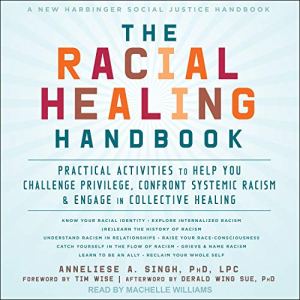
This project started by sending a school-based leadership team to attend summits and conferences where they could immerse themselves in learning about race and equity. They established a plan to engage the educators and staff. A cohort of educators planned yearlong strands of racial justice learning for their peers to increase their capacity as teacher leaders, including an equity strand for staff focused on increasing cultural competence and becoming an anti-racist educator. As part of their professional development staff also received The Racial Healing Handbook by Dr. Anneleise Singh and participated in their choice of book studies with a selection of books.
As a result of the professional development in the Racial Justice Teacher Development project, project leaders reported strengthened classroom communities and a decrease in behavior incidents. Through their professional learning efforts, they were able to begin redesigning instructional models and systems at their school toward a student-centered, restorative, inclusive school for all of their student body. Leaders in the school have also developed new ways to address equity in class placement, identification of students with advanced learning needs, and changes to instructional blocks that are more responsive to all students. The equity strands were impactful and will be a continued effort in the future.
Not a “Safe Space,” instead a brave one
Brave Space to Talk About Race is a project in Milwaukee Public Schools created to increase staff member conversations about race. The goals were to help identify actions the district could take to address issues of discipline disproportionality and school climate and to develop antiracist educators who could increase school capacity to maintain and sustain the work of having these conversations.
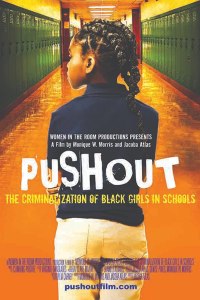
The project incorporated ways for staff members to engage with these topics through reading groups, by creating book study guides, participating in Jamboard reflections, offering viewings of the documentary “Pushout,” and offering programs for educators who were interested in participating . These included offering a Race Practitioner’s Cohort and planning a three-year program called Courageous Conversations about Race Exploration. In addition, the team worked to integrate action steps into school improvement plans for the coming year. At the end of the year project leaders shared cohort action steps with the district leadership and participating school-based cohorts had action steps to continue these conversations in the next school year.
Challenges along the way
Of course one of the major challenges for both project teams was COVID-19 and its impact on schooling. Some schools taught the first part of the year online and had a phased re-opening in the spring, which made it difficult to sustain professional development. Some schools were entirely virtual. This made book studies more challenging, but also opened up some virtual learning opportunities which can be useful in multi-school or district projects.
Recommendations for educators
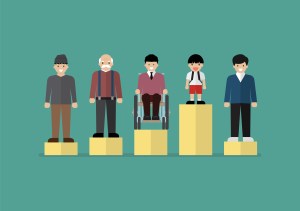
Both of these projects took on challenging topics and both offer examples in their approach that could be beneficial to others who are working to improve racial equity.
- Getting buy in at all levels by building relationships
- Creating norms for conversations
- Engaging in reflection on policies and methods
- Facilitating conversations around meaningful texts, media and/or events
- Allowing people to engage with the project at their own comfort level
- Developing action steps for the next year
While the work of racial equity is not easy to do, it can be done by small groups of educators working together. These projects have shown some impactful ways that educators can develop projects that can grow to serve these communities over time, supporting the leadership and staff in an ongoing effort to support racial equity. As Emily stated, the message is: Don’t wait! Start Now!
Learn more about Racial Equity and Teacher Development
- 3 Ways Schools can Support Racial Equity (EDC, 2021)
- A guide to Equity and Antiracism for Educators (Edutopia, 2020)
- Understanding the need for change, discipline disproportionality (NASSP, 2020).
Share this:

Where the Light Travels: Creative Media Builds Confidence and Digital Literacy
“Soon the digital divide will not be between the haves and the have-nots. It will be between the know-hows and the non-know-hows.”
– Stanford lecturer Howard Rheingold
Where the Light Travels is an after-school enrichment class designed to integrate photography and digital media into core areas of learning such as English Language Arts and Social Science. This project supports refugee youth in San Diego, creating engagement and connection by bridging hands-on creativity with technology and art.
The need for technology and visual communication has never been more important. This was highlighted as the world was sent into isolation with the impacts of COVID-19. “We use digital photos and videos to share our understanding, to connect with our communities, and to express ourselves,” stated Jana McBeath, Media Educator and Youth Council Coordinator with Outside the Lens. Receiving a three-year grant from the McCarthey Dressman Education Foundation is allowing McBeath’s project, Where the Light Travels, to transform an elementary after school digital media class into a safe space to build confidence while increasing digital and media literacies. She has seen firsthand how having media skills to use in life can change a student’s focus from self-identity, to family, community and eventually become a new language to use worldwide.
What were the goals of the project and how were they achieved?
Where the Light Travels was implemented virtually in partnership with the San Diego Refugee Tutoring Program as an after-school class with goals to:
- integrate ELA and core academic subjects using photography, videography, animation, and mixed media
- build confidence and engagement in students and their academic subjects
- create a safe space to encourage storytelling, identity and creativity
- showcase projects at a community exhibit honoring student work from throughout the year
Craft boxes with various art supplies and props were provided, as well as sealed envelopes with project materials. iPads loaded with apps for animation, photography, digital art, film editing, and other resources were also given to each student. To help combat screen fatigue, now that all of the students were learning online every day, the focus of the projects relied on the incorporation of tactile and hands-on activities, even though the project was designed to enhance digital literacy.
Consistent engagement became one of the major components of success. This was achieved in many ways. In addition to opening the sealed project envelopes online together each week, an emphasis was put on daily connection, using digital tools like Flipgrid and Google Chat for sharing jokes, art and ideas separate from the specific project.
Students were encouraged to experiment, explore and create in their free time in whatever interested them most and report back with self-directed projects. This was an opportunity to see what interested each student most, and reinforce the ELA and Skill standards in the discussion and evaluation of each student’s work. The consistent engagement, paired with the flexibility to adapt the curriculum to address varying curiosities, concerns and interests made the pivot to a virtual afterschool program arguably more successful than originally envisioned.
What progress did they make to their goals?

The projects created by the students really speak to the progress made in this program. The confidence of the students shines throughout and the results were far reaching. From comedic YouTube videos to dance performances and tactile science experiments, all of the projects incorporated some form of digital media problem solving, verbal and written communication, which addressed the crucial ELA, 21st Century Skills and digital media literacy needs.
What challenges were experienced along the way and what are the ideas for improving the project?
The onset of COVID-19 changed the goal for creative outlets to a necessity and was the biggest challenge for the project. What was meant to be an engaging in person experience now had to be redesigned to an accessible virtual setting that still allowed for meaningful connections for students who were already spending the day learning online. A lot of inventiveness went into pivoting this project to be something joyful for the students to look forward to during what ended up being a very difficult year for them in so many ways.
How has Where the Light Travels affected the learning of students and/or teachers?
Based on feedback from the students, parents, tutors and partners of the San Diego Refugee Tutoring Program, the effect on students was solidly positive. Engagement was achieved, as well as a returning student base. The students were truly able to nurture and develop their identity using their own passions and hobbies to explore interests and curiosities using the iPads and craft kits.
Exciting plans for the Future
As the project entered its second year, still virtual, the number of participating students doubled and included all previous students from the first year. Whether the program continues online, in person, or possibly even as a hybrid, the plans for the future include continuing with the student-led curriculum, utilizing techniques to stay highly adaptable, focus on mixed media projects, introducing advanced photographic processes, and keeping the asynchronous work and connections between classes.
Additional Resources
Learn more about supporting digital literacy for learners who are refugees:
- The Tech Advocate: Digital Literacy and Lifelong Learning
- Migration Policy Institute: Bridging the Digital Divide for U.S. Children in Immigrant Families
- International Rescue Committee: Digital Skills in Refugee Integration: Lessons Learned from Research and Practice
Share this:

The Best of Buena Vista: Empowering Community through Social Media
Just as we learn through experience, multi-year projects learn from previous years implementations. The Best of Buena Vista is a multi-year project that continues to build momentum each year it is repeated. Project leaders built on their success, addressed past challenges, and incorporated new opportunities and ideas.
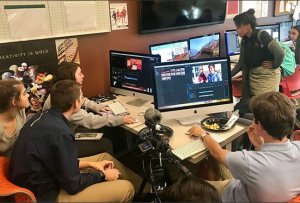
Located in Buena Vista, VA, the project team at Parry McCluer High School sought to collaborate with their community to create optimism by celebrating the The Best of Buena Vista.
The goals of “The Best of BV” were to expand the current program of weekly video announcements made by and for the PMHS student body. In the second year of the project, the team built on the excitement and eagerness of new and returning students in their Blue Library and Film/TV classes. At the request of the their students, they sought to provide additional inter-generational opportunities and experiences utilizing film and written media.
The project aspired to disrupt the negative small-town mindset as their students engaged in interviewing adults about their positive contributions to the community.
The team also wanted to allow their students to benefit economically as they increased their communication, writing, and storytelling skills, while practicing responsibility and accountability.
What progress did they make towards their goals?
The project continued to make progress towards all of their goals. They Best of Buena Vista established and produced a regular pattern of publication which included promoting student achievement.
The negative small-town mindset continued to be disrupted as students connected with community members and created platforms of growth for both students and elders. PMHS students have a stronger connection to their school and community though the deep and meaningful relationships they have created with the community elders. Project lead, Rishi Richardson, reports that every experience has been richly rewarding as each interview and interaction is met with surprise and delight by all the participants.
Academic opportunities for their students have expanded while the students and community members are empowered was a new, positive perspective. Students are becoming progressive story tellers of their communities’ rich and complex history. Furthermore, the elders in the community also learn as they are excited to access their interview on social media and share with others.
What did students learn while participating in and producing The Best of Buena Vista?
PMHS students learned how to use camera equipment and practiced being in front of the camera. They increased their communication skills, writing skills and confidence through mentoring, interviewing, filming, creating content, and successfully producing film and writing products for “the Best of BV”. One student who needed help to write a paragraph when she first started the program is now completing rough drafts on her own! Another student with developmental challenges has gained confidence and improved his ability to share his ideas in front of the camera.
What challenges did they face and how did addressing these challenges shape future plans for the project?
From slowing down the project to a snail’s pace to stopping the project in its tracks, COVID and COVID related restrictions continued to be a major challenge for the project team Addressing these challenges head on, the project leaders rethought and reorganized how the project moved forward. They consulted closed with the communities’ elders and created contracts with students to complete the unfinished work from this year’s project.
After meeting with the communities’ elders, the project team revised their methods and took two directions towards completing their project goals. After all, “the Best of BV” was contributing to an optimistic mindset for the community, they could not let COVID hinder the momentum. The first direction was to continue interviewing elders as they have done in the past. The second direction was to create teams of students who would study one aspect of the community more deeply and for a longer period of time. Aspects of the community that have been studied thus far include the Buena Vista Colored School (a place where African-Americans attended school under segregation) and the Paxton House (a home built in the 1800’s which has been restored).
Both directions have been successful. In the first direction, community elders stepped forward to share their experiences with the students. In the second direction, student commitment to the project increased. So much so, project leaders have decided to expand the project into the summer months and the students are excited to participate!
Plans for the future
As students take on more responsibility, become more courageous, and find their inner voice, they are beginning to look for ways to shape the town’s future. With COVID restrictions starting to relax, community elders have once again come to the school to have conversations with the students.
The program is looking forward to the next school year and anticipate that the students will continue to grow and succeed in their participation. We at McCarthy Dressman Education Foundation are excited to see how “the Best of BV” continues to positively impact the students and community!
The project team is thrilled to share this video describing their accomplishments.
Additional Resources
Golden Rules for Engaging Students in Learning Activities
How School and Community Partnerships Enhance Student Learning
12 Ways to Use Social Media for Education
Share this:

Full STEAM Ahead with Project Based Learning
All aboard and Full STEAM Ahead!

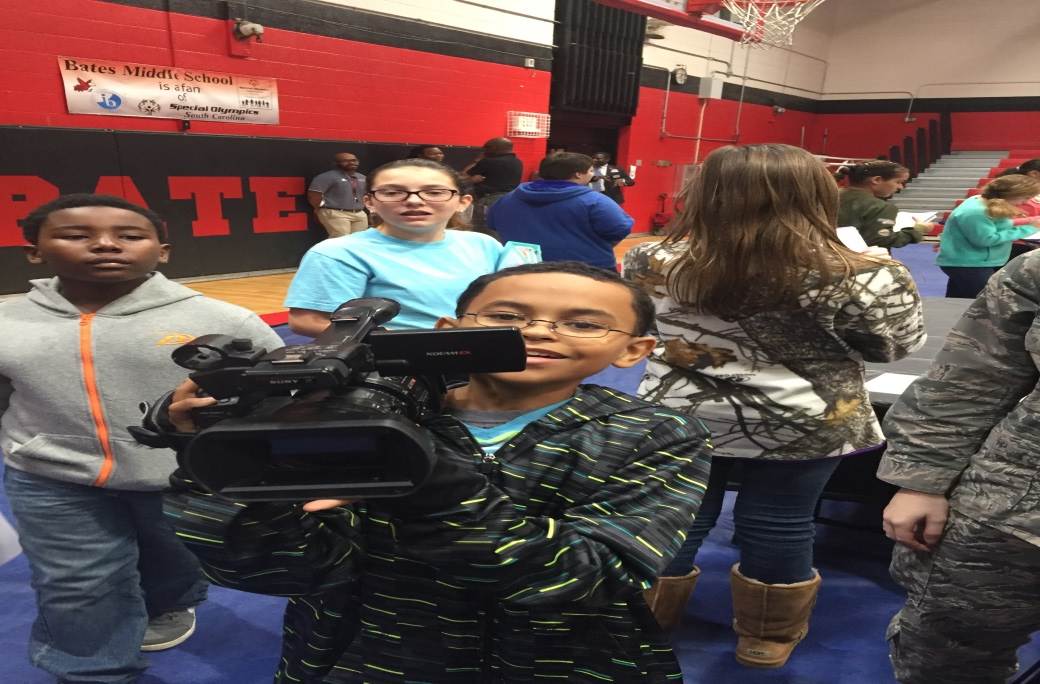
The educators over at Bates Middle School in Sumter, South Carolina have been working hard laying tracks for the past year in order to bring their exciting project to fruition. By combining Project Based Learning (PBL) and a curriculum focus on Science, Technology, Engineering, the Arts and Mathematics (STEAM) and working with local businesses they are hoping to create a new generation of students who are prepared to be in an agile and competitive work force. One of the brilliant concepts behind this project is that nothing exists in a vacuum. You can’t well understand engineering if you don’t have a good handle on physics. You can’t code a videogame without understanding the underlying code. And you certainly can’t have music without math.
The Full STEAM Ahead project aims to remove the traditional isolation of subjects through the use of the “Critical C’s” of Collaboration, Cooperation and Communication which are emphasized with project based learning through interdisciplinary activities.
Now that they are a year in, let’s see what has transpired.
Bates teachers, led by the Transforming Learning Together (TLT)

mentor teachers, in the first stage of this initiative begun by identifying large-scale student learning goals for the year. They then researched new teaching approaches in order to integrate STEAM and Project Based Learning to help them achieve their goals, along with developing “action plans” for each year’s practice. The belief was that art can spark creativity in young scientists and engineers, develop observational abilities, and strengthen collaborative skills. One of the guiding questions for this project is ” How can we improve instruction, pedagogy, and student learning across the curriculum through the use of STEAM and PBL?”
So how do they propose to do this?
They began by having their trainers and the TLT team attend a PBL and STEAM workshop that spaned six sessions. This team returned to Bates to lead the entire staff through a STEAM Project Based Learning activity in order to familiarize everyone with the methods. Teachers investigated and utilized critical inquiry to work through this challenge. The thinking was that teachers will experience everything that the students do, giving them the tools to help elevate the projects as well as answer previously unanticipated questions. Teachers then guided students through one PBL unit in the first year of implementation.
A year in… where are they now?
They started off by providing professional development to their teachers during the first semester of the school year. STEAM lessons were developed to be a part of the regular curricula as well as embedded in Project Based Learning. The second semester brought about school-wide PBL units. Then on March 24th, there was a school-wide PBL Kickoff to begin the grade level units. This is where things really began to take off. For this initial thrust into the unknown they gave each year a different subject field to dig into. Sixth graders explored the guiding question: “Are animals placed in captivity at an advantage or disadvantage than those in their natural habit? Why/ Why not?”
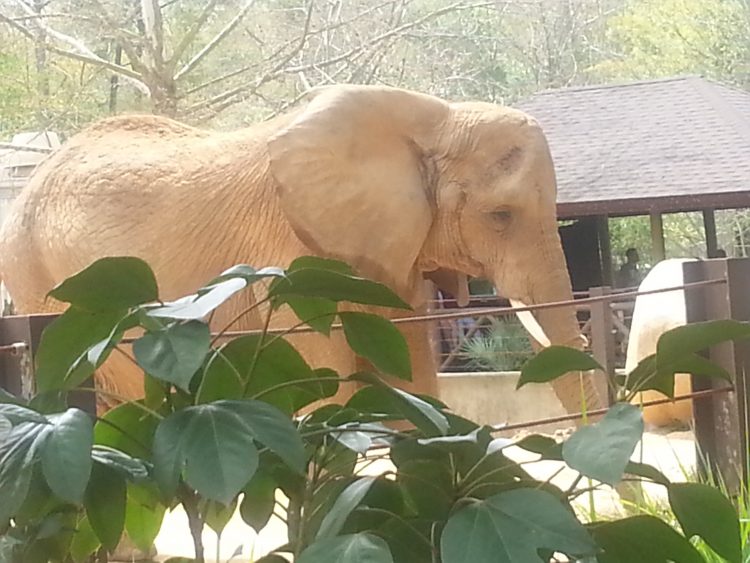
The kick-off was a field trip to the Riverbanks Zoo. The 6th graders researched the question and created suitable habitats for animals of their choice. The 7th graders explored the guiding question: “How can we be prepared for the unexpected?” Dealing with the preparedness for natural or man-made disasters was the focal point. The Red Cross, Fire Department, EMS, Disaster Management, Police Department, Shaw AFB and Salvation Army each set up a station to explain their role in disasters and how the community can prepare for disasters in the future. Students researched a disaster and prepared community service presentations on disaster preparedness. Eighth graders explored the, very relevant, guiding question: “Can separate be equal?” This question dealt with the Civil Rights movements of 1960 -1990. Guest speakers, Nathaniel Briggs (Briggs vs. Elliot) and Artrell Benbow (civil rights activist in Summerton and Sumter) spoke to the students of their personal experiences. This culminated with the 8th grade Drama class presenting a skit about the infamous Orangeburg Massacre. Students then rotated rooms to watch films about civil rights, explored civil rights virtual museums, and participated in gallery walks. Students researched the civil rights eras of 1960’s through the 1990’s and created projects to address the guiding question. The PBL classes occurred every Tuesday and Thursday beginning March 28th and ended in a PBL Excellence Fair held on May 4th at 6:00 pm at BMS to showcase student work and presentations.
What are some challenges facing STEAM/PBL learning?
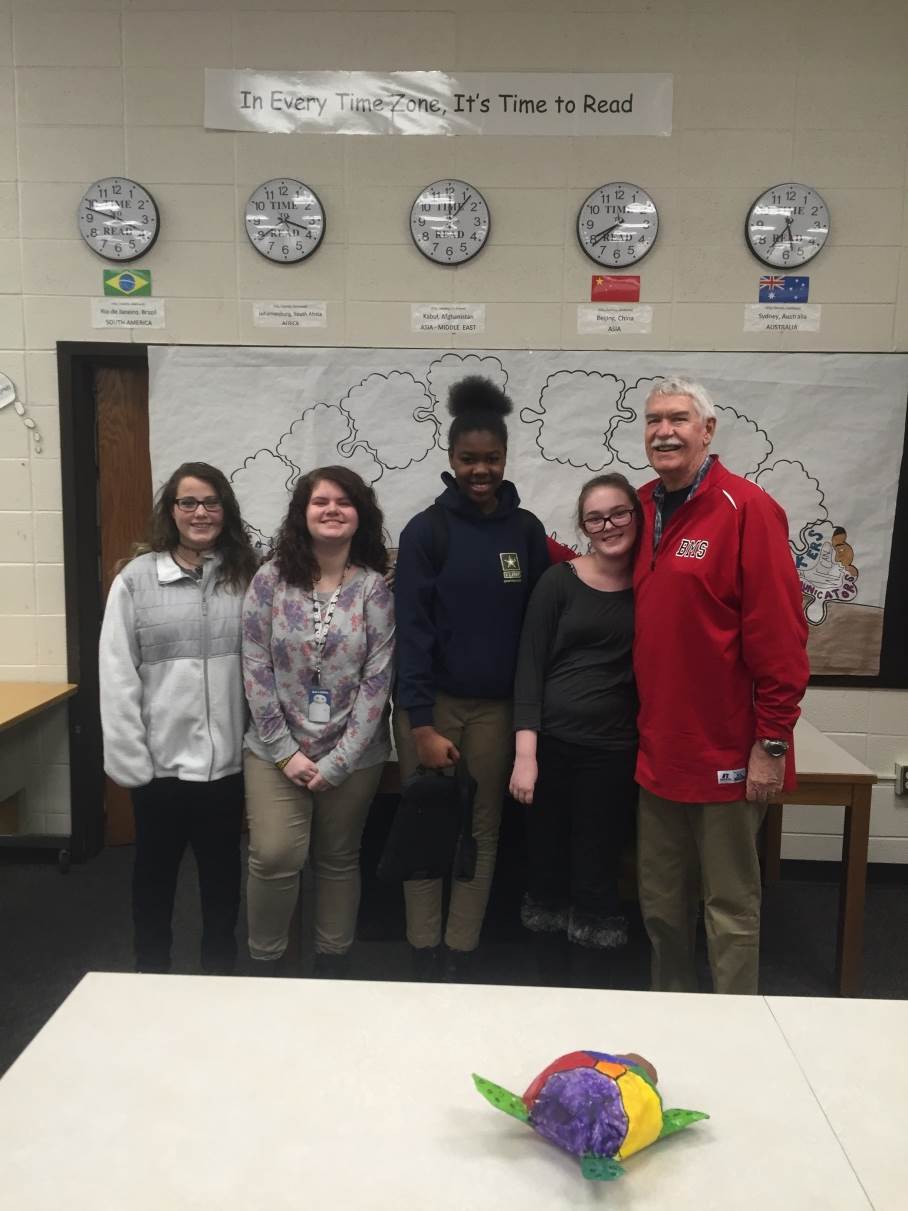
For as exciting as this method of PBL learning is, and it’s clear that it’s starting to work; students and teachers on the whole are more engaged in their study areas… it’s not without it’s challenges. One of the biggest cited in the report is that not all of the teachers have bought into the STEAM /PBL concept. This makes communicating those ideas to students that much harder. Further professional development is needed in order to ensure more participation by teachers. They have also had some difficulty setting up model classrooms so we are hoping teachers observing other teachers will assist in this. But as more teachers undergo professional development and find the merit in this method of teaching the easier it will get. And year two has some exciting things in store for the students. One word: Robots. We look forward to hearing about their experiences with Robots.
How might Robots, cross-cultural references and civil rights intersect?

Let’s mix up that engineering and art a bit, shall we? The term “robot” came from a Czech play called Rossums Universal Robots and is derived from the word “robotnik” which means slave. It’s about a robot who is forced to work for a shady company that then rebels and leads to the extinction of the human race. It’s bleak, but not without hope. But it’s a good lesson and a challenge for students on how we should be thinking about a newly created servant class. Just some food for thought.
Learn more
- STEAM, not STEM
- STEAM Rising: Why we need to put the arts into STEM education
- Project-Based Learning: PBL is a dynamic classroom approach in which students actively explore real-world problems and challenges and acquire a deeper knowledge
- Project-Based Learning: Students actively investigate solutions to complex, long-term challenges, often in groups
Share this:

Cigar Box Odyssey: Enriching Creative Process Skills
Fourth graders stimulate the thinking processes involved in creativity through an Academic Enrichment Grant
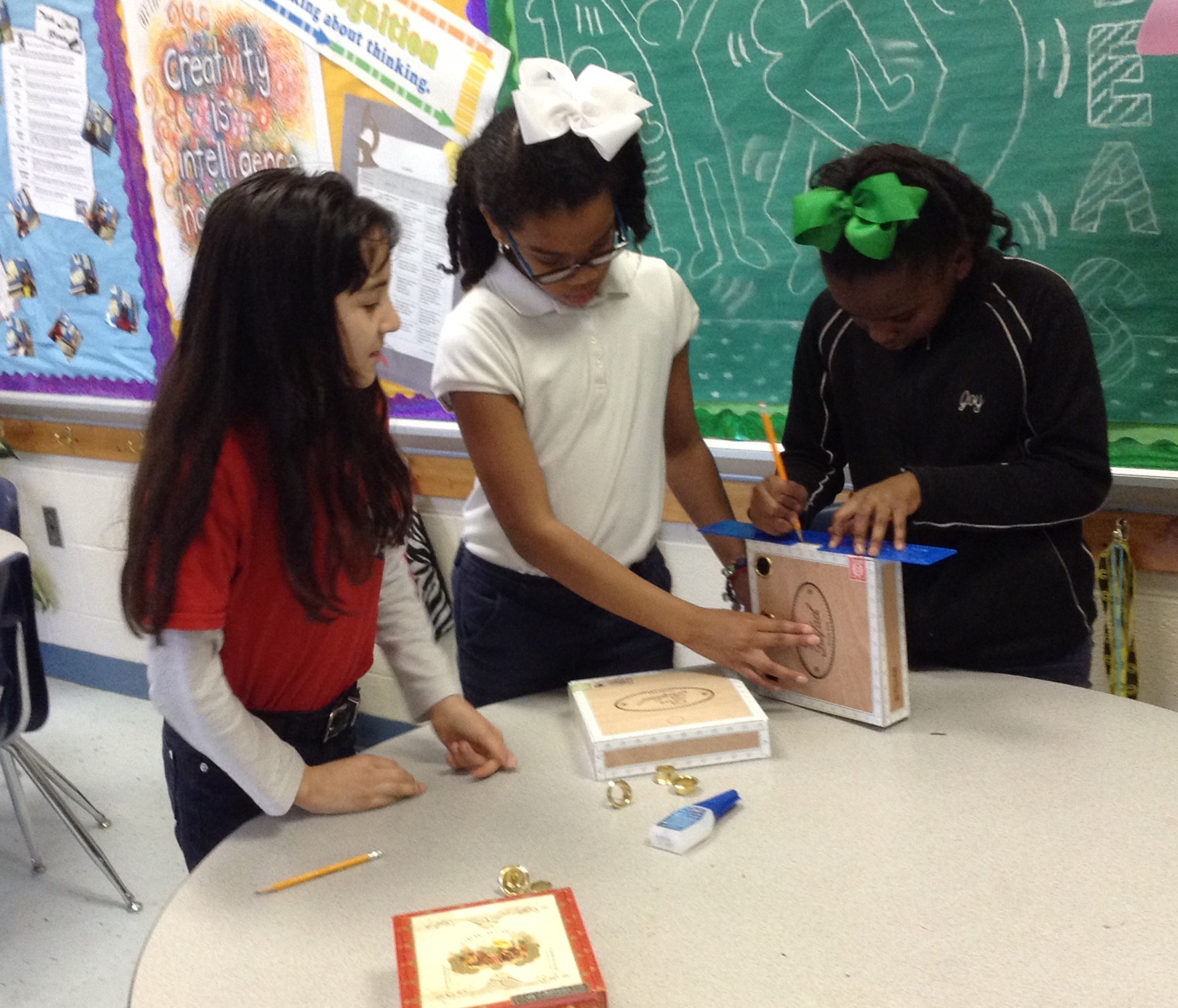
As we face many challenges in educating our children, it is important to emphasize creative thinking and problem solving. Creative thinking and problem-solving are essential parts of the process to turn ideas into innovation and open up avenues to creativity.
What were the goals of the Cigar Box Odyssey project?
The overall goal of the Cigar Box Odyssey project was to teach creativity by integrating the Outcomes of their gifted program with the Objectives of their Fourth Grade Curriculum. Their goal was achieved by emphasizing the gifted process skills of performance, presentation, research, creativity, self-directed learning, group dynamics, and understanding and creating art. The students analyzed the creative process used by musicians to design the cigar box guitar using the SCAMPER (Substitute; Combine; Adapt; Modify; Put to another use; Eliminate; Reverse) technique.
What is the SCAMPER technique?
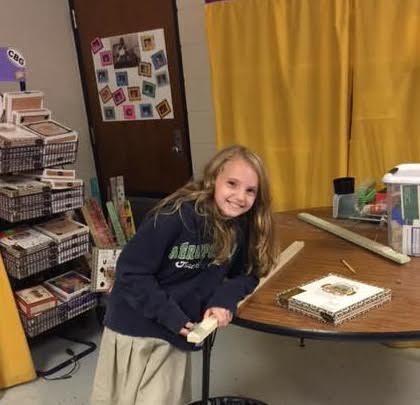
The SCAMPER technique (introduced Bob Eberle, as described in the design thinking blog, Designorate, by Rafiq Elmansy) is based on the idea that what is new is actually an adaptation of something that already existed. It is considered one of the easiest and most direct methods to creative thinking. The SCAMPER keywords noted above represent the necessary questions students should address during the creative thinking process. For example, for Substitute one could ask, “What part of the process can be substituted without affecting the whole project?” or for Combine, one could ask, “Can we merge two steps of the process?”
- Project caption “We begin research and building guitars at the same time. We use sites like PBS Blues Road Trip and Carnegie Hall History of the Blues.”
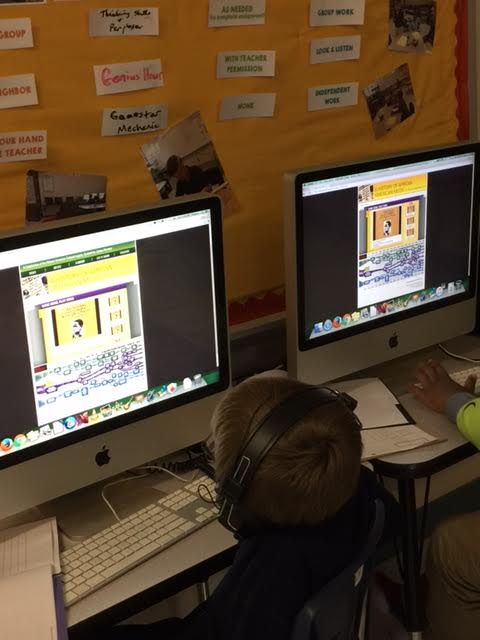
What skills did students use to build their Cigar Box Guitars?
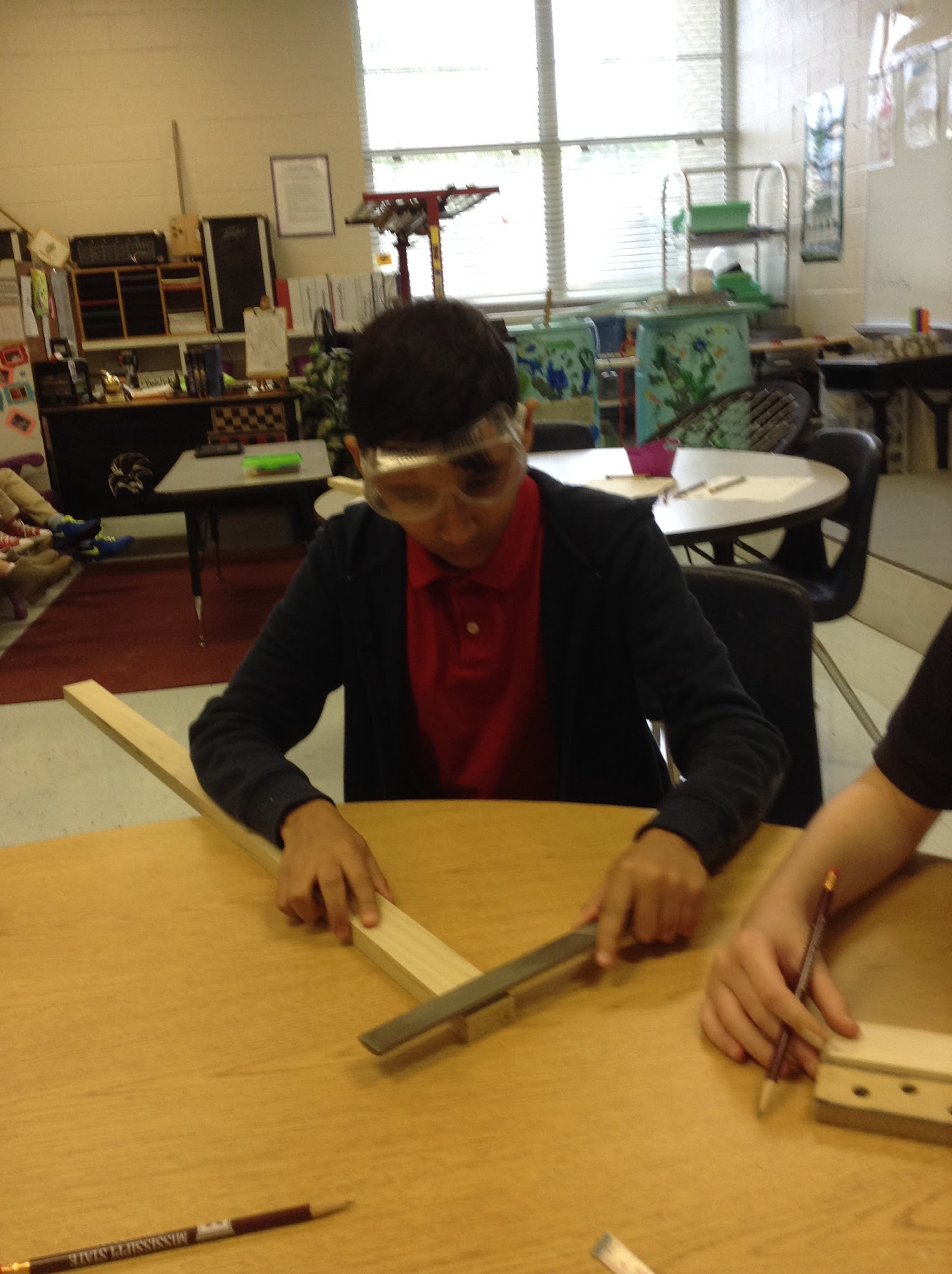
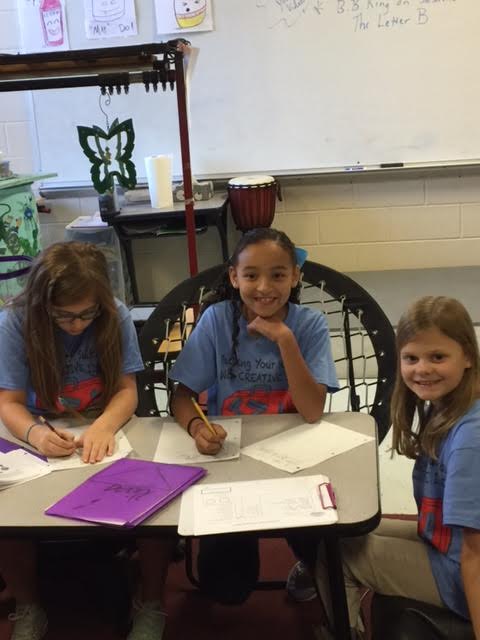
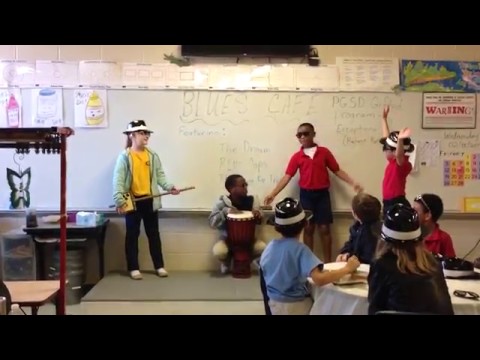
The students researched the origin of the Delta Blues and how the Blues form travelled and changed, influencing other American music forms. They used measuring skills, basic knowledge of sound, and creative principles to build their own cigar box guitars. Then the students wrote original songs and performed them in a Blues Café that was set up in their classroom.
The students attended the New Orleans Cigar Box Guitar Music Festival where they were well received and able to meet professional performers. And, to top it off they have been invited to perform at the Festival next year. To prepare for their performance, they plan to invite T. J. Wheeler, creator of the Blues in Schools program, to College Park and help the students prepare for this performance. He taught this year’s fourth graders a few things in just a short time at the festival.
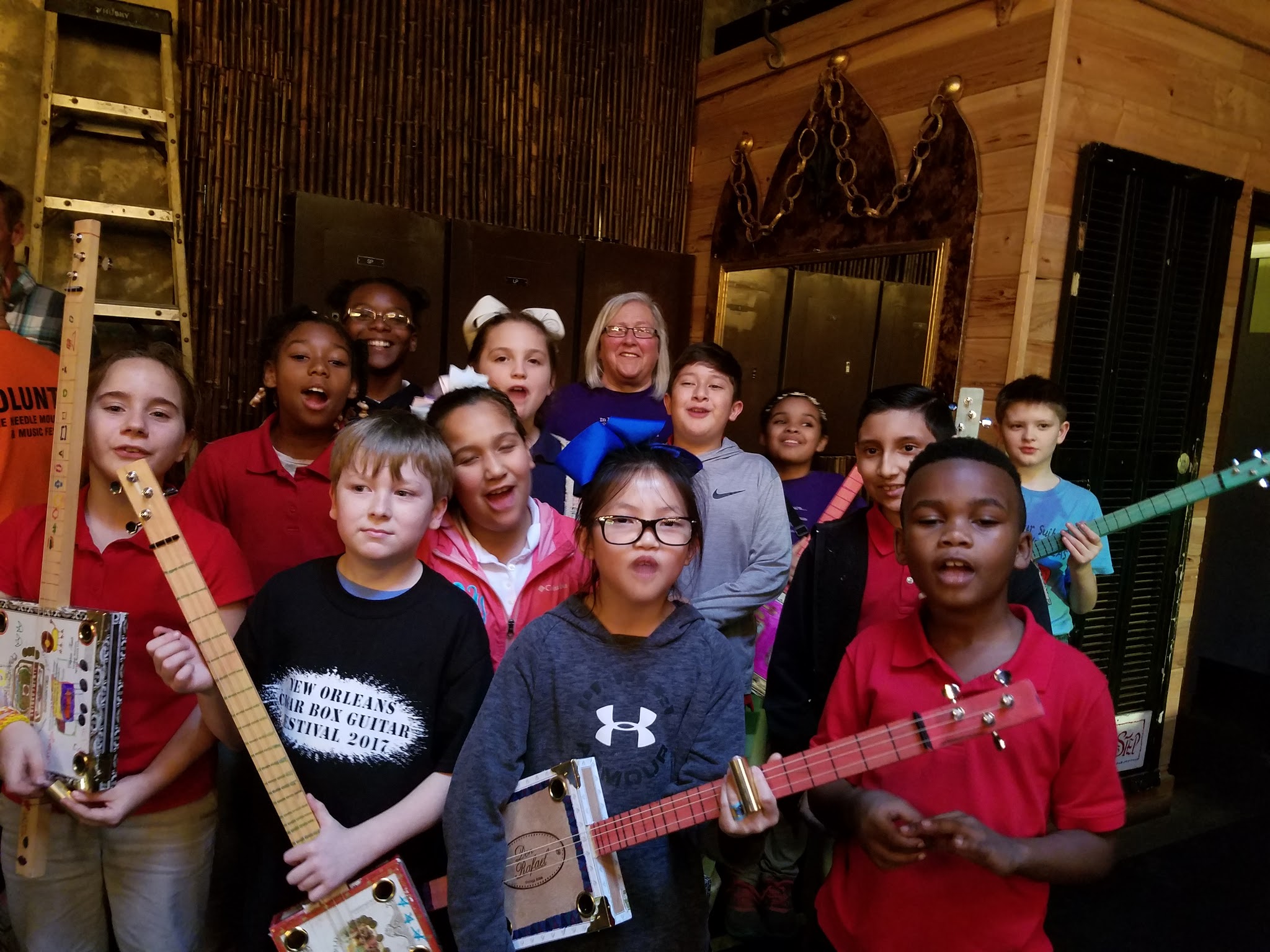
How has this program affected learning?
Because of this program the students have experienced the intersection of research and reality. They have had a taste of living what they researched and were exposed to adults who built the same instruments and performed the same kind of music. They were also able to extend the program to include some cutting-edge technology by 3D printing their own guitar picks.
- “We wrote our own Blues songs and performed them in a Blues Cafe in our classroom” Project caption.
So, what’s next for the students?
With the purchase of a 3D printer students will learn how to program CAD and create (not just print) their own picks. So, both the technology and the performance components of the program will be lifted to a higher plane when they learn to program CAD and perform formally in front of a festival audience.
- Students develop original music. ({Project photo).
Further reading:
Share this:

The Village Science Project: Reducing Barriers to Science Education in South Sudan
While there are always needs in the schools in our own country, it is important to remember that other countries have students that have the same potential but lack even the basic resources available to many U.S. students.
This is what Candacia Greenman is aiming to address by working with the Loreto Primary School in Rumbek, South Sudan. The Village Science Project (VSP) aims to use an inquiry-driven, hands-on and play-oriented approach to improve access to high quality science education for over 200 disadvantaged students over a 3-year period in this MDEF funded academic enrichment project.
How can educators address barriers to high quality science education?
VSP intends to target the four main hindrances to science learning in their community in order to better serve the students:
- Limited resources for practical, inquiry-driven science exploration
- Poor English language acquisition
- Little community engagement
- Psychological barriers to learning
VPS’s proposed addressing these in the following ways:
- Providing students with the resources needed for science exploration through the use of science experiments and engineering and robotics projects.
- Implementing techniques to improve English language skills in science learning by promoting reading through tablets, facilitating peer learning experiences and encouraging student presentations through science fairs
- Stimulating community engagement through science fairs combined with field trips and career talks from local community members.
- Creating low-stress environments for our students, especially our girls to become interested in learning science (students are also given opportunities for “tinkering” or “free play” with science kits through the formation of an after school “tinker club”)
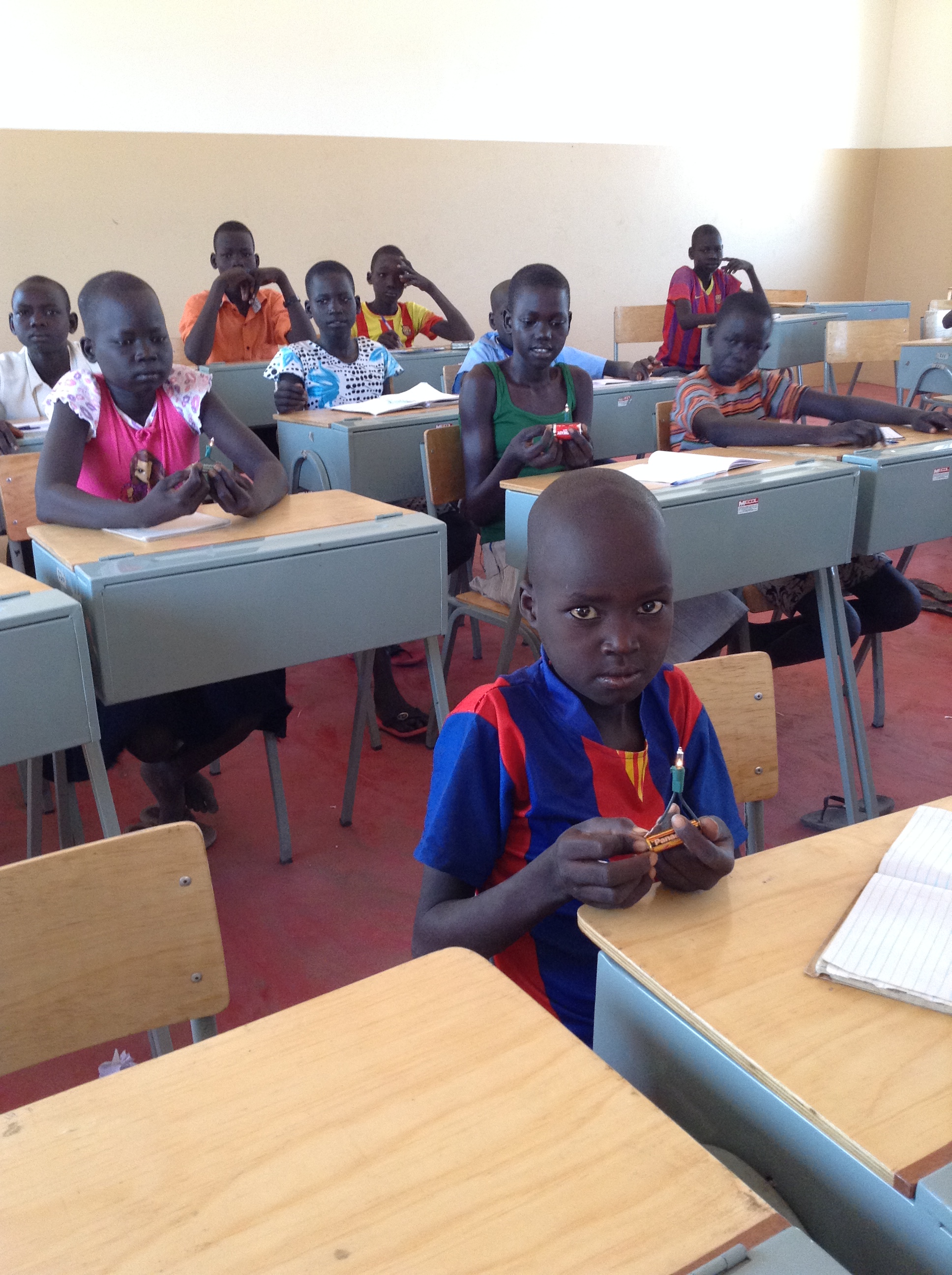
How can teaching methods improve students’ love for science?
Loreto Primary School serves over 600 students, with an emphasis on girls’ education and VSP will benefit about 200 different upper primary students over 3 years. The students live in a community with limited access to electricity and potable water and currently, classes are conducted outdoors under trees.
Most of these students never get a real chance to find a love of science because it’s taught almost exclusively in a theoretical, teacher-centered manner. As such, VSP is ground-breaking because of its use of a more hands-on and child-centered methodology to elevate student learning. They’ll do this by keeping a strong focus on inquiry-driven science exploration, which will help these students to develop their critical thinking skills. VSP will also deepen students understanding of, and interaction with the local physical environment as well as addressing social issues that adversely affect science education such as gender inequity, trauma-induced stress and poor community engagement.
At the end of year one the educators working on the VSP conducted initial baseline assessments of science performance and interest of Primary 5 and Primary 6 students after the following programs were implemented:
- Teacher demonstrations
- Laboratory exercises/activities
- Robotics and engineering projects
- Tablet usage
- Mathematics manipulatives usage
- Science fair
- Career talks
- Field trips
- Tinker Club
Revealing effective science and math teaching
The VSP team members have conducted baseline assessments in both science and mathematics enabling the teachers to tailor the rest of their programs according to how best to serve the students needs. In light of a mathematics assessment revealing gaps they’ve launched a mathematics intervention program targeting student understanding of number operations for Primary 3 through Primary 6 students. All teachers have adapted their teaching programs to allow for more time for Mathematics instruction and they have expanded their focus on number operations.
In addition, all of the primary school teachers attended a month-long training workshop to learn how to integrate demonstrations into their lesson plans for effective science teaching. In order to maximize the use of the science teaching aids, they expanded their focus to include demonstrations in Electricity, Magnetism and Weather modules.
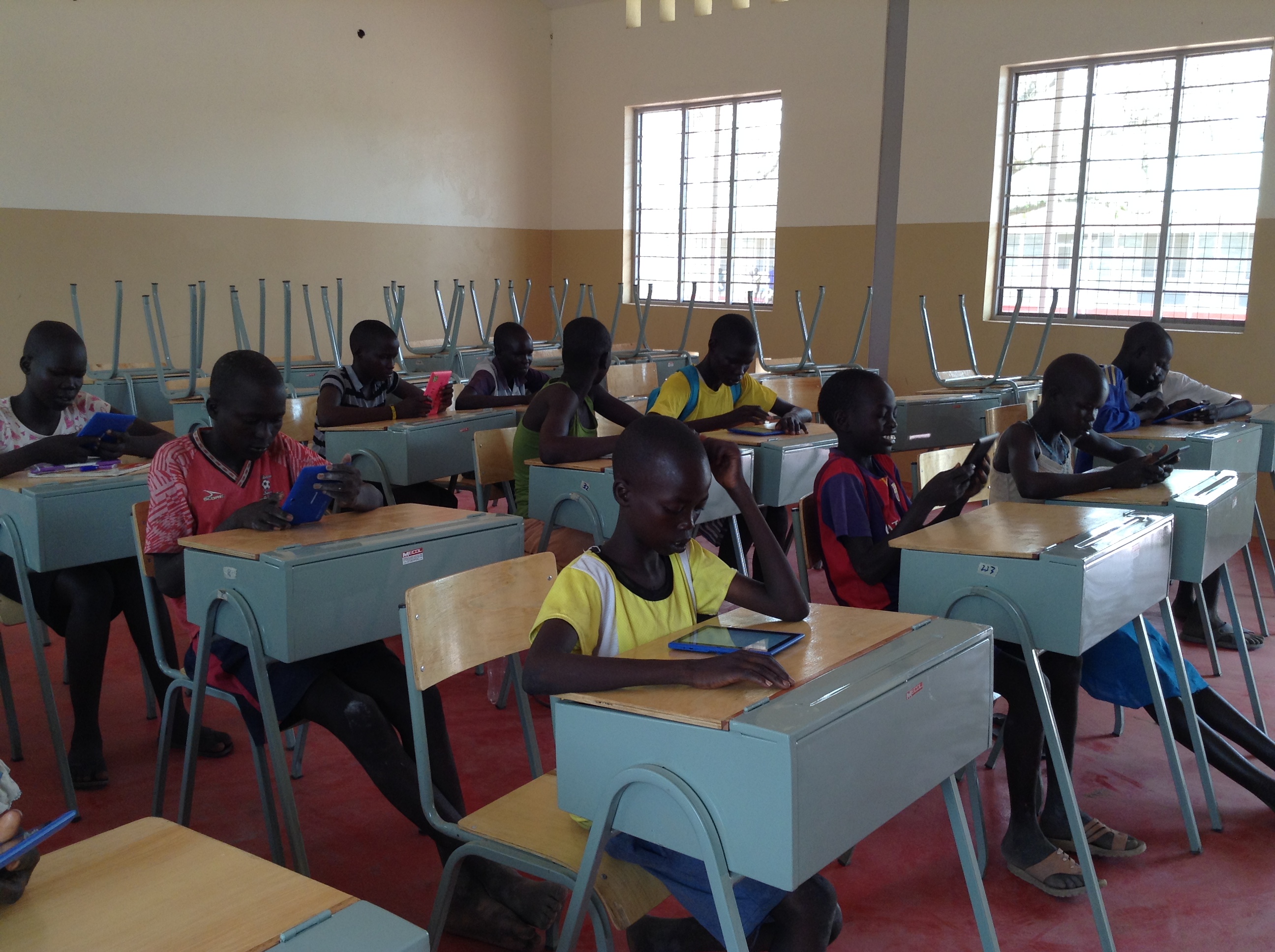
Best of all, afterschool programs to supplement students’ science education have also been implemented. In these programs, the students use science kits to expand their learning of material covered in their Electricity, Magnetism and Weather modules. Those aren’t the only exciting things going on after school for Loreto Primary School students.
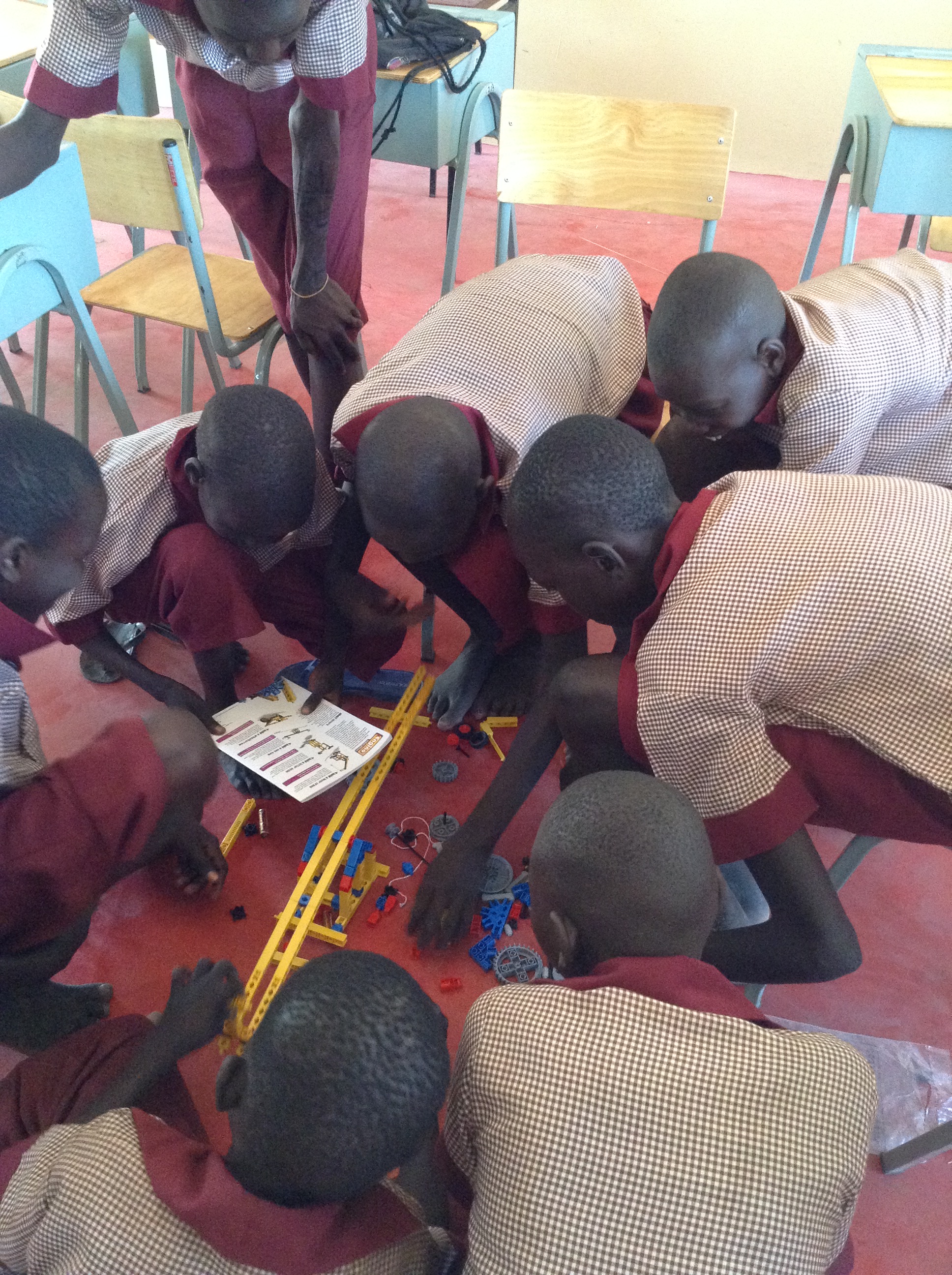
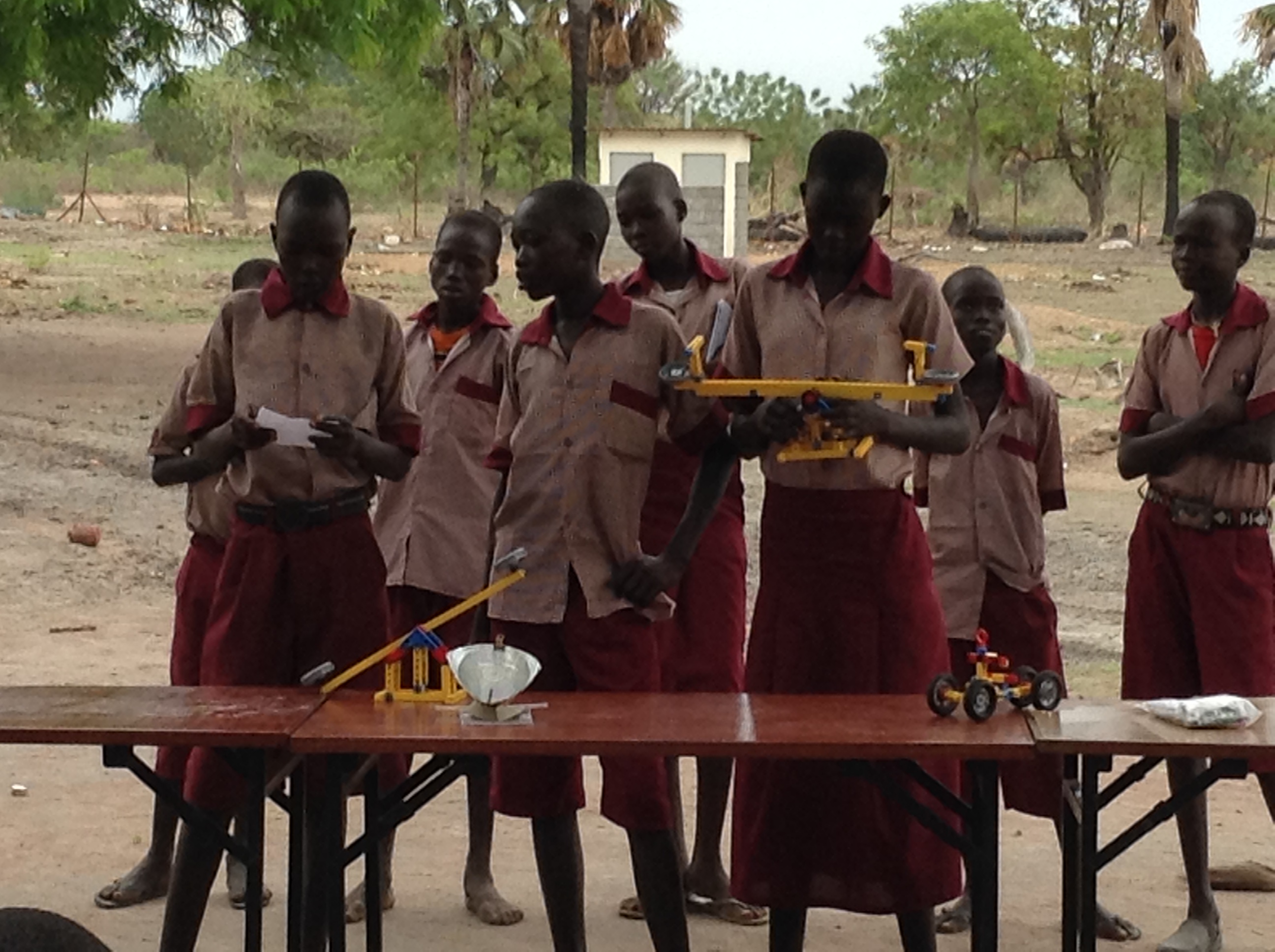
VSP has also introduced programs to introduce students to engineering principles and robotics. In these programs, students have been using Engino engineering blocks to build simple machines and learn how to code using the Lightbot app as a first step towards understanding robotics. The engineering afterschool program encompasses the proposed ‘Tinker Club’ in which ‘free play’ is encouraged and students build simple machines of their choice. Students are also being provided with tablets to use in the afterschool programs to aid them in their mathematics and science courses.
One of the most exciting additions have been the science fairs which give the students a place to shine in front of Teachers, parents and other community leaders also attending the event. The science fair focused on energy and engineering and students gave presentations on the design of solar toys, the basics of electricity, and the design and utility of simple machines.
One of the greatest feathers in the cap of the VSP project is that all of their after school programs and the science fair were conducted in English and has resulted in a vast improvement in English comprehension. In addition, students have learned how to use technology and the basics of coding through the use of tablets. Their teachers have reported that tablet usage has also helped the students with Mathematics anxiety.
Lessons learned in academic enrichment
The accomplishments of this project have not come without challenges. The VSP team have reflected on ways they can improve their program in later years. Their biggest challenge was the field trips due to security concerns. As a result of this challenge, they have shifted their focus and are currently designing a “Mathematics and Science for Life” program in which students will attend weekend sessions to learn how mathematics and science are useful in everyday life. Being able to adapt and shift strategies in response to challenges is a necessity for success for a program like this.
The VSP team also learned the difficulties of relying on applications that are not as readily available on the international networks. Google Play is not enabled in South Sudan. As such, all apps must be pre-loaded before transportation to Rumbek. Unfortunately, this means that updates cannot be installed as needed. Furthermore, a lack of consistent and fast internet access has limited the utility of many apps that would be very useful for the students. And in addition to these challenges, having electricity in the classroom has been an issue. As such, they recently invested in solar energy to provide electricity to their school campus and are have installed solar electricity panels for our primary school which will improve their internet access.
All in all, it sounds like some really exciting things are going on with the VSP in Rumbek. They’re swinging with the punches and adapting when necessary. The McCarthy Dressman Education Foundation is excited to see where they go in the years ahead. If they succeed, other schools in the region will benefit enormously from the pedagogical strategies that these educators are pioneering.
Learn more about the topics in this post
- Science and Math Education for Development
- SIAM: Developing Mathematics in the Developing World
- Science Education in Developing Countries
- Revealed: World pupil rankings in science and maths
- Redefining education in the developing world
Share this:

Lesson Study Improves Science Instruction
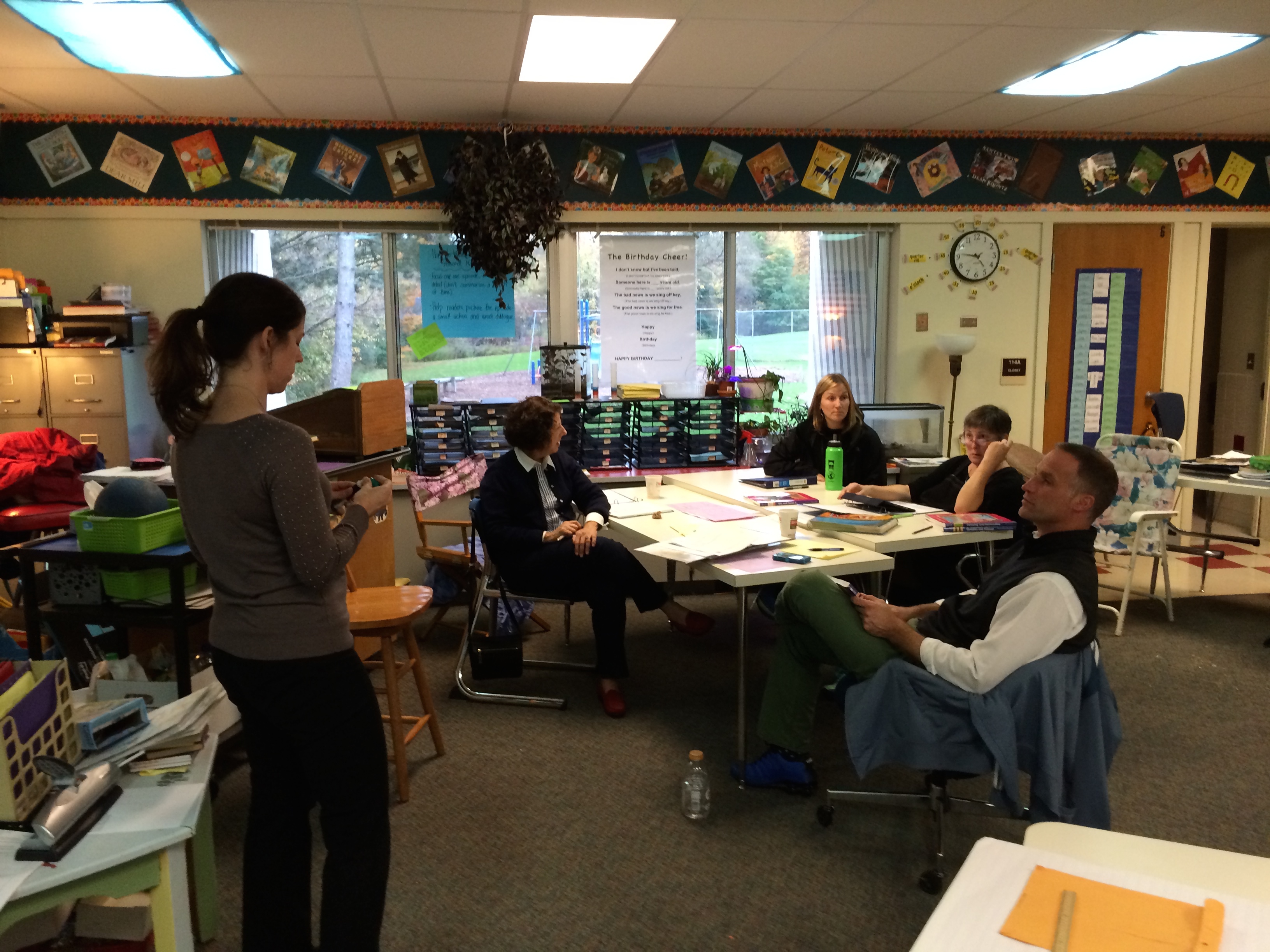
It’s no secret that Lesson Study works.
There are many, well documented success stories and it has been used to great effect in Japan.
There’s a reason Japanese students consistently score in the top ten in the Organization for Economic Operation and Development’s Programme for Student Assessment. But today’s blog isn’t about Japan, it’s about improving the quality of elementary level science instruction and how the educators at Long Branch Elementary in Liverpool, New York are doing it.
What is lesson study?
For those that may not know, Lesson Study is a widely utilized collaborative professional development practice (2015, Wikipedia). Lesson Study starts with a group of educators that pick a content focus with the express purpose of preparing a research lesson. That group will convene regularly to share research, discuss national, state and local education policies and standards correlating to the subject at hand. This enables teachers from a wide variety of subjects and disciplines to cross-pollinate their ideas and research with one another in a directed and focused environment. By observing and critiquing each other’s lessons and delivery these educators are able to elevate each other’s abilities and knowledge base. And by the transitive property, the students are exposed to a well-constructed lesson plan.
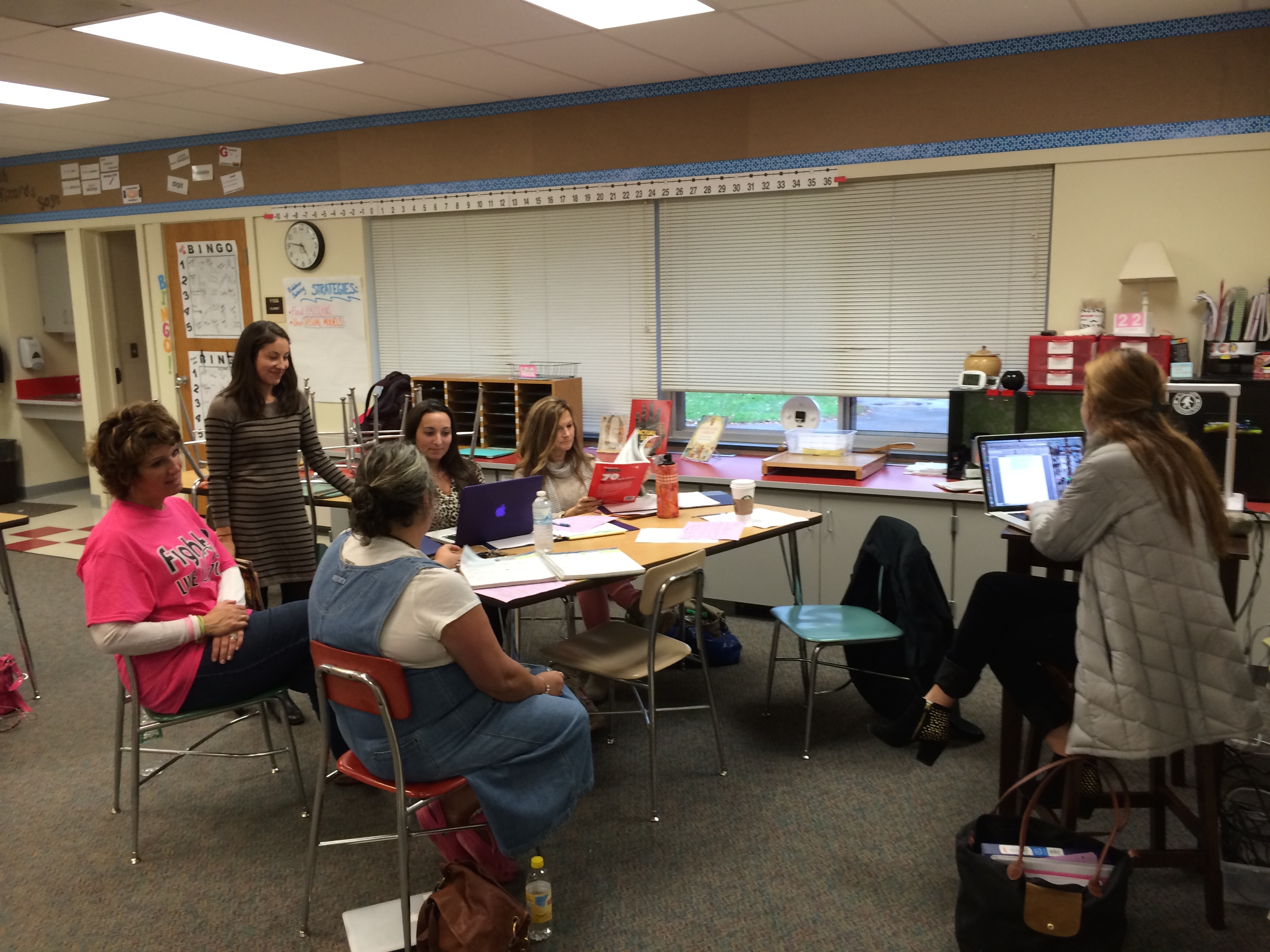
How are the teachers at Long Branch Elementary using lesson study?
These educators decided to focus their lesson study efforts on the sciences, including studying a national framework for science education and how they could adopt it to fit their specific needs.
According to their proposal, they wanted to be guided by the following three questions:
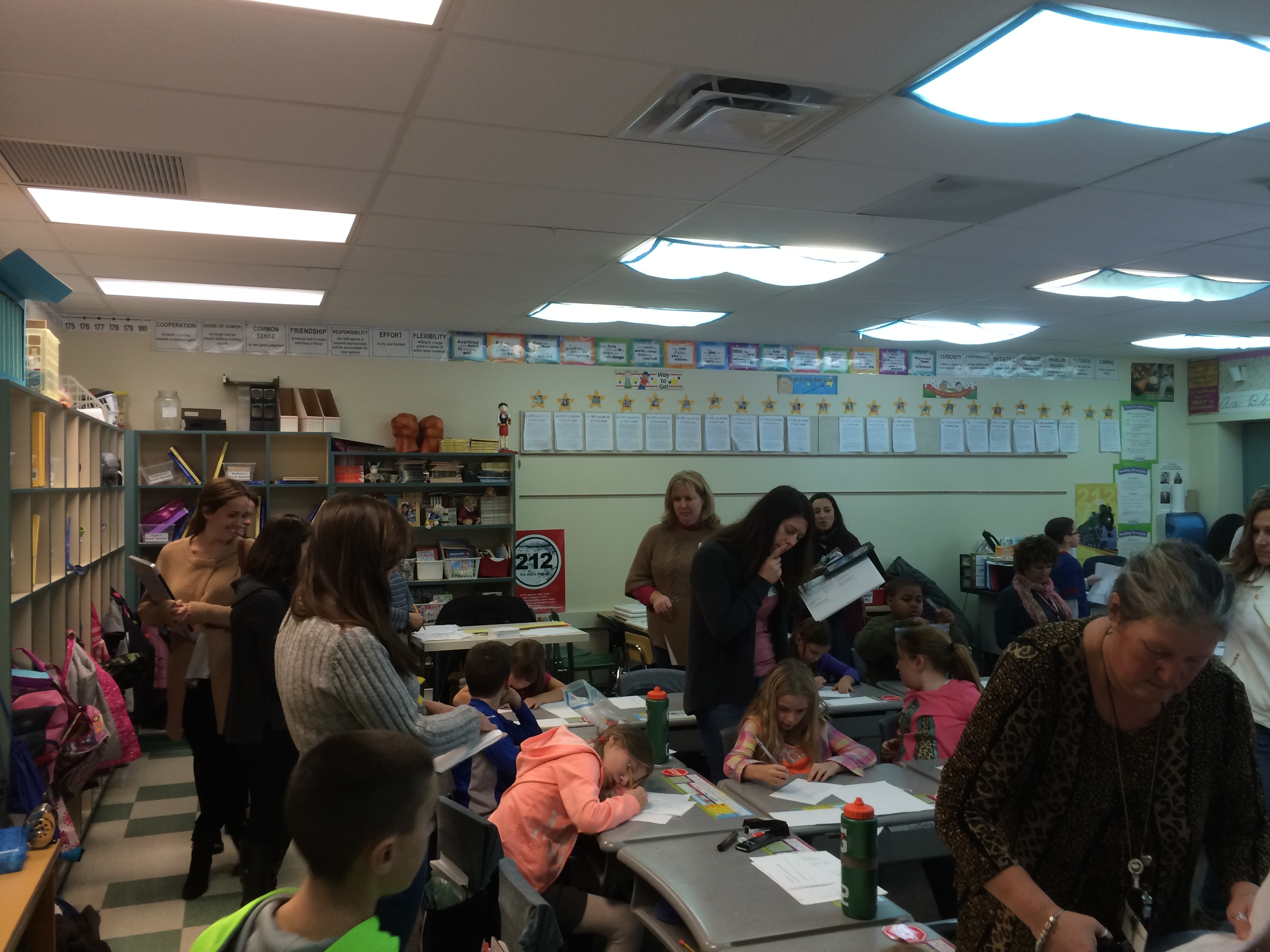
- How do we design science instruction that makes students’ thinking visible?
- How can we meet our students’ needs and simultaneously address the new science framework?
- How will evidence of students’ learning be used to help us revise our original lesson?
What did they learn?
The project at Long Branch Elementary has been so successful that their program and teaching tools have spread to two other schools in the region, with educators from those schools now participating in the lesson study program. In addition, at the time of their report, they had three out of the four research cycles completed and implemented, with the final research team in the midst of their own cycle and well on their way to completion.
The educators participating expanded their knowledge base about claims/evidence, science content knowledge, and constructivist methods for teaching elementary science. The teachers also expressed “self-efficacy and confidence in regards to teaching claims and evidence, using inquiry-based instruction and teaching with student science notebooks.”
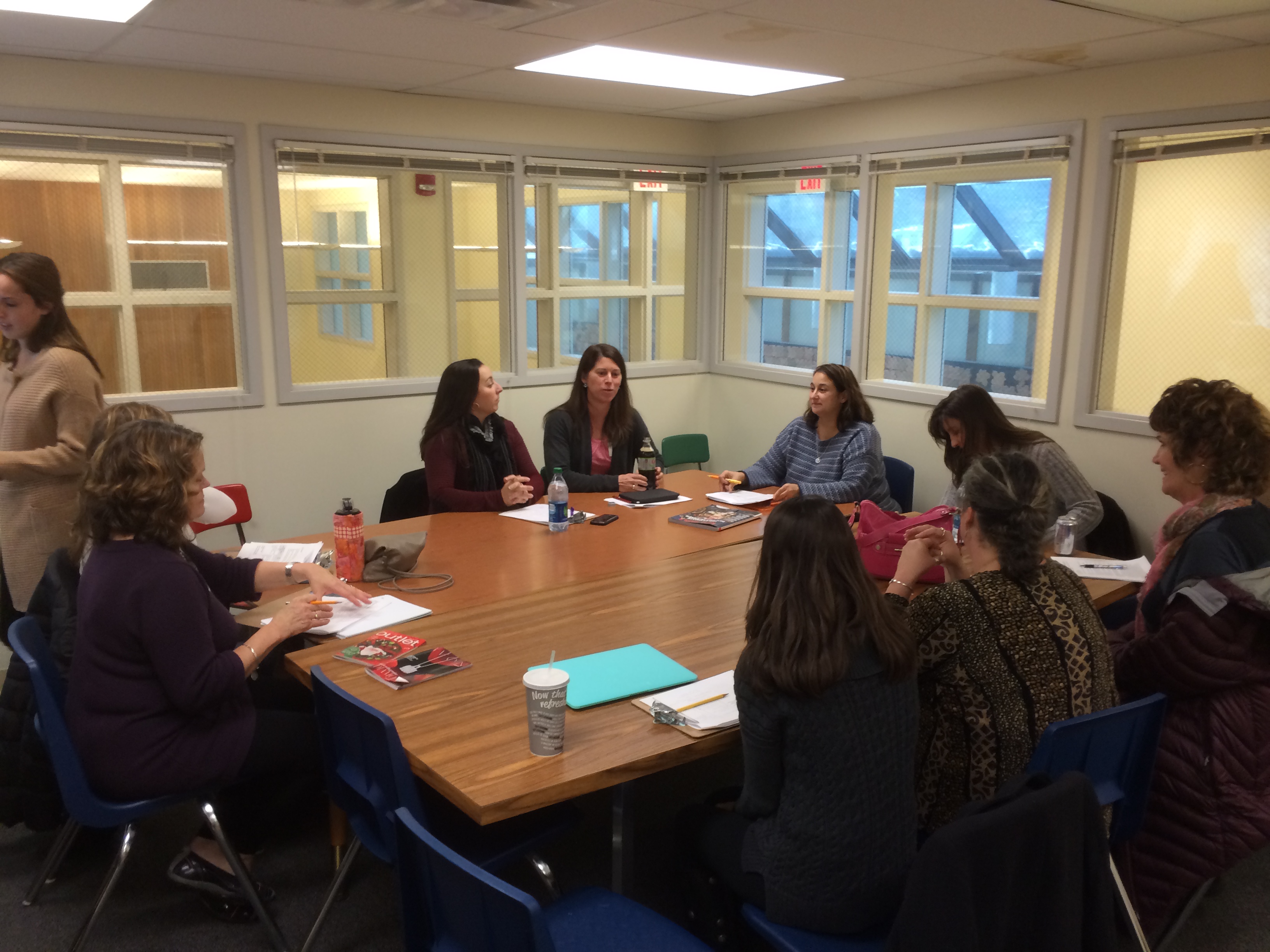
Teachers weren’t the only ones to benefit. Students had the opportunity to collect data, engage in scientific experimentation and increased the level of science knowledge throughout the course of the cycle.
How did Lesson Study support improved science instruction?
Understandings gleaned from the Lesson Study were used to inform instruction. For example, educators learned that it can be difficult to facilitate discussions with students with varying levels of comfort with the subject matter. Teachers report that teaching students to make claims based on evidence has been a bit of a pedagogical challenge, as the students tend to confuse evidence with claims. They also found that without visual aids, such as graphs and charts, the difficulty in communicating these ideas increased exponentially. These valuable understandings of what wasn’t working in the science research lessons provided educators with specific modifications they could make in their lessons to make student learning more effective.
What did they learn about implementing Lesson Study?
The structure of their school is not very supportive of lesson study which has forced them to start their meetings during the summer. They found they cast too wide a net when it came to getting the research groups started and think that scaling down the research lessons will improve the speed in which they can be implemented.
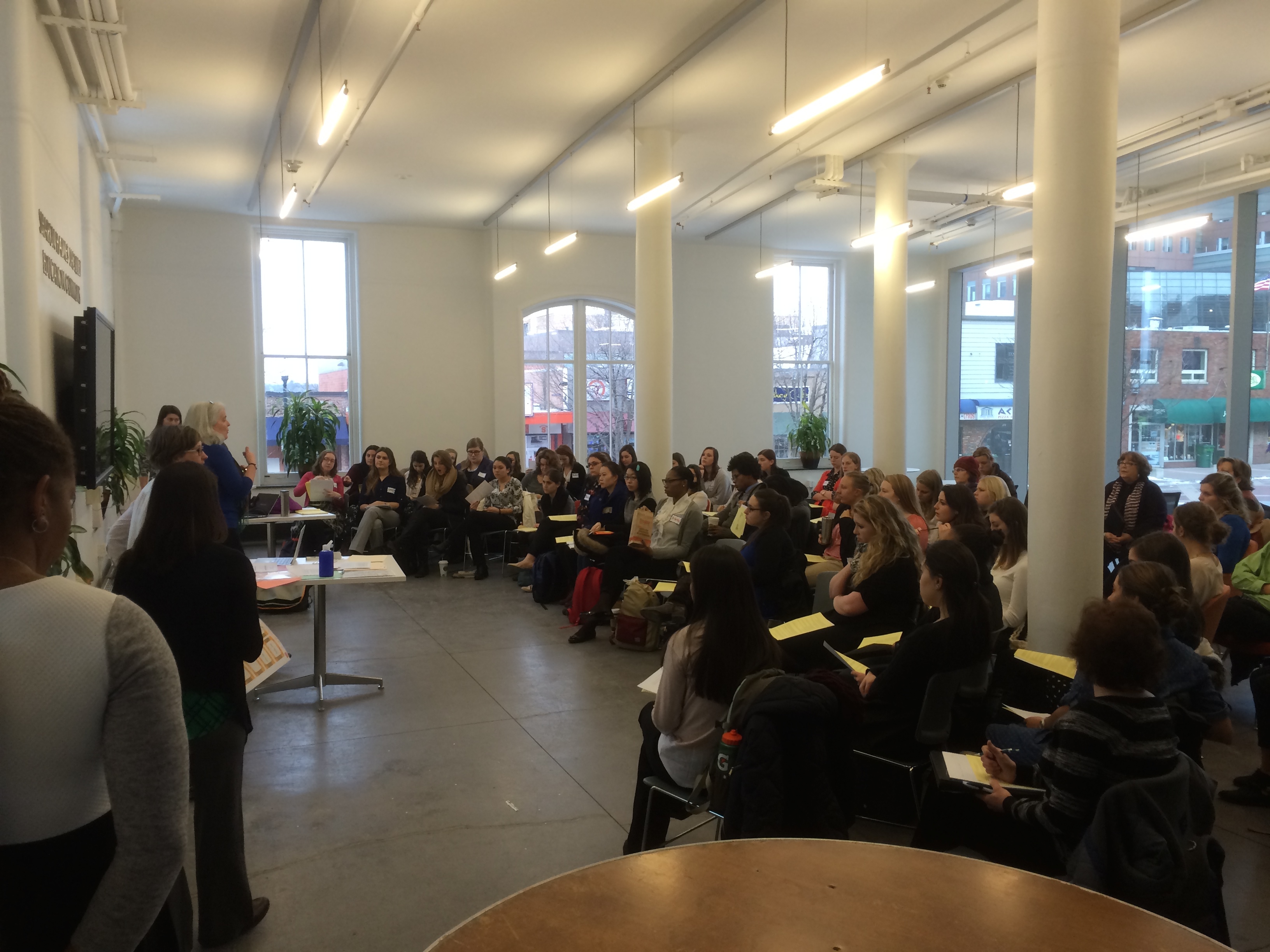
How can you make this work at your school?
Research and texts on lesson study are not hard to come by. The biggest challenge you can face is that your school does not have the time or resources to implement the necessary bits and pieces at study inception, however, once the process gets going the road gets easier as the work invested makes future studies easier. Bottom line? Lesson study works. Make it work for you.
Learn more about Lesson Study
- What is lesson study?
- A deeper look at lesson study
- Challenges to Importing Japanese Lesson Study: Concerns, Misconceptions, and Nuances
- Lesson study (Wikipedia)
Share this:

2015-2016 Application Now Available
Here’s to another year of enriching and inspiring both learners and educators!


Applications are now being accepted on our website for this year’s application period (January 15 – April 15, 2015).
Please apply early as the number of applications which may be submitted is limited to the numbers below.
- 175 Academic Enrichment applications (preview Academic Enrichment Grant Application Questions)
- 75 Teacher Development applications (preview Teacher Development Grant Application Questions)
- 50 Scholarship applications (preview Student Teaching Scholarship/Mentoring Application)
You can learn more about McCarthey Dressman Education Foundation’s 2014-2015 Grant Recipients here.

 McCarthey Dressman Education Foundation