
teacher development
Teacher Collaboration Creates Real World Learning and Assessment at San Francisco Community School

Collaborative Planning for Project Based Learning
Teaching, despite being surrounded by literally hundreds of human beings on a daily basis, can be a very isolating profession. An educator could be likened to being a single island in an archipelago. While they are a part of an entity larger than themselves the vast gulfs that separate them keep them from fully benefitting from each other’s resources. Coupled with the daily slog through textbooks, homework, and testing, it’s easy to see how a teacher’s passion for education could wane. Is collaboration with other teachers a way to improve teaching and learning? The educators at San Francisco Community School (SFC) proposed exactly that in the Collaborative Planning for Project Based Learning project funded by McCarthey Dressman Education Foundation.
What exactly is Project Based Learning (PBL)?
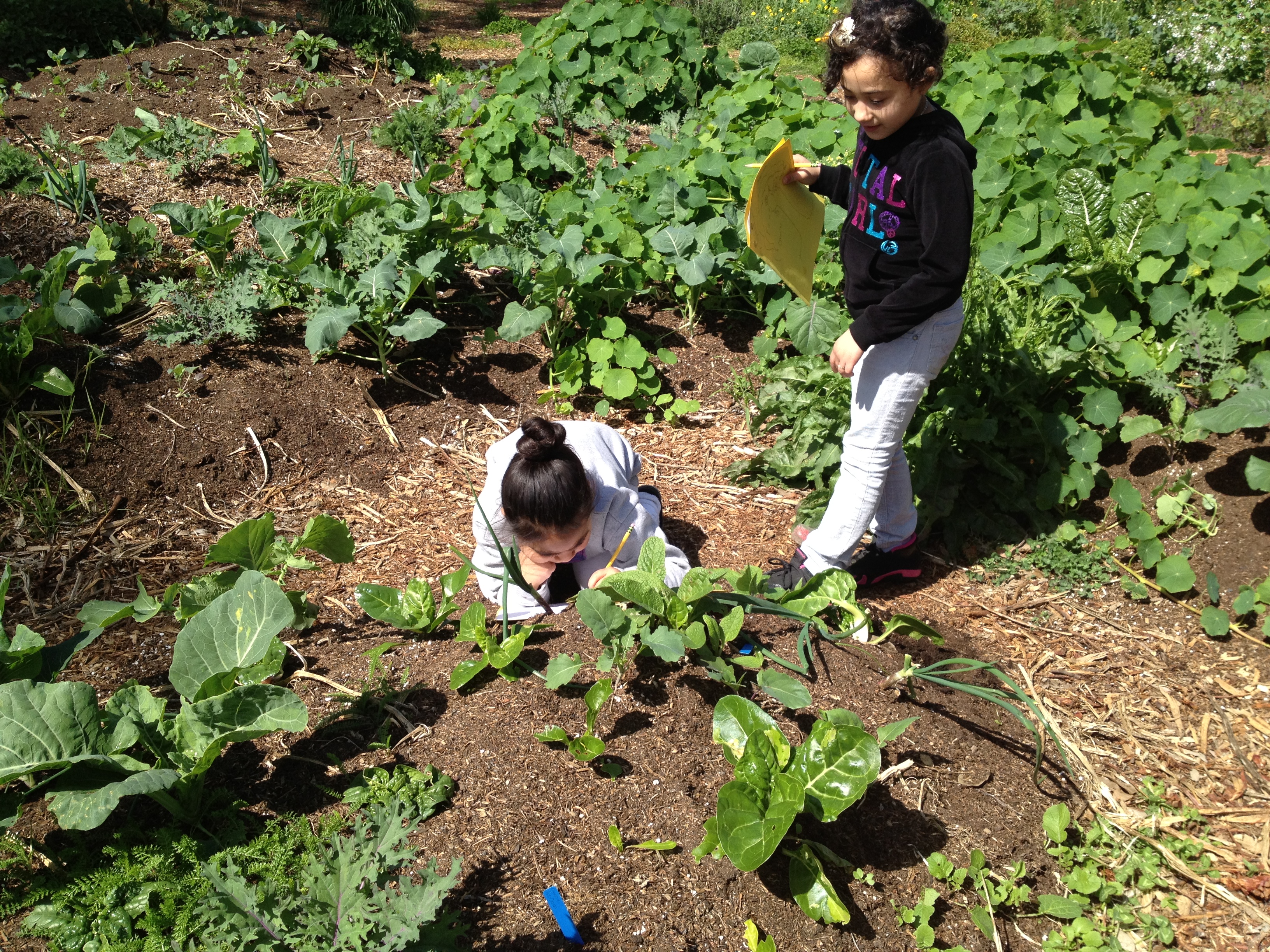
According to the Buck Institute for Education PBL is “a teaching method in which students gain knowledge and skills by working for an extended period of time to investigate and respond to a complex question, problem, or challenge.” You can learn more about types of PBL from John Larmer at Edutopia. Put more simply, it’s learning by doing. PBL is a model that shifts its focus away from a teacher-centric approach and emphasizes student directed assignments. With a focus on relevant assessment and real world relevance, PBL is a very exciting alternative for both students and teachers to traditional classroom learning.
What are the benefits of PBL for teachers and students?
According to the National Education Administration, PBL “makes learning relevant to students by establishing connections to life outside the classroom and addressing real world issues. In the classroom PBL gives teachers an opportunity to build relationships with students by acting as their coach, facilitator, and co-learner.” In the past few years the increased access to technology in schools, even underprivileged ones like SFC, makes this type of learning much more accessible. The large format of the projects also lend themselves to being easily shared between teachers and with parents who are invested in the student’s learning process.
How are the educators at SFC implementing PBL?
It’s not an easy approach, especially if you have limited resources and time. According to the original proposal by Jessica Fishman, who is spearheading the project, “The Collaborative Planning Project (CPP) will allow SFC teachers to work together for three days in summer study groups to establish essential learning objectives, develop long-term project-based curriculum and develop common learning strategies for the coming year.”

The teachers used the text Understanding by Design by Wiggins & McTighe as their guide as they work through the ideas of backwards design and the building blocks of project based learning. The teachers were also be divided into groups based on grade ranges so that, when sharing, they could manage and engage each others needs and expectations as students moved through the school. This collaboration will create essential bridges between educators so that ideas and proposals may flow more easily between them.
After two years of implementation, where are they now?
Jessica Fishman was happy to report that the project met or exceeded all the goals they had set.
According to the proposal the goals were as follows:
- Project-based learning methods to support student learning in real-world, meaningful challenge-driven projects.
- Teachers will identify and develop performance-based assessment opportunities and rubrics that are aligned to the projects and indicate the extent to which students have mastered the essential learning outcomes.
- Culturally-relevant instructional strategies designed to engage and support students who are traditionally under-served by public schools.
- Vertical alignment and calibration of expectation and rigor K-8.
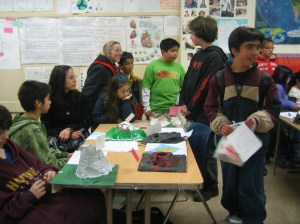
Student projects about volcanic eruptions.

By working in their individual grade level groups the teachers created concrete plans for their fall cycle. Not only did they create a solid collaboration plan, they created a set of assessments along with K-8 vertical integration and alignment. The problem they’ve run into both years was that very few teams had time to do initial planning. As a result, many teams were forced to meet again over winter break to finish their planning for the spring. The extra time spent in each others company only strengthened the personal and professional bonds between their educators. Now, with the project plans in place, it’s a much smoother transition for new teachers joining the project.
When teachers are able to truly collaborate it opens up worlds of opportunities, not only for the students, but for the educators as well. There is no reason to cease learning, especially when one is a teacher. The benefits of project based learning are clear, but the added collaboration between educators will only amplify that effect.
Further Reading
- Research Spotlight on Project-Based Learning
- What is Project Based Learning (PBL)?
- PBL – Problem Based Learning
- The Challenge of Problem Based Learning
Share this:

Lesson Study: Improving Science at Willow Field Elementary School
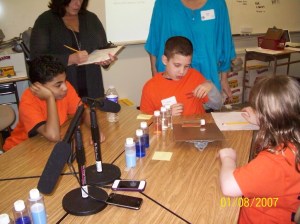
One of the biggest factors in positively impacting student learning is teacher’s self efficacy and skill in communicating quality instruction. If you aren’t a natural communicator, this isn’t the easiest skill set to develop. With an increased emphasis placed on ELA (English Language Arts) and mathematics instruction at the elementary level, science instruction seems to have fallen through the cracks. The teachers at Willow Field Elementary in Liverpool, NY have developed a proposal to address that very issue. How do they plan on doing this? Through “Lesson Study.”
What is lesson study?
It’s also known as kenkyu jugyo in Japan, where the technique was developed. It’s focus is on teacher collaboration to discuss learning goals and planning actual classroom lessons. This is followed by observation and revision so that other teachers can benefit from it. According to their original proposal, a lesson study cycle begins with a team of educators who determine the content on which they want to focus for the purpose of preparing a research lesson. In this case, it is with a focus on science education, though the model can be adapted to fit any subject.

How does the project work?
The project team meets regularly to study and discuss the national, state and local standards and reviews educational research regarding the content. In Willow Field Elementary’s case, they’ve been studying the new National Framework for Science Teaching, recent journal articles from the field of elementary science education and consulting with the Department of Science Teaching at Syracuse University to become more knowledgeable in elementary science content and teaching practices. Using what they’ve learned, they will collaboratively write a lesson plan, which will be taught to a group of students while at the same time having the lesson video taped for further discussion. All of this is done with the end goal of improving instruction. How specifically? By starting to teach more science than in the past, teachers gain comfort and improve teaching effectiveness. When combined with studying the national framework, research literature, and the data they have collected about student’s learning process and outcomes, teachers can more easily pass on what they have learned to other professionals.
What did the teachers study?
Three questions, specifically, are guiding teacher learning in this project.
- How do we design science instruction that makes students’ thinking visible?
- How can we meet our students’ needs and simultaneously address the new science framework?
- How will evidence of students’ learning be used to help us revise our original lesson?
How did they find the time?
Because lesson study requires teachers have time to plan, observe and reflect with each other, scheduling is difficult. With the logistical challenges inherent in this model, they have certainly faced an uphill battle. Gearing up in August was required; team members needed time to plan. The project went into full swing of September 2012 with nine elementary school teachers and a building principal meeting a Syracuse University doctoral student and science education professor to discuss the overview of the Lesson Study process to those new to the method. Shortly after, they met to determine their over all research focus.
Their goals:
- Students will be problem-solvers.
- Students will be inventive, creative and curious.
- Students will be risk-takers.
To help focus their efforts, teachers broke into three smaller teams, each dedicated to a grade and content specific focus.
- 2nd Grade Science- Understanding the Specifics Matter (two second grade teachers, doctoral student)
- 4th/5th Grade Science- The Force of Magnetism (two 4th Grade and one 5th Grade teacher)
- 6th Grade Art – Observational Drawing to Support Sketching in Science Notebooks (two Art teachers, one 6th Grade and one 3rd Grade teacher)
Once the teams were in motion, they could follow the traditional model for the next semester. So after a year and a half of the program, how is lesson study impacting the students and teachers of Willow Field Elementary?
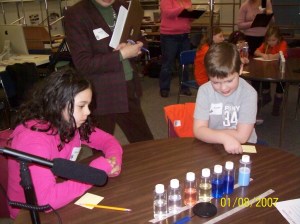
Impacting teachers, students, and administrators
With time, support and resources for lesson study, what were the teachers of Willow Field Elementary able to achieve?
- Teacher participants gained further pedagogical content knowledge with regard to science content knowledge, observational drawing and uses in science and, constructivist methods of teaching elementary science (versus direct instruction)
- Teacher participants expressed increased self-efficacy and confidence
- Students gained experience collecting data
- Students benefited from the many revisions to the lesson during the lesson study cycle
- Students engaged in authentic scientific experimentation
- Students gained content knowledge
- Students who volunteered on the Professional Development Day had the benefit of seeing their teachers as learners. They also experienced pride in playing a role in their teachers’ professional development.
In their project update, members wrote “Our lesson study team garnered increased support from the district administrators.” Seeing the model in action “allowed them to recognize the benefits of lesson study as an authentic model of professional development.”
How could the project be improved?
With all of the positive outcomes, members reflected on ways to improve on their experience. They found it especially challenging to differentiate lesson study for the experienced and novice participants, though in future iterations this problem may simply solve itself through teacher collaboration. Scheduling and logistics, as always, was a nightmare. But the biggest problem they faced was that the current school structures do not support lesson study mechanisms. In order to widely adopt this model for nationwide consumption, a massive overhaul of our education system would be needed. However, for the individual school this method can prove invaluable in improving teaching and communication skills thus facilitating improved learning.
Further Reading
- Lesson Study: How Can It Build System-Wide Improvement? (Lewis, 2008)
- What is Lesson Study? (Teacher’s College, Columbia University, Undated)
- Lesson Study (Wikipedia, 2012)
- A Mathematics Leader’s Guide to Lesson Study in Practice (EDC, 2010)
- Chicago Lesson Study Group (McDougal, 2011)
Schools in the News using Lesson Study
- ‘Lesson Study,’ Japanese Strategy for Improving Teachers, Catching on in US (Lutton, 2012)
- Sherwood Middle Schools pilot collaborative Lesson Study, taken from Japan (Hammill, 2014)
Share this:

Project Go! Lab Classrooms offer job-embedded professional development
One of the problems facing educators today is the lack of time for personal and professional development. With overcrowded classrooms and heavy course loads it has become very difficult for many teachers to hone their craft or improve their teaching skills. This is a problem the teachers surrounding Project Go! at Rowe Middle School in Portland, Oregon are trying to address. Their strategy? Take a proactive approach to change, by improving and sharing their teaching craft through lab classrooms. Project Go! involves an ongoing series of lab classes, opening classroom doors to coaching in the midst of teaching. With classes often at capacity and teachers being forced to take their own, limited, time for professional development this project takes bold steps toward teacher development.
How does it work?
The first step Project Go! has taken to ensure teachers and educators have the time for professional development is to write half day substitutes into the budget. That way a teacher isn’t required to come in on an evening or weekend and they can rest assured that some one is teaching their students. With this half day, the teachers are given the opportunity to participate in teaching labs. Teachers participate in a preliminary meeting, lab site learning and debrief. With teachers being given opportunities to participate in these half-day labs, Project Go! supports their goal that “every educator engages in effective professional learning everyday so every student achieves.” Instructional practices, behavior management techniques, and pacing are all things to be discussed and deconstructed for the benefit of the educator. When paired with ongoing assessments, the teachers quickly find themselves with more education resources at their fingertips.
Teachers need learning structures that empower them professionally and enable them to collaborate with colleagues. (2010, ASCD)
So what do these labs look like?
Each lab takes a half day: an hour for a pre-briefing/discussion of what will be seen, the actual teaching, and the debrief to name and discuss what was seen, analyze the teacher choices and the student engagement. This model integrates the professional learning along with the learning of their students who will be gleaning the direct benefits of their teacher’s professional development. Not only that, the students will get to observe the review process where the teachers discuss with each other on their progress as teachers, and at the same time giving the students a better understanding of the tools and methods that will be utilized in the future.
How is this program unique from other professional development or peer review proposals?
Project Go! supports the newest teachers in the profession, setting the environment of a school in which doors are open, risks are taken, feedback is honest and immediate change is an ongoing reality. Mid-career teachers, who have often gotten used to being the only adult in the room, will find it energizing, intellectually stimulating and welcoming to either share their practice or participate by watching and dialoguing about a colleagues craft. Veteran teachers are equally invited into an invigorating opportunity for growth; many veteran teachers have so much to teach our newer teachers but have no means in which to do so. By facilitating the purposeful opening of the teaching practice Project Go! provides a time and place for teachers to participate without hamstringing them by adding extra workload.
What has been learned in the three years this project has been operating?
According to their report, the program has had a significant affect on teacher learning and therefore on student learning.
“We are changing the way we provide professional development for teachers by making sure the work is being done in real classrooms, with real students, and in real time. This models the metacognitive processes that teachers go through as they plan, teach, and reflect. A pleasant and meaningful surprise that has manifested itself throughout the past three years has been our students observing and learning from our metacognition. Students share how much they learn from listening to the teachers dialogue with one another. They give us insight into what is helpful/not helpful in the process of teaching new information.”
That being said, they have not been without their challenges. Scheduling labs around different teachers classroom schedules has proven more difficult than anticipated. The educators also have some worry over the sustainability of the project, due to the sub coverage. This lead them to reach out to Portland State University and form a partnership with the goal of identifying new strategies for sustaining this model. Though new strategies will take time to implement, teachers are encouraged by the practice of learning from colleagues in action.
All in all the teachers of Rowe Middle School have taken a very proactive approach to improving their craft and educational standards. Through collaboration and evaluation, these teachers have seen improvements in both their educator peers and students. With budgets growing ever tighter, this may be a difficult model for other schools to follow, but the rewards are clear. Any school wanting to create an environment of professional cross-pollination, where teachers are working with teachers and students gain the benefit should look into building a Project Go! of their own.
Related links
- Demonstrating Teaching in a Lab Classroom (2010, ASCD)
- Laboratory Classrooms – Frequently Asked Questions (2011, EBCERI)
- Learning by Observing Colleagues in Action (2006, Responsive Classrooms)
Share this:

Beyond the Book: Opening Classrooms to Close the Knowledge Gap
Addressing the Knowledge Gap
Among the many challenges facing us in education one of our most formidable foes is the comprehension gap, across all content areas, between students of low socioeconomic status and those of high socioeconomic status.

E.D. Hirsch, The Case for Bringing Content Into The Language Arts Block and for a Knowledge Rich Curriculum Core for All Children American Educator, Spring 2006.[T]his neglect of [content] knowledge is a major source of inequity, at the heart of the achievement gap between America’s poor and non-poor”
The Importance of Literacy Skills
While there are many factors that attribute to poor performance, one of the chief offenders is a lack of literacy skills. This is often noted at the college level when students are forced to take non-credit developmental education classes just to catch up to the basics. This both demoralizes the student as well as extending the amount of time they have to spend in, and thus pay for, college.

By expanding literary sources, however, we expand the sphere of knowledge surrounding the content areas. Students can gain a broader context of how a given subject fits into the larger narrative of the real world.
“If they want their students to learn complex new concepts in different disciplines, they [content teachers] often have to help their students become better readers…”
Chris Tovani in her text Do I Really Have to Teach Reading?
Peer Assistance and Review (PAR): A Teacher Development Project
Teachers need to move beyond textbooks to increase their literary skills so that they can better communicate their subject to students. So how do we get a teacher to step away from the science textbook and into some Sagan or Hawking?
One of the ways we can work to address the knowledge gap is through the model of Peer Assistance and Review. In order to address inequity, our featured project at The School of the Future has done just that. With a Teacher Development Grant from McCarthey Dressman, The School of the Future helped improve the overall literacy of their teachers and subsequently their students.
Supports for Improved Content Literacy for Educators and Students
- Collaboratively Created Curriculum
Teachers in high school met after school and collaborated to develop, create, and implement a curriculum that would enhance their students’ ability to read and write in the content areas (History, Math, Science and Technology) across the 11th and 12th grade. - Shared Texts Across Content Areas
The group worked together to come up with a list of shared texts across content areas. While history and science have obvious literary sources outside the textbook, with a subject like math the teachers could study the history of math and biographies of mathematicians to give a wider scope to how the content area applies to the real world. - Content Literacy Support
Included was a training program for inexperienced or ineffective teachers to improve their literacy skills across their content area, specifically focusing on grades 11-12 to start.
The Difference: Educator Driven Approach

The difference between this program and previous initiatives aimed at teaching reading in the content areas was that previous efforts were top down administrative mandates that focused on ensuring uniformity in how reading, whereas the current effort was focused on expanding the teacher’s actual knowledge base. Past “one size fits all” approaches to teaching reading in the content areas failed to account for the fact that students read different types of texts in every content area.
The unique aspect to this program is its need for a personal “buy-in” from the teachers. Not a monetary buy-in, but those teachers who want to get involved will need to be willing to pull up their sleeves and put a little more time on the table.
The Impact: Students Identify and Analyze Printed and Non-Printed Texts
What have the teachers accomplished with this project?
During year one, five teachers (half the 11th/12th grade team) studied professional literature in their content areas to be able to implement a plan for teaching students to independently identify and analyze multiple non-fiction printed texts and non-print texts, at the student’s own instructional level, appropriate for the content of the class. Classroom visits and observations of each other in the form of Lesson Study, analysis of student growth, refinement of practice, creation of videos, continued throughout the year. In year two, participants in year one become “Anchor” teachers and shared best practices with the half of the team that was not previously involved (“Innovator Teachers”). For year three, the 11th/12th grade teacher team will mentor the 9th/10th grade team.
PAR provides teachers with the opportunity to work collaboratively to improve professional development. But it is not easy; successful implementation of PAR requires commitment, time, resources, cooperation and flexibility from the teachers involved. In successful PAR projects teachers play a key role in the support, assistance and review of their colleagues. Everyone has to pull their weight for the program to be successful
Teachers can look to existing program models, such as the California Peer Assistance and Review program to get some idea on how they can best start their own. Those who have experienced it emphasize that PAR models should only be used as reference tools, not as fixed templates, which could hinder the development and implementation of plans tailored to meet individual schools and students needs and goals.
Learn more about PAR
- What is Peer Assistance and Review?
- A User’s Guide to Peer Assistance and Review
- Peer Assistance and Review: Working Models Across the Country
Share this:

- ← Previous
- 1
- 2
 McCarthey Dressman Education Foundation